There is something deeply unsettling and beautiful about ancient sound wells tuned to voice echoes. When you speak a single word, it does not simply bounce back. Instead, it transforms, stretching and curving as if guided by invisible hands. These structures were not built casually. They were crafted with intention, patience, and a remarkable understanding of sound that feels ahead of their time.
Across various civilizations, people carved wells, chambers, and vertical shafts that behave like living instruments. Some amplify whispers, others distort chants, and a few turn a simple clap into rolling thunder. Even today, scientists and acousticians marvel at the precision achieved without modern tools.
Have you ever stood somewhere and felt your own voice surprise you? Not due to volume, but because it felt directed or alive? That is the sensation these sound wells provide. They are experienced as much as heard.
What Exactly Are Sound Wells
Sound wells are architectural spaces designed to manipulate sound through shape, material, and depth. Many appear as vertical shafts, stepped wells, underground chambers, or temple rooms. Each structure affects sound in unique ways, creating effects that cannot be replicated in normal spaces.
Some wells produce strong echoes, while others create long, lingering reverberations. In certain locations, chanting at specific pitches triggers harmonic resonance, layering multiple tones. The geometry, curvature, and surface texture all influence how sound travels. Even minor differences in depth or angle can dramatically change the acoustic experience.
Why Ancient Builders Cared About Sound
Modern architecture often emphasizes aesthetics, yet ancient builders focused on holistic experience. This included light, temperature, movement, and sound. In spiritual cultures, sound was not mere entertainment; it was communication with gods, spirits, or ancestors.
Many ancient sound wells were built near temples, sacred spaces, or ritual centers. Echoes carried prayers, chants induced trance, and reverberations symbolized divine replies. In this way, sound amplified authority. A priest whose voice resonated through stone commanded presence and attention.
Have you considered how much modern spaces neglect sensory intention beyond sight?
Chand Baori, India
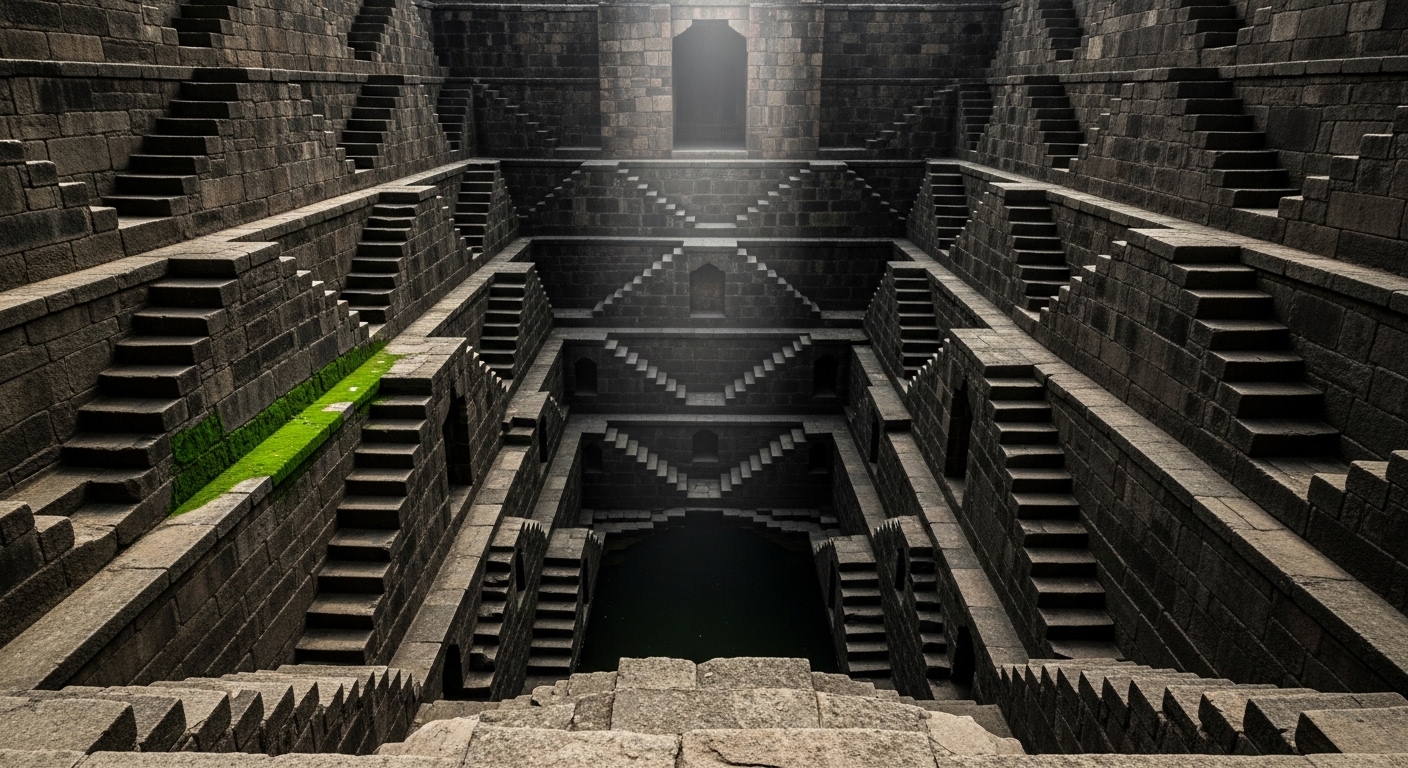
One striking example is Chand Baori, a massive stepwell in Rajasthan. At first glance, its geometric symmetry impresses visually. However, visitors quickly notice something extraordinary: the sound. A single voice at the bottom travels upward in waves, whispers audible several levels above. The stone walls multiply sound in unexpected ways.
Historians suggest stepwells served multiple purposes beyond water storage. They acted as social and spiritual spaces. The echoes created a presence even when people were physically apart.

Rani ki Vav, India
Another remarkable site is Rani ki Vav, a UNESCO-listed stepwell in Gujarat. Carved with hundreds of sculptures, it descends in multiple chambers. Unlike Chand Baori’s dramatic echo, Rani ki Vav’s acoustics are subtle. Low-frequency sounds travel deeply, fading slowly to create an atmosphere of introspection.
Visitors often describe a feeling of humility. The echo transforms silence, giving it weight and presence. Such experiences encourage reflection and calm.
Hypogeum of Hal-Saflieni, Malta
Perhaps the most scientifically studied sound well is the Hypogeum of Hal-Saflieni. This prehistoric underground temple is over 5,000 years old. Within the Oracle Room, a male voice at approximately 110 Hz resonates throughout the complex. Stone, bone, and human perception interact, creating vibrations felt in the chest and skull.
Modern acoustic tests confirm that the frequency was deliberate. People experience resonance differently depending on their position. Why ancient builders tuned spaces so precisely remains a mystery, sparking fascination and study.
Chavín de Huántar, Peru
Deep in the Andes, Chavín de Huántar showcases underground galleries designed for acoustic effects. Conch shell horns sound distorted and disorienting in certain corridors. Darkness and narrow passageways amplify the psychological impact. Scholars suggest these rituals intentionally induced altered consciousness. Sound was, in effect, an instrument of mind and body.
How Sound Wells Were Built Without Modern Science
The ingenuity behind ancient sound wells is astounding. Builders relied on empirical methods rather than machines. They sang, clapped, and listened. If a space responded as desired, the design was replicated. Over generations, this hands-on knowledge became tradition.
Material selection played a crucial role. Limestone and basalt absorb and reflect differently. Curved surfaces, stair angles, and chamber dimensions all impact acoustic behavior. This was not guesswork—it was applied science honed through careful observation.
The Emotional Impact of Hearing Your Voice Transformed
Inside a sound well, your voice changes in ways that challenge perception. Some people feel humbled. Others feel unsettled. Occasionally, visitors describe comfort, as if the structure itself is responding. Silence feels heavier and more meaningful when sound is rare and deliberate.
Have you ever experienced an echo that made you pause and simply listen?

Why These Structures Still Matter Today
In a world dominated by noise, ancient sound wells remind us that sound can convey meaning and power. Modern architects study these structures to design concert halls, meditation spaces, and therapeutic environments. Acoustic therapy now draws inspiration from principles developed millennia ago.
These wells teach that progress is not always technological. Sometimes, sensory understanding surpasses machines, leaving lessons for us in subtlety, patience, and human perception.
Visiting Sound Wells Respectfully
Many sound wells are fragile. Visitor limits, restricted noise, and protective measures exist to preserve these wonders. While it may be tempting to test echoes loudly, it is more rewarding to listen. Respect enhances the experience.
Listening to the Past
Ancient sound wells tuned to voice echoes are not relics of nostalgia. They are active experiences that engage our senses. They encourage slow, intentional travel and foster introspection.
WentWorld.com invites you to explore spaces that stimulate more than sight. Seek places where silence, sound, and architecture converse. Have you ever visited a location that reshaped your perception of sound? Share your stories with us—we would love to hear them.
Follow WentWorld.com on our social media platforms to continue discovering the world’s most unusual and immersive travel experiences.
Catch up on the top stories and travel deals by subscribing to our newsletter!