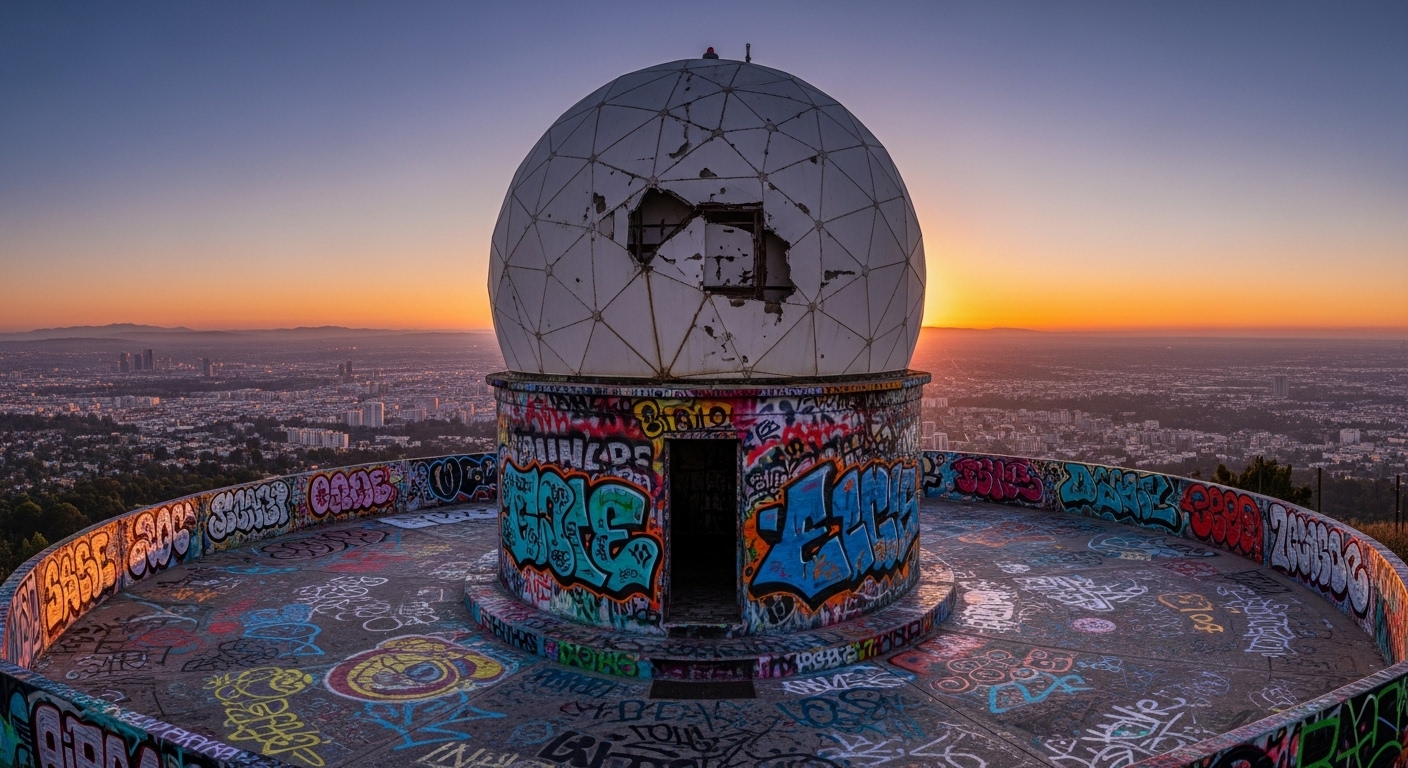
Across remote coastlines and wind-swept hills, giant white spheres once scanned the skies. For decades, they tracked aircraft, storms, and distant signals. Today, however, many of these silent structures have found new life. Abandoned radar domes are transforming into creative observatories and dramatic art lookouts.
These unusual buildings, often called radomes, combine Cold War history with bold artistic reinvention. As a result, they now attract photographers, architects, and curious travelers. Moreover, they offer something rare in modern tourism: isolation, scale, and story.
What Makes Radar Domes So Unique?
Radar domes were designed to protect sensitive antenna systems. Their spherical shape shields equipment from wind, salt, and snow. Consequently, engineers placed many of them in extreme locations such as cliffs, islands, deserts, and mountaintops.
Because of this design, they feel almost extraterrestrial. In fact, many resemble giant golf balls rising from the landscape. Inside, the curved walls create unusual acoustics and soft light diffusion. Therefore, artists often see creative potential where others see decay.
Why Artists Are Reclaiming These Spaces
Scale plays a major role. The vast interior allows immersive installations and large projections. At the same time, the dome’s echo enhances sound-based art.
Isolation adds another layer. Visitors must travel intentionally to reach these sites. Thus, the journey becomes part of the artistic experience.
Symbolism also matters. Radar domes once represented surveillance and defense. Now, they represent openness and creativity. That emotional shift gives each space powerful depth.

Remarkable Examples Around the World
Teufelsberg – Berlin, Germany
Perched above the forests of Teufelsberg in Berlin, this former Cold War listening station has evolved into an open-air art destination. Once used to monitor communications across Eastern Europe, the domes now host vibrant murals and creative events.
Today, guided tours allow visitors to explore the graffiti-covered interiors. Meanwhile, panoramic city views stretch across Berlin’s skyline. The contrast between military history and street art creates a striking atmosphere.
RAF Stenigot – Lincolnshire, England
Hidden in the countryside near Lincoln, RAF Stenigot features dramatic radar towers and dome remnants. Although parts remain protected heritage sites, the location inspires photographers and architecture enthusiasts.
Temporary art projects and exhibitions occasionally bring new energy to the area. As a result, the rural setting feels both historic and contemporary.
Mount Umunhum – California, USA
In the hills south of San Jose, the summit of Mount Umunhum overlooks Silicon Valley. While the original radar structure no longer operates, restoration efforts have opened the area as a public viewpoint.
Interpretive displays now explain the site’s Cold War past. Additionally, the summit attracts hikers, photographers, and artists seeking perspective and space.
The Architecture of Reinvention
Converting radar domes requires careful planning. Many contain aging materials that demand restoration. Therefore, preservation teams must stabilize structures before opening them to visitors.
Once secured, however, the interiors offer remarkable flexibility. Curved walls support projection mapping and immersive lighting. Sound installations thrive in echo-rich chambers. Even minimal illumination creates dramatic visual impact.
Furthermore, adaptive reuse supports sustainability. Instead of demolishing these buildings, communities reinterpret them. In doing so, they preserve history while reducing environmental waste.

The Emotional Experience Inside a Dome
Stepping inside an abandoned radome feels surreal. Wind moves softly through broken panels. Light filters across curved concrete surfaces. Every sound echoes in every direction.
Yet the space rarely feels empty. Instead, it feels contemplative. Visitors often pause longer than expected.
Rather than scanning the sky for threats, these domes now frame horizons. Instead of secrecy, they invite reflection. That transformation defines their modern appeal.
Visiting Responsibly
Before planning a visit, always check access rules. Some radar stations remain restricted or privately owned. Others operate as managed heritage attractions.
For example, Teufelsberg in Berlin offers ticketed entry and guided tours. In contrast, remote domes may sit on protected or private land. Therefore, confirm legal access before exploring.
Additionally, respect the artwork and surrounding environment. Responsible tourism ensures these unique spaces remain open and inspiring for future visitors.
Abandoned radar domes turned art lookouts show how architecture can evolve. Structures built for secrecy now inspire openness. Military relics now frame sunsets and installations. Ultimately, these spherical landmarks remind us that even the most unexpected places can find new creative life.
Catch up on the top stories and travel deals by subscribing to our newsletter!