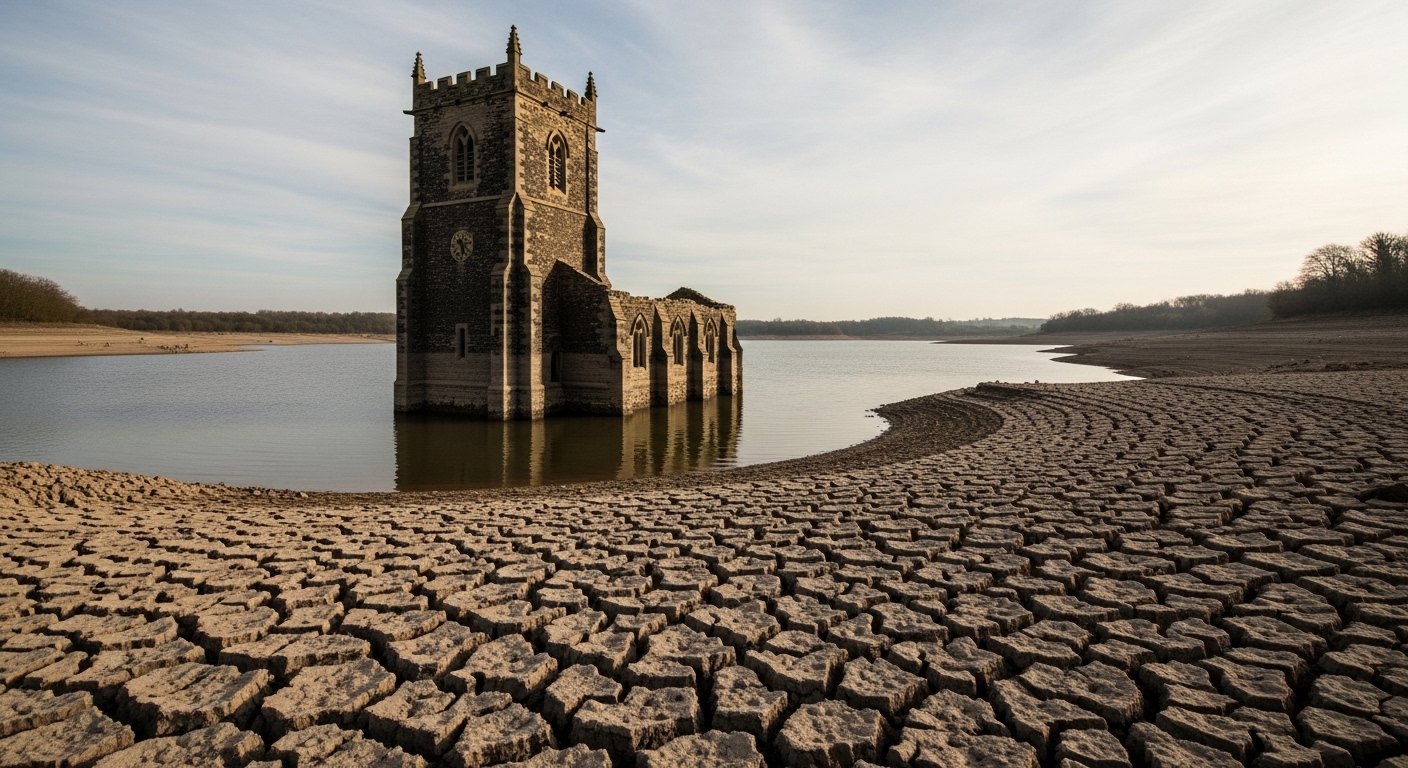
Across the world, there are places where history disappears beneath lakes and reservoirs, only to return again when water levels fall. These sunken villages that reappear during droughts tell stories of communities that once thrived before being abandoned or flooded. During severe dry periods, roads, houses, churches, and entire streets rise again from beneath the water, creating powerful reminders of lives once lived.
Witnessing sunken villages that reappear during droughts is both fascinating and emotional. Travelers often describe the experience as walking through a ghost town frozen in time. Old foundations emerge from cracked earth. Church towers stand alone in empty basins. Stone walls trace the outlines of forgotten neighborhoods.
Have you ever wondered what it would feel like to walk through a place that disappeared decades ago? These rare moments offer a glimpse into history that museums cannot replicate.
This WentWorld.com journey explores remarkable sunken villages that reappear during droughts, revealing how they were lost, why they return, and what they teach us about memory, climate, and change.
The Strange Beauty of Sunken Villages That Reappear During Droughts
The sight of sunken villages that reappear during droughts is unlike anything else in travel. Instead of ancient ruins slowly eroding over centuries, these places often look surprisingly modern. Brick houses still stand. Doorways remain intact. Staircases lead nowhere.
Many villages were intentionally flooded to create reservoirs for drinking water, agriculture, or hydroelectric power. Entire communities relocated, leaving behind homes, schools, and churches. Water covered these places for decades, preserving them in unexpected ways.
Then drought arrives.
As water levels drop, outlines of villages slowly reappear. First come rooftops. Then towers. Eventually, entire streets become visible.
It raises a powerful question: when a place disappears, is it ever truly gone?
Why Villages Were Flooded
Most sunken villages exist because of dam construction. Throughout the twentieth century, governments built reservoirs to supply water and electricity to growing populations. While these projects brought economic benefits, they also required sacrifice.
Families left homes where generations had lived. Cemeteries were relocated. Buildings were demolished or abandoned.
Organizations such as Encyclopaedia Britannica document how reservoir construction transformed landscapes worldwide. These engineering projects reshaped rivers and valleys permanently.
At the time, many believed the villages would never be seen again.
Climate change and prolonged droughts have proven otherwise.
Aceredo, Spain
One of the most famous sunken villages that reappear during droughts is Aceredo in northwestern Spain. The village was flooded in the 1990s when a dam created the Alto Lindoso reservoir.
For years, Aceredo remained hidden beneath the water.
Then severe drought struck.
As water levels fell, the entire village resurfaced. Visitors walked along old streets and peeked into roofless homes. Rusted cars sat where they had been parked decades earlier.
Travel coverage from BBC brought global attention to Aceredo when it reappeared dramatically during dry seasons.
Standing there feels less like visiting ruins and more like entering a paused moment in time.

Curon, Italy
In northern Italy, the village of Curon lies beneath Lake Resia. Most of the town was submerged in 1950 to create a hydroelectric reservoir.
Only one structure remained visible: a church tower rising from the lake.
During extreme drought conditions or maintenance work, more of the village becomes visible. Foundations and walls appear beneath the receding waterline.
The lone tower has become an iconic image of loss and endurance.
Tourism organizations such as Italia.it describe Lake Resia as both scenic and historically significant.
Visitors often stand quietly along the shoreline, watching the tower reflect on the water.
What stories would that tower tell if it could speak?
Old Adaminaby, Australia
Old Adaminaby once stood in the Snowy Mountains region of Australia. The town was flooded in the 1950s as part of the Snowy Mountains Hydroelectric Scheme.
When water levels in Lake Eucumbene fall, remnants of the original town emerge. Stone chimneys rise from dry ground. Old building outlines become visible.
Local historical groups preserve stories and photographs of the original settlement.
Information from NSW National Parks helps visitors understand the region’s environmental significance.
Walking through Old Adaminaby during drought conditions feels like stepping into a memory shared by thousands of former residents.
St. Thomas, Nevada
In the desert of Nevada lies the ghost town of St. Thomas, submerged when Lake Mead formed in the 1930s.
Lake Mead is one of the largest reservoirs in the United States. When drought lowers water levels, the ruins of St. Thomas reappear.
Visitors can walk along original streets and see foundations of homes and public buildings.
The National Park Service provides historical information about the area and its transformation.
The stark desert surroundings make the experience even more dramatic.
It is difficult not to imagine the lives that once unfolded here.
The Emotional Experience of Walking Through Lost Places
Sunken villages that reappear during droughts create emotional reactions unlike traditional historic sites. These places feel recent enough to be relatable, yet distant enough to feel mysterious.
You might see a doorway and imagine the people who passed through it every day. You might follow an old road and wonder where it once led.
Many travelers describe a strong sense of quiet reflection.
These villages remind us that landscapes change and communities adapt. They show how human stories are tied to rivers, valleys, and water.
Have you ever visited a place that felt frozen in time?

Climate Change and Reappearing Villages
The return of sunken villages often signals environmental stress. Drought conditions that expose these settlements can also threaten water supplies and ecosystems.
Scientific organizations like IPCC study long-term climate trends and their impacts on water systems.
While travelers may be fascinated by reappearing villages, the environmental reasons behind their return are serious.
This creates a complicated balance between curiosity and concern.
Is it possible to appreciate these places while also recognizing the challenges they represent?
Visiting Respectfully
If you visit sunken villages that reappear during droughts, respect is essential.
These sites are not just attractions. They are former homes.
Avoid removing artifacts. Stay on safe paths. Follow local guidelines.
Many areas have unstable ground and hidden hazards.
Responsible travel ensures these places remain accessible for future visitors.
Why These Villages Stay With Us
Sunken villages that reappear during droughts stay in memory because they connect past and present in a powerful way.
They remind us that progress often comes with sacrifice. They show how landscapes hold stories even after communities disappear.
Most of all, they encourage reflection.
Travel is not always about excitement. Sometimes it is about understanding.
As WentWorld.com continues exploring unusual destinations, we invite you to think about the places that shaped your own sense of history.
Have you ever visited a place that no longer exists in the way it once did?
We would love to hear your experiences and thoughts.
If journeys into hidden histories inspire you, follow WentWorld.com on our social media platforms and continue exploring remarkable places with us.
Catch up on the top stories and travel deals by subscribing to our newsletter!