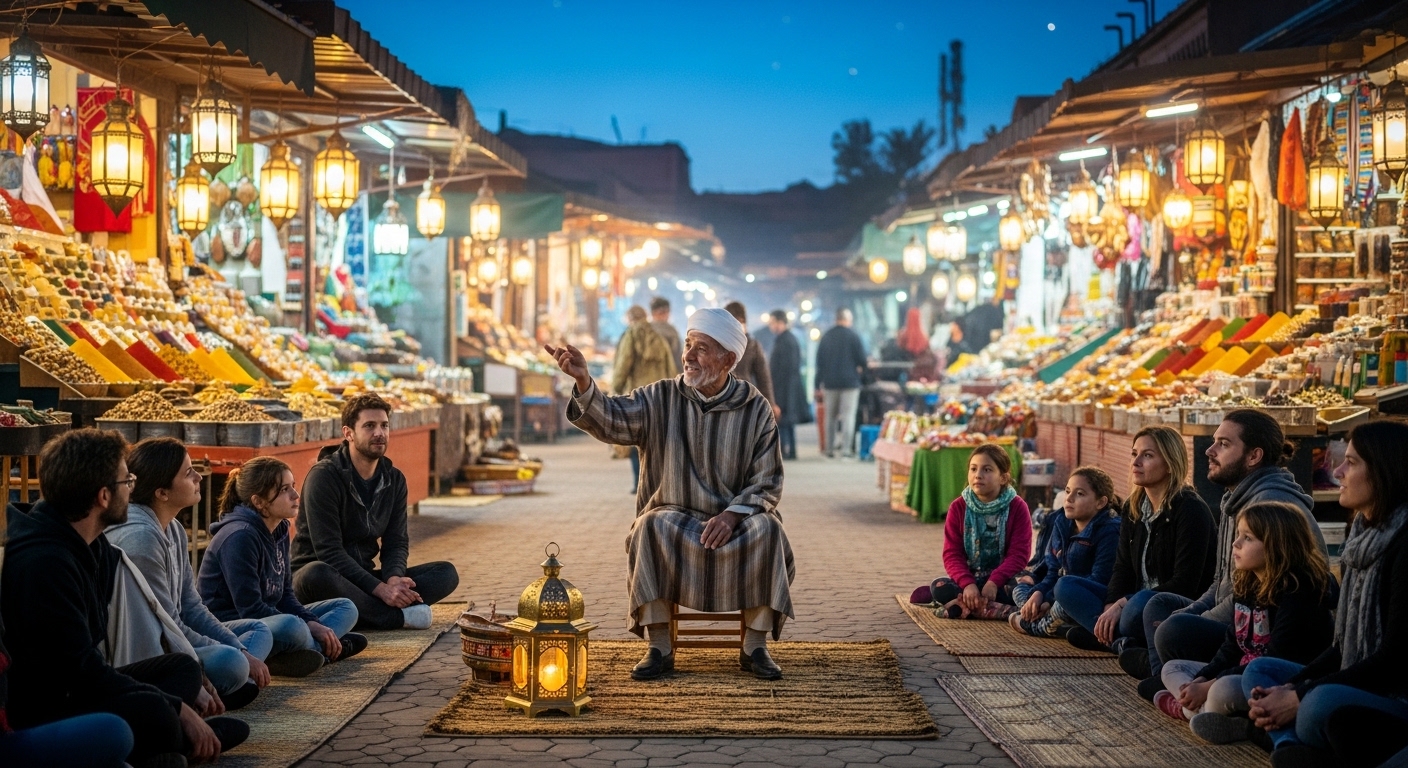
Traveling to places known for traditional storytelling is not just another cultural experience; rather, it is a return to humanity’s oldest form of connection. Long before printed books, digital screens, and streaming platforms, stories were carried by voice, memory, and community. In fact, oral storytelling shaped civilizations, preserved identity, and passed wisdom from one generation to the next. Today, when you choose to travel to places known for traditional storytelling, you are stepping into a living archive of culture.
Unlike modern entertainment, these traditions require presence. You sit. You listen. Gradually, you become part of something larger than yourself. The storyteller reads the room, shifts tone, pauses for effect, and invites imagination to fill the spaces between words. Have you ever experienced a story so immersive that you forgot everything else around you?
Throughout this journey with WentWorld.com, we explore destinations where storytelling is still alive and thriving. Moreover, we uncover why these traditions matter, how they survive in a digital world, and how traveling to places known for traditional storytelling can transform the way you see travel itself.
Why Traveling to Places Known for Traditional Storytelling Still Matters Today
In a world dominated by constant notifications, traditional storytelling offers something increasingly rare: focused attention. Instead of scrolling, you observe. Instead of multitasking, you immerse yourself. Consequently, the experience feels deeper and more human.
Oral traditions are not static. On the contrary, they evolve with each telling. A skilled storyteller adapts to the audience, reshapes dialogue, and emphasizes different lessons depending on context. As a result, no two performances are ever identical. This fluidity keeps traditions alive rather than frozen in time.
Furthermore, storytelling often carries moral lessons, historical memory, and spiritual beliefs. Therefore, traveling to places known for traditional storytelling supports communities that protect intangible heritage. Rather than consuming culture, you begin participating in its preservation.
When was the last time you truly listened without distraction?
Marrakech, Morocco – The Living Stage of Jemaa el-Fnaa
As evening falls in Marrakech, the atmosphere in Jemaa el-Fnaa shifts dramatically. During the day, the square buzzes with vendors and movement. However, at sunset, storytellers gather and form circles of attentive listeners. This transformation feels theatrical, yet it remains deeply authentic.
Recognized by UNESCO as part of humanity’s intangible cultural heritage, the oral traditions here carry centuries of Moroccan history. Epic tales, moral parables, and poetic legends unfold under open skies. Even if you do not understand every word, emotion transcends language through rhythm and gesture.
Because Marrakech has become more accessible through international routes offered by airlines like Royal Air Maroc, travelers now have greater opportunity to witness this tradition firsthand. Nevertheless, the magic remains rooted in simplicity: a voice, a story, and a circle of listeners.
Would you sit quietly in a bustling square just to hear a tale older than your passport?

Ireland – Where the Seanchaí Keeps Legends Alive
Meanwhile, in Ireland, storytelling thrives in a different setting. Instead of open marketplaces, gatherings often happen in cozy pubs or village halls. The seanchaí, Ireland’s traditional storyteller, weaves myths of Celtic heroes, mischievous fairies, and tragic romances.
Because Irish culture places high value on language and lyrical speech, stories feel musical even without instruments. In counties such as Clare and Kerry, festivals celebrate oral tradition as a living art form. Information from Fáilte Ireland highlights experiences that allow travelers to engage respectfully with these traditions.
Moreover, the warmth of these gatherings creates intimacy. A simple nod from a listener may encourage the storyteller to expand a scene or add humor. Gradually, strangers become companions through shared imagination.
Have you ever noticed how a story told beside a fireplace feels different from one read alone?
West Africa – The Enduring Power of the Griot
Across Mali, Senegal, and neighboring countries, the griot tradition continues to shape cultural memory. Unlike casual performers, griots inherit their role through family lineage. They memorize genealogies, recount political history, and perform with instruments such as the kora.
Importantly, a griot is not just an entertainer; rather, they serve as historian and advisor. Ceremonies, weddings, and community events often depend on their presence. Therefore, traveling to places known for traditional storytelling in West Africa reveals how oral history functions as both archive and celebration.
International connections through airlines like Air France make these destinations reachable. Yet accessibility does not diminish authenticity. Instead, respectful tourism can strengthen appreciation for this profound tradition.
Can you imagine memorizing centuries of history without a single written note?
Japan – The Minimalist Brilliance of Rakugo
In contrast to open-air storytelling, Japan’s rakugo performances take place indoors, often on small stages. A single performer sits on a cushion and uses only a folding fan and cloth as props. Nevertheless, through voice and subtle posture changes, entire worlds emerge.
Because rakugo blends humor with social commentary, audiences of all ages continue to attend performances in Tokyo and Osaka. Information provided by the Japan National Tourism Organization helps visitors discover theaters that maintain this tradition.
Traveling to places known for traditional storytelling in Japan demonstrates how heritage can adapt to modern society without losing essence. Although technology surrounds daily life, communities still value the art of spoken narrative.
Indigenous Australia – Stories Written in the Land
Elsewhere, in Australia, Dreamtime stories carry spiritual and geographical meaning. These narratives explain creation, natural landmarks, and moral law. However, they are not simply myths; they are sacred frameworks connecting people to land.
Guided cultural experiences supported by Tourism Australia emphasize respect and understanding. Visitors learn that listening is an act of humility. Consequently, traveling to places known for traditional storytelling here becomes a lesson in responsibility as much as curiosity.
When stories are tied to landscape, travel transforms into deeper awareness.

How Traveling to Places Known for Traditional Storytelling Changes You
Modern travel often focuses on landmarks and photographs. However, storytelling destinations shift the focus from seeing to listening. Instead of asking what you can capture, you begin asking what you can understand.
Gradually, perspective changes. Mountains become characters. Rivers carry symbolism. Cities reveal layers of myth beneath modern architecture. As a result, journeys feel richer and more meaningful.
Listening carefully also builds empathy. Shared laughter or collective silence during a performance creates connection among strangers. In that moment, cultural differences feel smaller.
Have you ever returned from a trip feeling intellectually moved rather than simply entertained?
Practical Tips for Respectful Storytelling Travel
Before attending storytelling events, research local customs. Additionally, arrive early and remain attentive. Avoid interrupting or recording unless permission is clearly given. Most importantly, support performers through official venues or guided tours.
Because these traditions are often vulnerable to commercialization, responsible behavior matters. Supporting authentic experiences ensures that storytelling remains valued within communities rather than reduced to spectacle.
Ultimately, traveling to places known for traditional storytelling is about slowing down. It is about remembering that before technology connected us globally, stories connected us locally.
We would genuinely love to hear from you. Have you experienced traditional storytelling during your travels? If not, which destination intrigues you most? Share your thoughts and reflections with us.
For more meaningful travel insights and cultural journeys, follow WentWorld.com on our social media platforms and stay connected with destinations that celebrate heritage, identity, and human connection.
Catch up on the top stories and travel deals by subscribing to our newsletter!