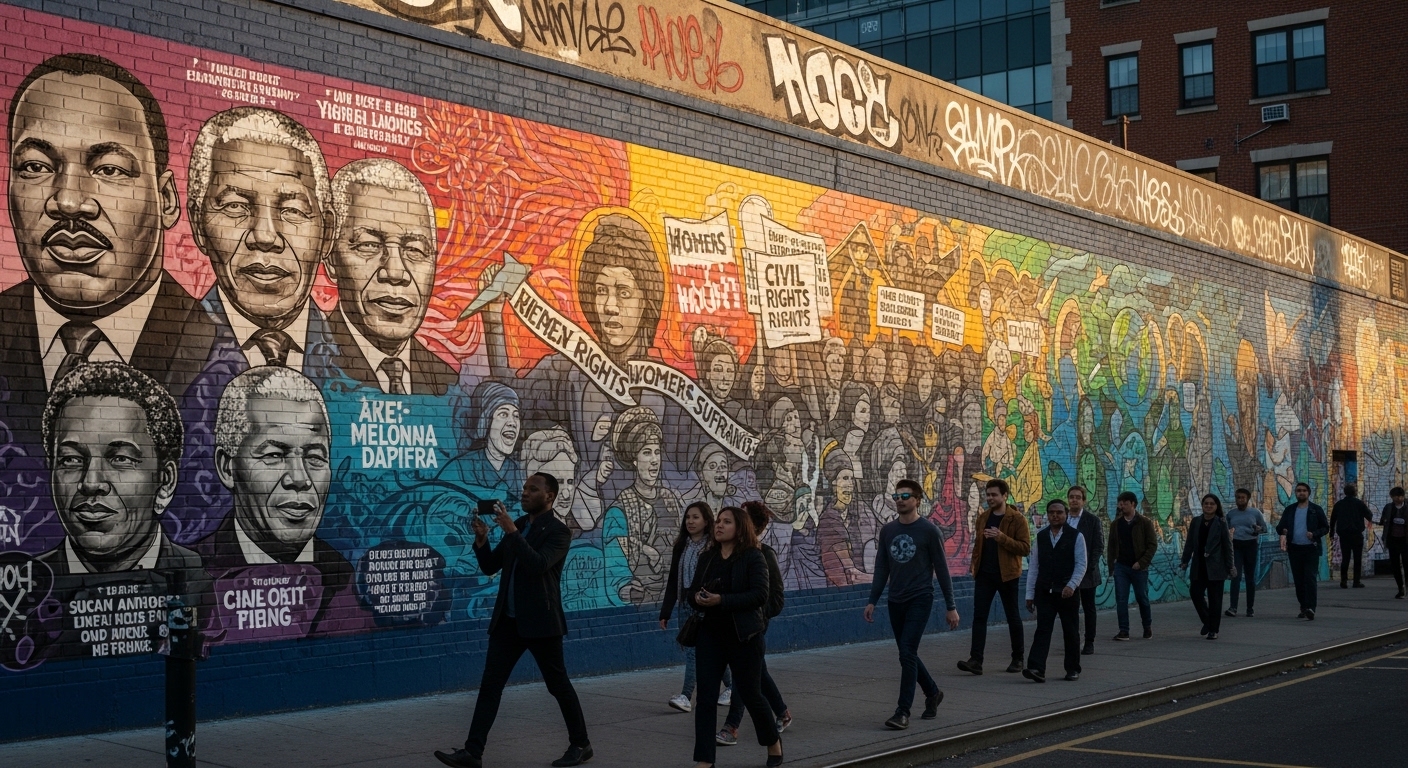
What if the walls of a city could speak? In many cities where street art tells local history, they already do. Across neighborhoods, alleyways, bridges, and abandoned warehouses, murals and graffiti transform blank concrete into living history books. These artworks don’t just decorate urban spaces. They document revolutions, honor forgotten heroes, celebrate cultural roots, and preserve community memory in ways museums sometimes cannot.
Street art has evolved from rebellion to recognition. What was once dismissed as vandalism is now respected as cultural storytelling. Travelers who explore cities where street art tells local history discover something deeper than colorful walls. They encounter voices of resistance, pride, struggle, and celebration painted boldly for the public to see. Have you ever walked past a mural and felt like you were stepping into a story you didn’t know before?
The Rise of Street Art as Public History
Street art began as an underground movement. It gave marginalized communities a way to speak when mainstream platforms ignored them. Over time, cities began recognizing the cultural power of murals. Instead of removing them, many municipalities now commission artists to capture local narratives visually.
Unlike textbooks, murals are immediate. They are accessible to everyone. There is no entry fee. No closing time. Just stories waiting to be noticed. In cities where street art tells local history, walls become democratic spaces of memory and identity.
Platforms such as National Geographic Travel have documented how urban murals preserve traditions, record social movements, and celebrate indigenous cultures. These artworks become public archives that evolve with each generation.
Philadelphia: The Mural Capital of America
Philadelphia stands as one of the strongest examples of cities where street art tells local history. Through the Mural Arts Program, thousands of murals now decorate neighborhoods across the city.
These artworks address civil rights struggles, immigration stories, labor movements, and African American heritage. Walking through Philadelphia feels like exploring an open-air museum. Each mural is layered with symbolism, color, and narrative depth.
Visitors can explore curated tours listed on Visit Philadelphia, offering guided experiences that explain the historical context behind the art. Would you rather explore a museum gallery or wander through entire neighborhoods shaped by public storytelling?

Berlin: Murals Born from Division and Reunification
Berlin is one of the most iconic cities where street art tells local history. After the fall of the Berlin Wall, artists from around the world transformed its remains into a canvas of freedom, protest, and reflection.
The East Side Gallery remains a powerful symbol of political transformation. Murals painted on the preserved sections of the Wall reflect hope, unity, and global solidarity. These works document not just German history, but global political change.
Travelers exploring Berlin through Visit Berlin often describe the experience as emotional. The art does not hide the past. It confronts it directly. Can street art help societies heal after political trauma?
Bogotá: Murals That Speak of Revolution and Identity
In Bogotá, Colombia, street art is intertwined with social justice and cultural pride. Once criminalized, graffiti is now protected under city law, recognizing its value as artistic expression.
Murals across neighborhoods depict indigenous leaders, political struggles, environmental activism, and Afro-Colombian heritage. These artworks openly discuss issues that formal institutions once avoided.
Travel guides like Lonely Planet Bogotá highlight graffiti tours as must-do experiences for visitors. Street art here is not decoration. It is dialogue. What stories would your city paint if every wall became a canvas?
Valparaíso: Chile’s Hills of Living Color
Valparaíso in Chile is another powerful example of cities where street art tells local history. The city’s steep hills are covered in murals reflecting maritime heritage, political movements, and poetic culture inspired by Pablo Neruda.
Street art in Valparaíso feels organic. It blends with staircases, rooftops, and narrow alleys. Artists use color to reflect the city’s resilience after earthquakes and economic hardship.
Exploring these hills reveals how art can revive neighborhoods and boost tourism while preserving authenticity. Would you climb steep streets just to uncover murals layered with generations of stories?
Melbourne: Laneways of Cultural Expression
Melbourne’s laneways are globally recognized for dynamic street art that evolves constantly. Unlike preserved murals elsewhere, Melbourne embraces change. Artworks appear, transform, and disappear in a continuous cycle.
While not always historical in a traditional sense, many pieces reflect indigenous history, immigration waves, and political commentary. Through this fluid creativity, Melbourne shows how history is not static but constantly rewritten.
Tourism resources like Visit Melbourne encourage visitors to explore Hosier Lane and surrounding areas for authentic artistic experiences.

Why Street Art Preserves History Differently
Traditional monuments often highlight dominant narratives. Street art, however, gives space to alternative perspectives. It amplifies voices of minorities, youth, activists, and marginalized communities.
In cities where street art tells local history, murals may portray undocumented stories. They may challenge official versions of events. They may celebrate local heroes overlooked by textbooks.
This democratization of storytelling reshapes how we experience urban history. Instead of reading plaques, we interpret colors, symbols, and faces staring back at us. Have you ever paused to decode the hidden meaning behind a mural?
Economic and Cultural Impact
Street art does more than preserve history. It revitalizes neighborhoods. Areas once neglected attract visitors, photographers, and small businesses. Cafés, galleries, and boutique shops often follow mural movements.
Cities where street art tells local history experience increased tourism while maintaining cultural depth. Murals become landmarks. They appear on postcards, travel blogs, and social feeds, generating organic promotion.
However, this growth raises questions about gentrification. As neighborhoods become popular, original communities may face displacement. How can cities balance cultural preservation with economic development?
The Future of Historical Street Art
As technology advances, street art is evolving. Augmented reality allows viewers to scan murals and access historical videos or interviews. Digital archives preserve artworks that may fade over time.
Young artists continue using walls as platforms for storytelling. Climate change, migration, gender equality, and political reform are becoming recurring themes.
The future of cities where street art tells local history depends on community support, legal protection, and recognition of murals as cultural heritage rather than vandalism.
Next time you travel, look beyond museums. Walk through residential neighborhoods. Explore alleyways. Pause at painted walls. Ask yourself: what is this city trying to tell me?
We would love to hear from you. Have you visited a city where murals left a lasting impression? Share your experiences and favorite destinations in the comments below.
Follow WentWorld.com on our social media platforms for more in-depth explorations of cities where culture, creativity, and history intersect in unexpected ways.
Catch up on the top stories and travel deals by subscribing to our newsletter!