Across centuries of human history, the night sky has always been a source of mystery, guidance, and inspiration. Long before modern telescopes and space agencies, civilizations carefully studied stars using stone structures, temples, and open-air observatories. Today, exploring ancient observatory travel routes offers travelers a rare chance to reconnect with this forgotten scientific heritage while experiencing cultures that once lived by the rhythm of the cosmos.
Unlike conventional tourism that focuses on beaches or cities, ancient observatory travel routes guide travelers through landscapes shaped by astronomy, mathematics, and spiritual observation. These routes reveal how ancient societies tracked celestial movements, predicted seasonal changes, and built monuments aligned with extraordinary precision.
Interestingly, many of these sites still exist in remarkably preserved forms. As a result, modern visitors can walk through spaces where ancient scholars once measured shadows, observed solstices, and mapped planetary motion. This creates an experience that feels both educational and deeply emotional.
Have you ever considered how humans understood time without clocks or satellites? What motivated ancient builders to align massive stones with sunrise points or lunar cycles? These questions become even more fascinating when standing at the very locations where early astronomy was born.
Why Ancient Observatory Travel Routes Still Fascinate Travelers Today
Although modern science has advanced significantly, curiosity about the universe has not diminished. In fact, it has grown stronger. Many travelers now seek destinations that combine history, science, and cultural storytelling, which makes ancient astronomy sites increasingly popular.
In addition, these journeys provide something that modern attractions often lack: silence, reflection, and wonder. Instead of digital screens or crowded spaces, travelers encounter vast skies, open landscapes, and monuments that speak through geometry and alignment.
Moreover, ancient observatory travel routes highlight how different civilizations independently developed advanced astronomical systems. For instance, societies in Europe, Asia, and the Americas all built structures aligned with celestial cycles, despite having no contact with each other.
On the other hand, these sites also raise important questions about human intelligence and cultural evolution. How did ancient engineers achieve such accuracy using only visual observation? Why did so many cultures dedicate monumental architecture to studying the sky? These mysteries continue to inspire both scientists and travelers.

Stonehenge and the European Sky Tradition
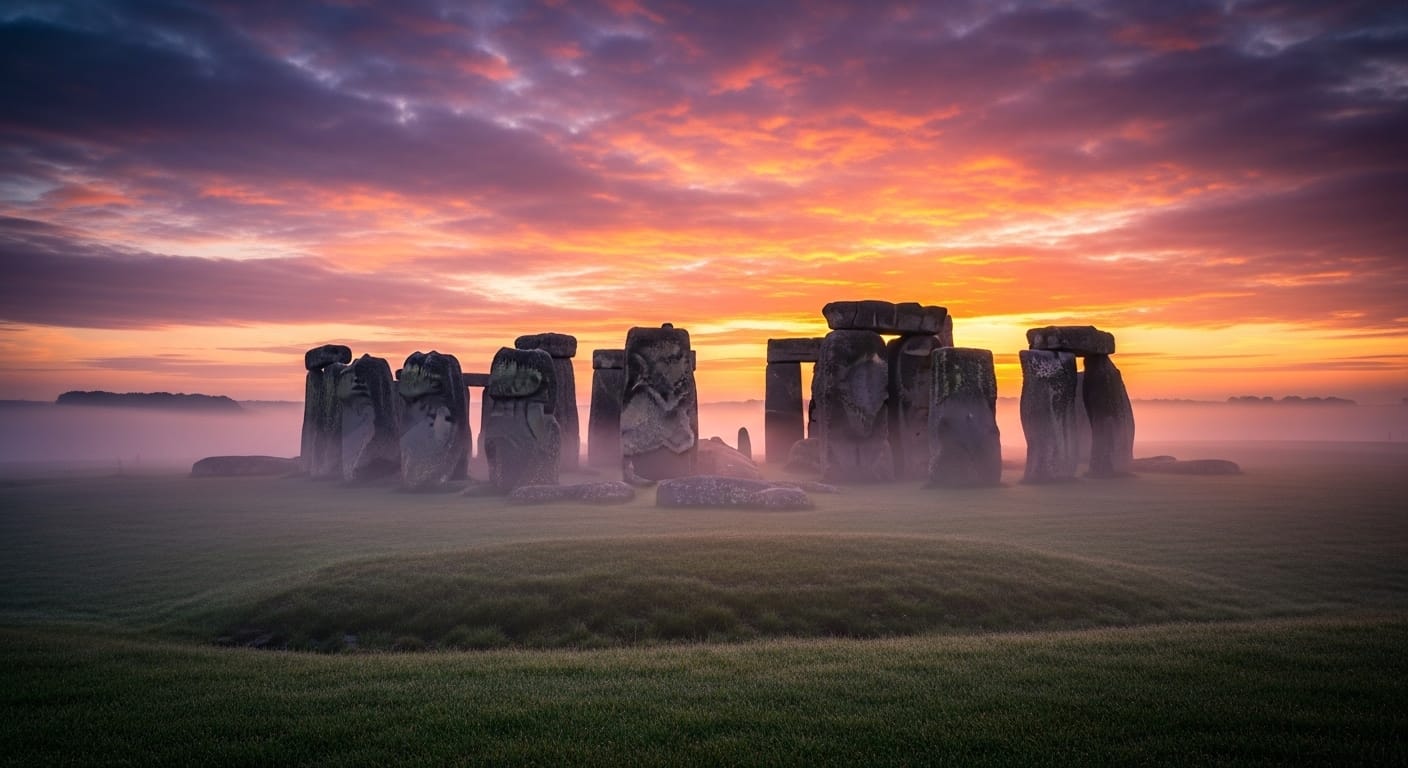
One of the most iconic stops along ancient observatory travel routes is Stonehenge in England. This prehistoric stone circle has fascinated researchers for centuries due to its precise alignment with solstices and lunar cycles.
Interestingly, Stonehenge is not just a collection of stones but a carefully engineered astronomical calendar. During the summer solstice, the sun rises directly in alignment with its structure, creating a powerful visual connection between Earth and sky.
Meanwhile, ongoing archaeological studies suggest that Stonehenge may have also served as a ceremonial site connected to seasonal rituals. As a result, it represents both scientific observation and cultural tradition in a single structure.
Visitors today often describe the experience as surreal. Standing among the stones while imagining ancient observers tracking the same sky creates a strong emotional link across time.
Jantar Mantar and the Precision of Indian Astronomy
Moving across continents, another remarkable destination within ancient observatory travel routes is the Jantar Mantar in Jaipur, India. Built in the 18th century, this astronomical complex contains massive instruments designed for measuring time, predicting eclipses, and tracking celestial bodies.
Unlike traditional observatories, Jantar Mantar uses architectural structures instead of optical devices. Each instrument is carefully aligned with celestial movements, demonstrating extraordinary mathematical precision.
In addition, the site reflects the intellectual vision of Maharaja Jai Singh II, who was deeply interested in astronomy. His work shows how science and leadership were interconnected in historical India.
Today, visitors can walk through giant sundials and shadow instruments that still function with impressive accuracy. This makes Jantar Mantar one of the most important stops in ancient observatory travel routes across Asia.
Chankillo and the Solar Genius of Ancient Peru
In South America, the Chankillo archaeological site in Peru stands as one of the oldest known solar observatories in the Americas. Built over 2,000 years ago, it features a series of towers aligned along a hill ridge.
Interestingly, these towers mark the position of the sun throughout the year. By observing the sun’s movement between them, ancient communities could accurately determine seasons and agricultural cycles.
As a result, Chankillo demonstrates how astronomy was essential for survival. Farming communities relied on celestial tracking to plan planting and harvesting cycles.
On the other hand, the site also reveals ceremonial importance, suggesting that astronomy and spirituality were deeply connected in Andean culture.
Mauna Kea and the Sacred Sky of Hawaii
Another significant location along ancient observatory travel routes is Mauna Kea in Hawaii. While it is now home to modern telescopes, it has long been considered sacred by indigenous Hawaiian culture.
Due to its high altitude and clear skies, Mauna Kea served as a natural observatory for early Polynesian navigators. They used stars to travel across vast ocean distances, relying entirely on celestial navigation.
Moreover, the mountain continues to hold cultural and spiritual importance. Many native traditions regard it as a sacred connection between Earth and the heavens.
Interestingly, Mauna Kea represents a unique intersection between ancient astronomy and modern scientific research, making it a powerful symbol within global astronomy travel routes.
Modern Science Meets Ancient Sky Knowledge
In Chile’s Atacama Desert, the ALMA Observatory represents one of the most advanced astronomical research facilities in the world. While modern in design, it is located in a region where ancient cultures once studied the sky with remarkable clarity due to extremely dry atmospheric conditions.
In addition, indigenous communities in this region developed their own celestial interpretations, many of which influenced agricultural and spiritual practices.
As a result, visiting such locations creates a bridge between ancient and modern astronomy. Travelers can observe how human curiosity about the universe has evolved while remaining fundamentally the same.
How Ancient Civilizations Built Sky Knowledge Systems
Unlike modern observatories that rely on advanced instruments, ancient civilizations used simple yet highly effective techniques. They observed shadow patterns, tracked horizon movements, and recorded long-term celestial cycles.
Moreover, many structures were built using geometric precision. Temples, stone circles, and towers were aligned with solstices, equinoxes, and planetary movements.
Interestingly, these systems were often passed down through generations, ensuring continuity of astronomical knowledge across centuries.
As a result, ancient observatory travel routes reveal not just architecture but entire knowledge systems embedded in stone and landscape.
Experiencing Ancient Observatory Travel Routes Firsthand
Traveling through these sites is not simply sightseeing; it is an immersive historical experience. Visitors often report feeling a deep sense of connection when standing in places where ancient scholars once studied the same sky.
Meanwhile, nighttime visits offer an even more powerful experience. Observing stars from ancient astronomical sites creates a unique blend of past and present perspectives.
Have you ever wondered how it feels to see the night sky from the same viewpoint as ancient astronomers? That sense of continuity is what makes these journeys unforgettable.

Challenges and Rewards of Astronomy Travel
Many ancient observatory travel routes pass through remote or environmentally sensitive areas. Therefore, travelers may encounter limited facilities or difficult terrain.
However, these challenges often enhance the authenticity of the experience. Reaching these destinations requires effort, which makes the reward even more meaningful.
In addition, responsible tourism plays a crucial role in preserving these fragile heritage sites. Organizations like UNESCO work to protect and maintain their historical integrity for future generations.
The Future of Ancient Observatory Travel Routes
As interest in cultural and scientific tourism continues to grow, ancient astronomy sites are becoming increasingly important travel destinations. Educational tourism, in particular, is driving renewed attention toward these historical observatories.
Furthermore, technologies such as augmented reality are helping visitors visualize how ancient instruments once functioned. This enhances understanding while preserving the physical integrity of the sites.
As a result, ancient observatory travel routes are evolving into interactive learning experiences that combine history, science, and technology.
Final Reflection on Ancient Observatory Travel Routes
Ultimately, exploring ancient observatory travel routes is about more than visiting old structures. It is about understanding how humanity has always looked to the sky for answers, meaning, and guidance.
From Stonehenge to Chankillo, from Jantar Mantar to Mauna Kea, each site tells a story of curiosity and innovation. Together, they form a global network of human effort to understand the universe.
What would you feel standing under the same stars that guided ancient civilizations thousands of years ago? That question alone makes this journey worth experiencing.
Stay connected with WentWorld for more immersive travel stories that explore history, culture, and science across extraordinary destinations worldwide.
Catch up on the top stories and travel deals by subscribing to our newsletter!