
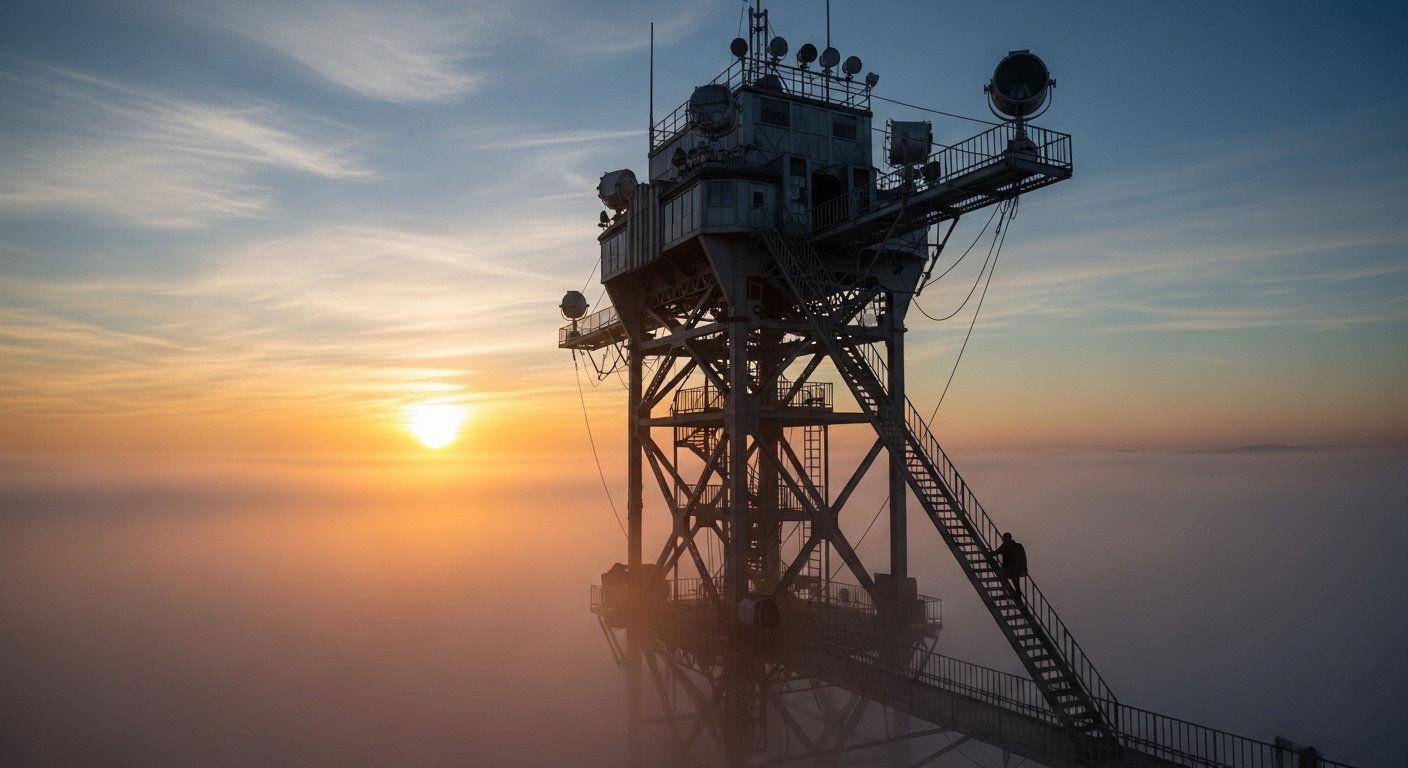
There is something quietly thrilling about discovering that airship mooring towers you can still climb still exist in our modern world. These towering relics were once designed for a future that never fully arrived — a future where massive airships docked in city centers, carrying passengers across continents through the sky. Today, many of these towers remain standing, not as functional transport hubs, but as powerful symbols of human ambition, imagination, and lost possibilities.
In an age dominated by jet engines and high-speed rail, it feels almost surreal to stand beneath a structure that was built for floating giants. These towers were created to guide, anchor, and service airships — massive lighter-than-air vessels that once represented the pinnacle of technological progress. Have you ever wondered what it would feel like to stand where passengers once looked up, waiting to board a craft that floated rather than roared?
This is a journey into airship mooring towers you can still climb, places where architecture meets forgotten dreams. Some are famous landmarks, others are hidden in quiet fields or industrial estates. All of them carry stories of hope, innovation, and the fragile nature of future visions.
Why Mooring Towers Were Once the Future
During the early 20th century, airships were seen as the ultimate solution for long-distance travel. They could carry passengers in luxurious cabins, glide smoothly above oceans, and land almost anywhere with the right infrastructure. Mooring towers were essential because airships were too large and fragile to simply park like airplanes.
These towers functioned like vertical harbors. An airship would approach, attach its nose to the tower, and remain tethered while passengers boarded or disembarked. Crews used winches, ropes, and rotating platforms to stabilize the vessel against wind. It was a complex dance between engineering and weather.
The idea was so compelling that major cities invested heavily in these structures. Some towers were placed in urban centers, others in military bases or remote airfields. For a brief moment in history, it seemed entirely possible that future skylines would include airships drifting between skyscrapers.
The Empire State Building: The Most Famous Failed Dock
Perhaps the most iconic example of airship mooring towers you can still climb is the mast atop the Empire State Building. Completed in 1931, the building was originally designed with an airship docking station at its peak.
Passengers were supposed to disembark directly into Manhattan from the sky. In theory, it was revolutionary. In reality, strong winds made docking extremely dangerous. Only one brief experimental docking ever occurred, and the idea was quickly abandoned.
Today, visitors can ascend the building via observation decks operated by esbnyc.com. While you cannot board an airship anymore, standing at the top still gives a sense of what the future once promised. Looking out over New York, it is easy to imagine silver giants hovering between towers, casting slow-moving shadows across the city.
Lakehurst Naval Air Station, New Jersey
Another deeply significant site is Lakehurst Naval Air Station, best known as the landing location of the Hindenburg disaster in 1937. This tragic event effectively ended the commercial airship era.
The mooring mast at Lakehurst still stands. It is not just a structure but a historical marker for the moment humanity lost faith in lighter-than-air travel. The tower itself is tall, simple, and industrial — a stark contrast to the luxury once associated with airship travel.
Today, visitors can explore the site through guided tours organized by local heritage groups and the U.S. Navy archives. Information is available through nps.gov for those interested in American aviation history.
Have you ever visited a place where history feels physically present, not just written on plaques but embedded in steel and concrete?

Cardington Airship Sheds, England
In the English countryside, near Bedfordshire, stand the massive Cardington Airship Sheds. These enormous hangars were built to house British military airships during the early 1900s.
Nearby stands a mooring mast that once guided giants like the R101, Britain’s most ambitious airship project. Although the sheds are no longer used for airships, the area remains a powerful reminder of how much faith was placed in these machines.
Organizations such as English Heritage highlight Cardington as one of the most impressive industrial relics in the UK. The sheer scale of the structures makes modern aircraft hangars look small by comparison.
Why Some Towers Survived and Others Didn’t
Many airship mooring towers were dismantled, abandoned, or simply forgotten as aviation evolved. Jets made long-distance travel faster, cheaper, and more reliable. Airships, with their vulnerability to weather and hydrogen risks, became obsolete almost overnight.
The towers that survived often did so because they were repurposed. Some became observation platforms, radio towers, or military installations. Others survived simply because demolishing them was too expensive.
There is something poetic about this. Structures built for a future that never came are now preserved by accident, standing as silent witnesses to a different technological timeline.
The Emotional Power of Climbing One
Climbing an airship mooring tower is not just a physical experience, it is an emotional one. The ascent is usually slow, often via narrow staircases or external ladders. As you climb, the world below shrinks and the sky feels closer.
At the top, there is rarely luxury or decoration. Just steel, wind, and open space. Yet the feeling is profound. You are standing in a place designed for something that no longer exists, but still feels alive through imagination.
Have you ever stood somewhere and felt like you were touching an abandoned version of the future?
Why These Towers Matter Today
In a world obsessed with constant upgrades and digital innovation, airship mooring towers remind us that not all futures succeed. Some ideas are brilliant, beautiful, and ultimately impractical. That does not make them failures; it makes them lessons.
These towers represent a moment when humanity believed travel could be slow, elegant, and environmentally gentle. Ironically, modern engineers are now revisiting airship concepts for sustainable cargo transport and low-emission travel.
Research institutions like NASA have explored lighter-than-air technologies for planetary exploration and atmospheric research. The idea never truly died; it simply changed shape.

Planning a Visit to Airship Mooring Towers
If you want to explore airship mooring towers you can still climb, planning is essential. Many towers are located on protected sites or private land. Some require guided tours, others are only accessible during specific events.
Always research safety guidelines and respect restricted areas. These structures are old, and while they are historically valuable, they were not designed for modern tourism standards.
Travel platforms like Atlas Obscura often feature rare or unusual locations, including mooring towers that remain accessible to the public.
Why Lost Futures Fascinate Us
There is a deep human fascination with lost futures — ideas that once felt inevitable but never arrived. Airship mooring towers belong to that category. They are physical reminders that progress is not always linear.
We build, we dream, we fail, and we adapt. These towers show that even failed visions can leave behind beauty, inspiration, and meaning.
Standing beneath one, it is hard not to wonder: what future ideas are we building today that may become relics tomorrow?
Final Thoughts from WentWorld
At WentWorld.com, we seek places that tell deeper stories than postcards. Airship mooring towers you can still climb are not just attractions; they are time machines. They take you back to an era where optimism floated in the sky and cities prepared for passengers arriving from the clouds.
We would love to hear from you. Have you ever climbed one of these towers or visited a forgotten aviation site? Did it change how you see travel and technology?
If you enjoy uncovering unusual travel stories and hidden landmarks, follow WentWorld.com on our social media platforms and stay connected with journeys that explore the past, present, and possible futures of our world.
Catch up on the top stories and travel deals by subscribing to our newsletter!









Leave a Reply
You must be logged in to post a comment.