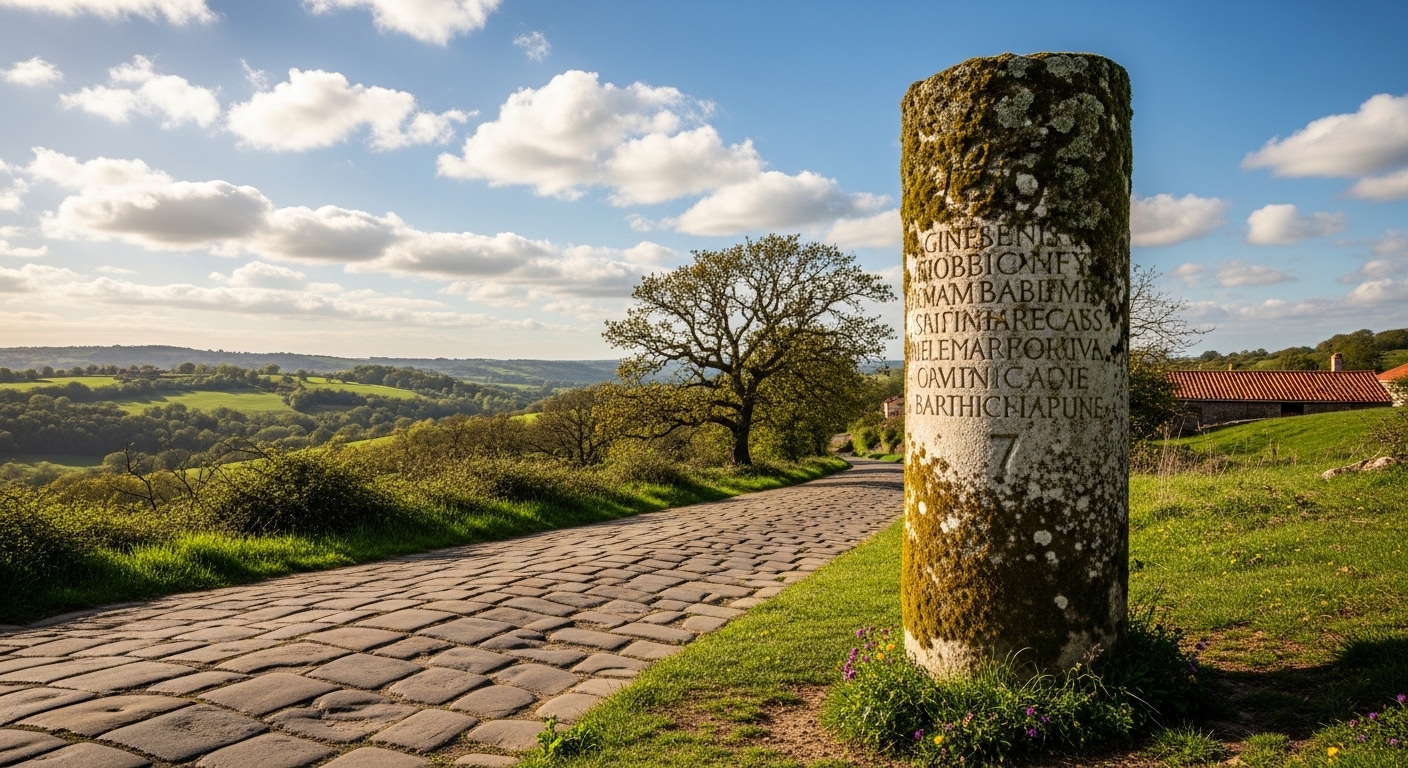
Ancient road milestones you can follow on foot are not dramatic monuments or towering ruins. Instead, they are quiet companions along forgotten paths, reminding travelers that someone once measured distance here long before modern maps existed. From Roman empires to medieval pilgrimage routes, these stones guided people through uncertainty, fatigue, and unfamiliar landscapes.
At first glance, many milestones appear unimpressive. They are often chipped, tilted, or partially buried. However, once you understand their purpose, they begin to feel deeply human. Each one represented progress, reassurance, and survival. Moreover, they told travelers that they were not lost, even in vast and unfamiliar terrain.
Today, walking beside ancient road milestones feels like entering a conversation across centuries. Rather than rushing from one attraction to another, you slow your pace. As a result, distance becomes meaningful again. Have you ever noticed how walking changes the way you understand a place?
Why Ancient Road Milestones Still Matter Today
Ancient road milestones mattered because they brought order to chaos. In a world without digital navigation, these stones offered clarity. More importantly, they created trust. Travelers knew that if a milestone stood here, the road was maintained and recognized by authority.
Additionally, milestones were symbols of power. Roman emperors often inscribed their names onto them, turning distance markers into political messages. Therefore, every mile reinforced imperial presence. Even now, reading those inscriptions connects modern walkers to ancient systems of control and communication.
Unlike modern highway signs, these stones feel personal. They sit at human height. They weather alongside the landscape. Consequently, they feel less like instructions and more like witnesses.
The Appian Way: Rome’s Enduring Stone Guide
The Appian Way remains one of the clearest examples of ancient road milestones you can follow on foot. Built in 312 BCE, it was engineered to last, and remarkably, it still does. Walking here feels grounded, almost meditative.
Along the route, several Roman milestones remain visible. Some are original, while others are carefully placed replicas. Nevertheless, each one marks the rhythm of ancient travel. Every stone represented effort already spent and effort still required.
Meanwhile, the surrounding silence contrasts sharply with modern Rome. Birds replace traffic. Footsteps replace engines. For context and preserved sections, resources from rome.net provide helpful historical insight.
Roman Roads in Britain: Straight Lines Through History
Roman roads in Britain reveal another side of milestone culture. These routes prioritized efficiency over comfort. As a result, they often cut straight through hills, forests, and valleys.
Several milestones survive near their original locations, especially in rural areas. Others have been moved to museums for protection. Still, walking these routes helps reconstruct how the Roman network functioned.
Furthermore, many modern British roads follow these ancient alignments. This continuity is striking. Information from English Heritage documents surviving milestones and road fragments across the countryside.

The Lycian Way: Milestones by the Mediterranean
In contrast to Roman highways, the Lycian Way follows a more organic route along Turkey’s coast. Although fewer milestones remain intact, carved stones and distance markers still appear in sections.
This trail once connected ancient cities like Patara, Myra, and Xanthos. Consequently, milestones here carried cultural weight as well as practical value. They linked commerce, diplomacy, and everyday life.
Today, hikers rely on modern guides. However, ancient travelers relied on stone. Historical context from kulturportali.gov.tr adds depth to the walking experience.
The Camino de Santiago and Its Roman Backbone
Many walkers approach the Camino de Santiago for spiritual reasons. However, beneath its religious identity lies an ancient Roman road system.
Several milestones were reused or repurposed over centuries. As a result, stones once marking imperial distances later guided pilgrims. This transformation reflects how infrastructure outlives ideology.
Walking past these markers creates a layered experience. You are not just walking a path. Instead, you are stepping through multiple historical eras at once. Details from spain.info highlight these transitions.
Milestones as Messages of Authority
Ancient road milestones rarely existed without intention. Roman inscriptions often included titles, honors, and restoration credits.
Therefore, each milestone reinforced loyalty. It reminded travelers who maintained the road and who controlled the land. Even centuries later, those messages remain readable.
Interestingly, walking beside these stones makes power feel distant yet present. You sense authority without fear, history without force.
Walking Ancient Roads Today
Following ancient road milestones on foot requires preparation. These routes are not always marked. Sometimes, they pass through farmland or merge with modern infrastructure.
For that reason, research is essential. Old maps, local guides, and heritage organizations help reconstruct paths. Moreover, many regions now promote slow tourism by preserving walkable ancient roads.
Ultimately, the reward is immersion. Distance feels earned. Progress feels physical.

The Psychology of Distance and Stone
Modern travel compresses space. Flights erase geography. In contrast, ancient milestones stretch distance back into awareness.
Each stone represented reassurance. It told travelers they were not alone on the road. Consequently, walking beside them today evokes empathy.
Have you ever noticed how a long walk changes your thoughts? Ancient roads encourage that transformation.
Preservation and Responsibility
Ancient road milestones are fragile. Weather, development, and vandalism threaten their survival.
Because of this, responsible walking matters. Observing without touching protects these markers. Institutions like UNESCO emphasize safeguarding cultural routes.
Respect ensures continuity. Without care, these stories disappear.
Why These Walks Matter Now
Ancient road milestones you can follow on foot offer something rare. They offer perspective.
Instead of consuming destinations, you participate in them. Each step becomes deliberate. Each mile becomes meaningful.
Have you ever chosen a route because of its history rather than convenience?
WentWorld.com believes travel is richer when movement slows. These roads remind us that journeys once shaped identity.
We invite you to reflect. Have you ever walked an ancient road or noticed a milestone along your path? Would you plan a trip simply to follow history on foot?
If thoughtful travel stories inspire you, follow WentWorld.com on our social media platforms and continue exploring journeys that connect past and present.
Catch up on the top stories and travel deals by subscribing to our newsletter!