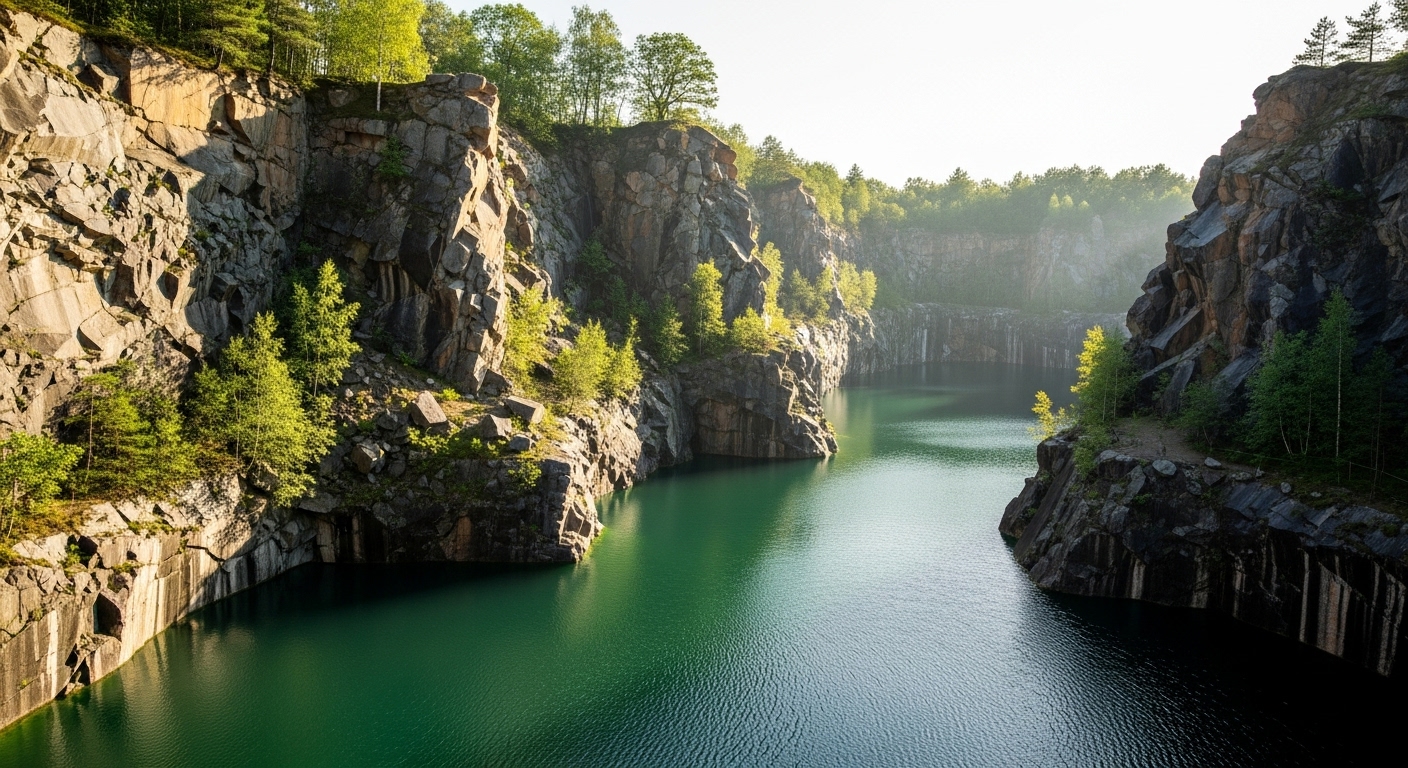
Ancient quarries reborn as lakes and parks tell some of the most unexpected comeback stories in the modern landscape. Places once carved open for stone, minerals, and marble now hold calm water, green trails, and public spaces where people walk, swim, and rest.
For centuries, quarries supplied the raw materials that built cities, monuments, and roads. When the stone ran out, many of these sites were abandoned, leaving behind vast pits and fractured terrain. Over time, nature slowly stepped in. Rainwater filled the voids, plants reclaimed the edges, and wildlife returned.
Today, these former industrial scars are being transformed intentionally. Cities and communities are reimagining them as lakes, parks, and cultural spaces that blend history with renewal.
Would you believe that some of the world’s most peaceful parks were once places of heavy labor and noise?
What Makes Ancient Quarries Ideal for Transformation
Quarries have unique physical characteristics that make them perfect candidates for reuse. Their deep basins naturally collect water, forming lakes without extensive engineering. Sheer rock walls create dramatic scenery, while their separation from residential zones offers space for large-scale projects.
Because many ancient quarries date back hundreds or even thousands of years, they already hold cultural value. Transforming them into public spaces allows cities to preserve history while offering something entirely new.
From Extraction Sites to Natural Sanctuaries
Ancient quarries reborn as lakes and parks often become accidental ecosystems long before redevelopment begins. Birds nest along rocky ledges, fish thrive in clean quarry water, and rare plants grow in mineral-rich soil.
Urban planners increasingly recognize this ecological potential. Instead of filling quarries or building over them, they enhance what nature has already started, turning former industrial zones into biodiversity hubs.
Butchart Gardens: A Famous Quarry Transformation
One of the most celebrated examples is the Butchart Gardens in British Columbia, Canada. Originally a limestone quarry, the site was transformed in the early 1900s into a lush garden landscape.
Today, it features sunken gardens, walking paths, and water features that attract visitors from around the world. Official visitor information can be found at Butchart Gardens.
Europe’s Quarry Lakes and Urban Parks
Across Europe, ancient quarries reborn as lakes and parks are quietly reshaping urban life. In Germany, flooded limestone quarries have become clear-water swimming lakes. In France, old stone pits now serve as protected green zones.
Many of these sites were once essential to constructing historic cities. Their transformation reflects a full-circle moment, where extraction gives way to restoration.
Italy’s Marble Quarries and New Green Futures
Italy’s Carrara region is world-famous for its marble, used in sculptures and architecture for centuries. While many quarries remain active, abandoned sections are being explored for ecological and cultural reuse.
Some former quarry areas are now hiking zones or scenic overlooks that reveal both the scale of human effort and the resilience of nature. Tourism boards such as Italia.it highlight these evolving landscapes.

Quarry Lakes as Urban Cooling Zones
In dense cities, quarry lakes serve another important purpose: temperature regulation. Large bodies of water help cool surrounding neighborhoods, making parks built around quarry lakes valuable climate assets.
As heatwaves become more common, ancient quarries reborn as lakes and parks offer relief while requiring less artificial intervention than newly constructed water features.
Asia’s Quarry Parks and Cultural Spaces
Several Asian cities have transformed old quarries into multifunctional public spaces. In China, quarry pits have become dramatic parks with walking paths carved into rock faces.
Some sites even host cultural events, concerts, and exhibitions within stone walls that once echoed with tools and machinery. These spaces blend heritage with modern urban life.
Swimming, Kayaking, and Quiet Recreation
Quarry lakes are often deeper and clearer than natural lakes, making them ideal for swimming and kayaking where permitted. Their enclosed nature reduces wave action, creating calm water environments.
However, safety regulations are strict. Many quarry lakes restrict access to designated zones to protect visitors and fragile ecosystems.
The Emotional Power of Reclaimed Landscapes
There is something deeply moving about walking through a place that has been healed rather than erased. Ancient quarries reborn as lakes and parks allow visitors to witness both human impact and recovery.
Rock walls tell stories of labor and craftsmanship. Water and greenery tell stories of patience and time.
Do you find places like this more meaningful than newly built parks?

Challenges of Quarry Redevelopment
Transforming quarries is not simple. Stability issues, water quality management, and access safety require long-term planning. Some quarries contain contaminants that must be carefully treated.
Despite these challenges, redevelopment often costs less than creating entirely new parks, especially when nature has already begun the process.
Community Involvement and Local Identity
Many successful quarry park projects involve local communities from the beginning. Residents help shape how the space is used, whether for quiet recreation, education, or cultural gatherings.
These parks often become symbols of local identity, reminding people where their city came from and how it continues to evolve.
Traveling to See Reborn Quarries
Visitors interested in ancient quarries reborn as lakes and parks can find them near major cities and rural areas alike. They often sit slightly outside tourist centers, offering quieter experiences.
Airlines such as Lufthansa and Air Canada connect travelers to regions known for quarry parks.
Why These Places Matter More Than Ever
As the world rethinks land use, quarry parks show how damaged spaces can be repaired rather than abandoned. They challenge the idea that extraction always leads to permanent loss.
Ancient quarries reborn as lakes and parks represent a shift in thinking, from consumption to care, from exploitation to coexistence.
If a place once shaped by industry can become a sanctuary, what other forgotten spaces around us deserve a second life?
Follow WentWorld for more stories that explore how landscapes, cities, and cultures transform in surprising ways.
Catch up on the top stories and travel deals by subscribing to our newsletter!