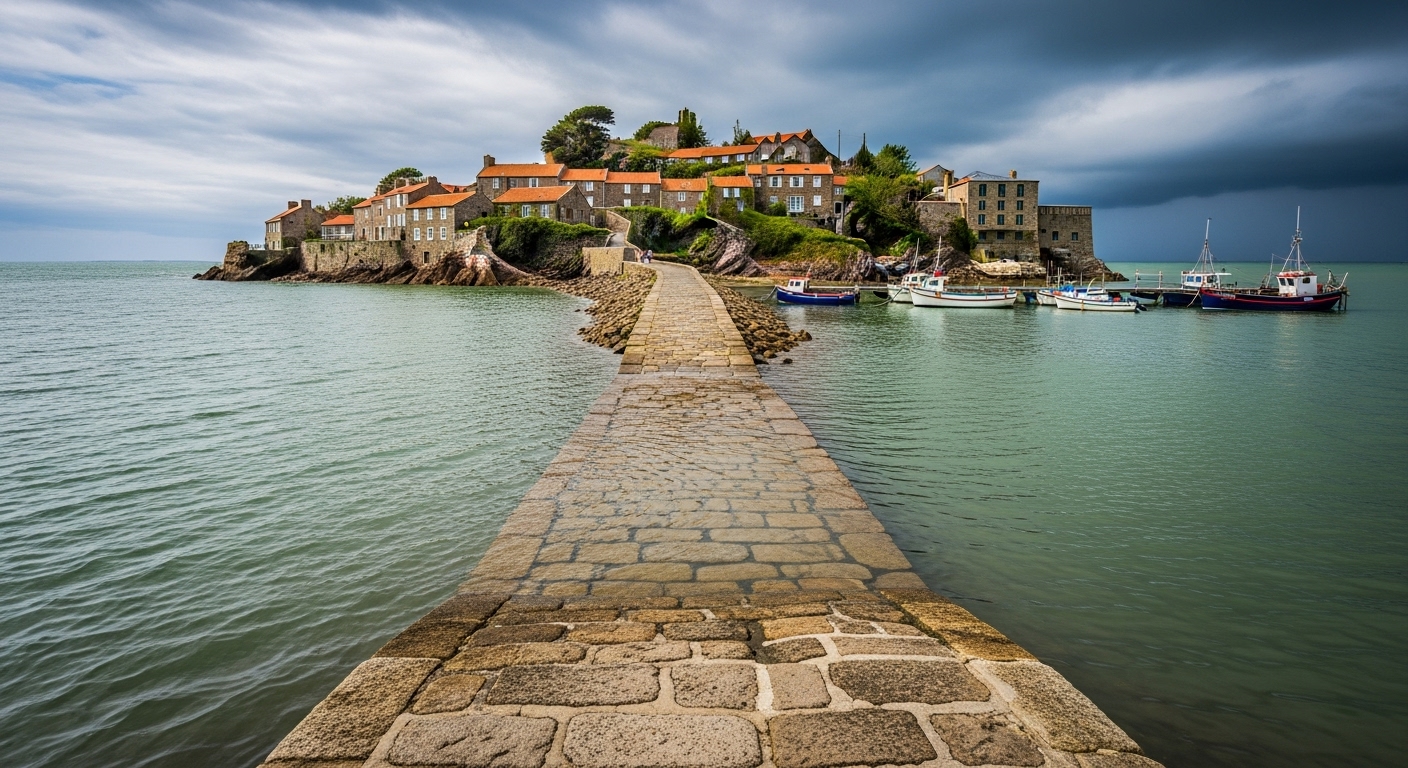
In most places, leaving town is as simple as starting the car or booking a train. Yet in a handful of extraordinary destinations, nature controls the schedule. These are coastal towns where the tides decide when you can leave, places where the ocean dictates movement, access, and daily life.
Here, roads disappear under water, causeways emerge only for a few hours, and ferries run according to lunar rhythms rather than clocks. For travelers, this creates an experience that feels both humbling and magical. Time slows down, and planning becomes part of the adventure.
Have you ever waited for the sea to retreat before continuing your journey? Exploring coastal towns where the tides decide when you can leave reveals how deeply some communities remain connected to the natural world.
Why Tides Control Access in Certain Towns
Tides rise and fall due to the gravitational pull of the moon and the sun. In areas with shallow coastlines, narrow channels, or natural causeways, this movement dramatically reshapes the landscape.
Some towns are connected to the mainland only by tidal roads. Others rely on ferry crossings that operate solely during specific water levels. When the tide comes in, routes vanish completely.
These environments demand patience and awareness. Locals learn to read tide charts as carefully as calendars.
Mont-Saint-Michel, France
Mont-Saint-Michel is one of the most famous examples of coastal towns where the tides decide when you can leave.
This medieval island commune is connected to mainland France by a causeway that becomes surrounded by water during high tide. At peak tidal moments, the abbey appears to float above the sea.
Visitors must plan arrivals and departures carefully, especially during spring tides when water rises rapidly. Learn more at Normandy Tourism.
Holy Island (Lindisfarne), England
Holy Island, also known as Lindisfarne, is accessible by a tidal causeway off England’s northeast coast.
Twice a day, the road floods completely, cutting the island off from the mainland. Clear warning signs and tide timetables are essential, as vehicles can become stranded.
This rhythm has shaped life on the island for centuries. It remains one of the most striking coastal towns where the tides decide when you can leave. More information is available at Visit Northumberland.
Fogo Island, Canada
Fogo Island, off the coast of Newfoundland, experiences dramatic tidal shifts that affect ferry schedules and access routes.
While not cut off by a road, the island’s connection to the mainland depends on sea conditions. Rough waters and tidal changes can delay travel plans.
The community has adapted to this uncertainty, embracing a slower pace of life shaped by the Atlantic Ocean. Learn more at Newfoundland and Labrador Tourism.
Isle of Skye’s Tidal Villages, Scotland
Several remote settlements around Scotland’s coastline, particularly near the Isle of Skye, experience limited access during high tides.
Old causeways, low-lying roads, and narrow coastal paths become impassable when water rises. Locals plan deliveries, travel, and workdays accordingly.
These areas quietly represent coastal towns where the tides decide when you can leave, even in modern Europe. More details can be found at VisitScotland.

Ganvie, Benin
Ganvie is a stilted village built entirely over water on Lake Nokoué.
Here, tides and water levels determine when boats can move freely. There are no roads, only waterways that expand and contract with seasonal changes.
Life in Ganvie revolves entirely around water rhythms, making it one of the most unique coastal towns where the tides decide when you can leave. Learn more at Benin Tourism.
Why Travelers Find These Towns Fascinating
Travelers are drawn to these places because they force a different relationship with time. There is no rushing the sea.
Miss the tide, and you wait. Catch it just right, and the journey feels earned. This creates a deeper awareness of nature’s power and beauty.
Many visitors say these towns feel more peaceful, grounded, and authentic.
Living With Tidal Schedules
For residents, tidal living becomes second nature. Schools, shops, and transport operate with flexibility.
Tide charts hang in homes and harbors. Children learn early how water levels shape daily routines.
This adaptability is part of the cultural identity in many coastal towns where the tides decide when you can leave.
Tips for Visiting Tidal Towns
- Always check local tide schedules.
- Arrive earlier than planned.
- Ask locals for safe crossing times.
- Never attempt flooded roads.
- Embrace waiting as part of the experience.

Why These Towns Matter
These destinations remind us that modern infrastructure has limits. Nature still sets boundaries.
They also highlight sustainable living, patience, and respect for the environment. In a fast-paced world, such places quietly teach us to slow down.
Coastal towns where the tides decide when you can leave offer more than scenic views. They offer perspective. Would you plan your journey around the sea’s schedule? Share your thoughts with us, and follow WentWorld on our social media platforms for more destinations shaped by nature, time, and tradition.
Catch up on the top stories and travel deals by subscribing to our newsletter!