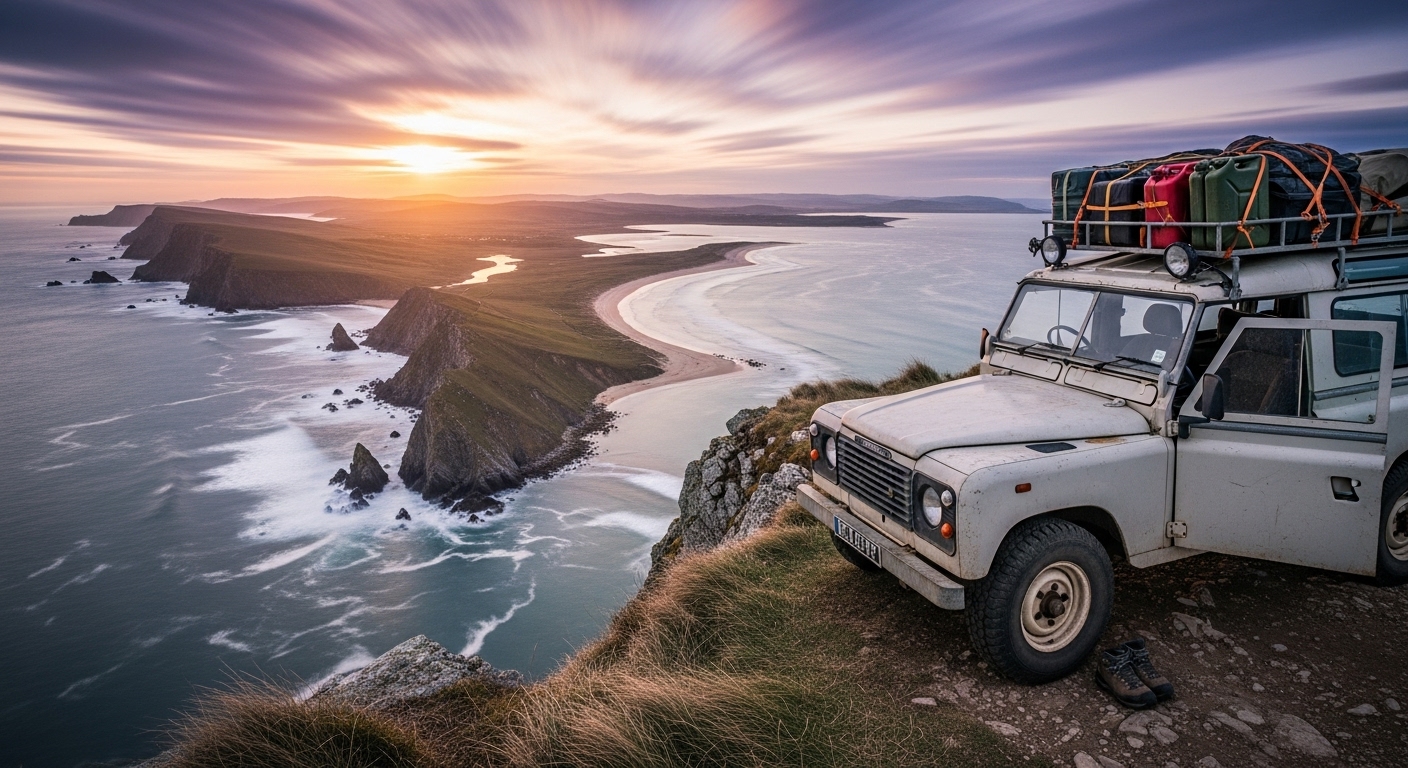
Some coastlines are beautiful — and then there are those that feel straight out of a fantasy novel. Welcome to the causeway coastlines of the world, where geology meets mythology, and every rock seems to whisper an ancient story. These natural bridges, basalt columns, and rugged shores aren’t just destinations — they’re masterpieces carved by time, waves, and volcanic fire.
If you’ve ever stood on a cliff edge, hearing the ocean thunder below and seeing hexagonal stones stretch into the horizon, you know how awe-inspiring such places can be. They don’t just show you nature — they remind you of how small and incredible our planet truly is. From Ireland’s legendary Giant’s Causeway to Iceland’s dramatic basalt caves, causeway coastlines are proof that Earth knows how to sculpt art better than any human ever could.
What Makes a Causeway Coastline So Unique?
It all starts with volcanoes and time. Millions of years ago, molten lava met the cooling sea, solidifying into symmetrical basalt columns that cracked and stacked into perfect geometric patterns. These formations, shaped by natural cooling processes, create the illusion of giant-built pathways — causeways that seem to invite you to walk toward the horizon.
But here’s the thing — no two causeway coastlines are exactly the same. Some are rough and sharp, others smooth and layered. Some reach deep into caves, while others rise like giant staircases above the waves. And though their origin is scientific, their atmosphere feels otherworldly.
The Giant’s Causeway, Northern Ireland: The Icon
No conversation about causeway coastlines is complete without mentioning the Giant’s Causeway — the most famous basalt wonder in the world. Located on Northern Ireland’s Antrim Coast, this UNESCO World Heritage Site is home to over 40,000 interlocking basalt columns, formed about 60 million years ago. The most astonishing part? They fit together so neatly that it looks like someone planned it.
According to legend, the Irish giant Finn McCool built this causeway to cross the sea and fight his Scottish rival, Benandonner. When he saw how enormous Benandonner was, Finn fled home — and his clever wife disguised him as a baby. The Scottish giant, seeing the “baby,” panicked and retreated, tearing apart the causeway in his escape. Science tells a different story, but the magic of the myth still lingers in the sea breeze.
Visiting the Giant’s Causeway today is both humbling and surreal. You can climb over the stones, feel the texture of time beneath your hands, and watch the Atlantic crash dramatically against the black formations. And when the light hits just right, it’s pure cinematic gold.
Iceland’s Basalt Caves and Arches: The Arctic Sculptures
Iceland might be the land of fire and ice, but it’s also the land of basalt. All across its coast, volcanic eruptions and ocean waves have conspired to create mesmerizing shapes — arches, pillars, and cliffs that look like they belong on another planet.
- Reynisfjara Beach: The iconic black sand beach near Vík is lined with basalt columns that rise like organ pipes. The contrast of dark stone and white surf is unforgettable — just keep an eye on the waves, which can be fierce and unpredictable.
- Dyrhólaey Arch: A stunning natural arch carved by the Atlantic, where puffins nest and sunsets paint the sky in fiery colors. You can even walk above it for panoramic views of Iceland’s southern coast.
- Stuðlagil Canyon: Inland but equally stunning, this canyon’s turquoise river is framed by towering basalt walls. It’s one of Iceland’s hidden gems that photographers can’t resist.

These landscapes don’t just invite exploration — they demand it. You’ll want to stop at every turn, take a hundred photos, and still feel like you’ve only scratched the surface of their beauty.
Scotland’s Fingal’s Cave: Where Music Meets Stone
Across the water from Ireland’s Giant’s Causeway lies its geological sibling — Fingal’s Cave on the Isle of Staffa, Scotland. It’s made of the same type of basalt columns, suggesting that both were once part of the same massive lava flow. But Fingal’s Cave adds something extra: acoustics.
When waves crash into the cave’s hollow interior, the sounds resonate like a cathedral organ. The effect is hauntingly beautiful — a natural symphony born from rock and sea. The cave’s musical magic even inspired composer Felix Mendelssohn to write the “Hebrides Overture” after his visit in 1829. Talk about art inspiring art.
Other Marvels Around the World
- Devils Postpile, USA: In California’s Sierra Nevada, this lesser-known basalt formation resembles a tidy wall built by nature’s best architect. The hexagonal columns rise neatly from the ground, topped by polished glacial surfaces.
- Takachiho Gorge, Japan: This narrow, emerald-green gorge features basalt cliffs that line the river like carved teeth. Row a boat beneath its waterfall and feel like you’re drifting through a myth.
- Los Organos, Spain: On the island of La Gomera, basalt cliffs rise vertically from the sea like the pipes of a massive organ — hence the name. They’re best admired from the water, where boats drift beneath their towering face.
Why These Places Feel So Magical
Yes, geology explains causeway coastlines, but their impact is more emotional than scientific. There’s something spiritual about seeing the raw bones of the Earth — untouched, ancient, and perfectly imperfect. You can feel the planet’s history in every stone.
Standing among those columns, you might find yourself asking: How can something so precise come from chaos? How can something so old still look alive? Maybe that’s why so many myths surround these places — humans have always needed stories to match the wonder in front of them.
How to Explore Responsibly
- Stay on marked paths: Basalt columns can be slippery and fragile. Avoid climbing in areas where it’s not permitted.
- Respect the rhythm of nature: Watch tides, winds, and wildlife — especially in regions where seabirds nest or waves are unpredictable.
- Go early or off-season: These destinations are popular. Visiting at sunrise or during shoulder months helps preserve the peace (and gives you better photos!).
- Leave no trace: Always carry out what you bring in. Nature carved these wonders — let’s keep them pristine.
Otherworldly Connections: Nature and Myth Intertwined
From Ireland’s giants to Japan’s river spirits, every causeway coastline comes with stories that bridge the gap between Earth and imagination. Maybe it’s because they feel so intentional — as if they were built for something divine. And perhaps, in a way, they were. After all, what is nature if not a slow, patient artist crafting cathedrals out of stone?
So here’s the question — if you could stand where giants once roamed, would you? Would you trace the edges of cliffs shaped by fire and time, knowing you’re walking across the same stones that have witnessed millions of years of Earth’s memory?
These causeway coastlines remind us that the world still has places where nature takes center stage — where silence, salt air, and stone speak louder than anything human-made. So pack your curiosity, lace up your boots, and follow the rhythm of the rocks. The giants might be gone, but their pathways remain. Have you visited a basalt coastline that took your breath away? Or maybe you have one on your travel list? Share your thoughts in the comments — we’d love to hear which natural wonder has left you in awe. And don’t forget to follow us on our social media platforms for more inspiring travel stories from around the globe!
Catch up on the top stories and travel deals by subscribing to our newsletter!