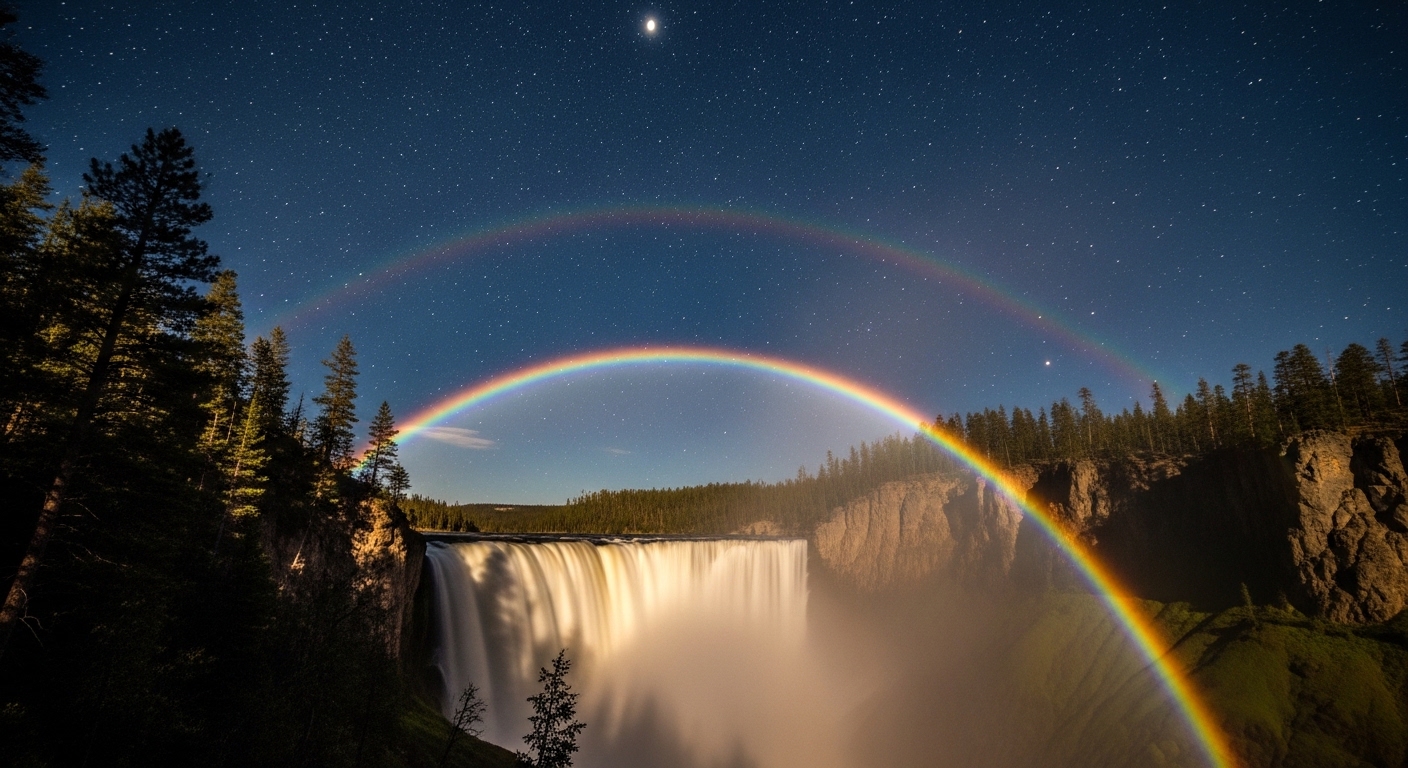
Some travelers chase sunsets. Others hunt northern lights. But a rare group of explorers seek something even more elusive: fogbow & moonbow lookouts with best seasons. These atmospheric wonders are among the most mysterious natural phenomena on Earth, appearing quietly, briefly, and often when no one is watching. Unlike traditional rainbows, fogbows and moonbows feel almost mythical — pale arcs floating through mist or glowing softly under moonlight.
Have you ever stood on a mountain ridge or waterfall at night and felt like the air itself was glowing? That might have been a moonbow. Or walked through thick coastal fog and noticed a ghostly white halo ahead? That could have been a fogbow. These phenomena don’t shout for attention — they whisper. And once you see one, you never forget it.
In this WentWorld guide, we explore the world’s most reliable fogbow & moonbow lookouts with best seasons, explain how these rare bows form, and help you plan your own hunt for nature’s most subtle rainbows.
What Is a Fogbow and Why Is It So Rare?
A fogbow is a type of rainbow formed not by raindrops, but by extremely small water droplets suspended in fog. Because the droplets are so tiny, the light bends differently, producing a bow that is almost entirely white, with faint hints of red or blue along the edges.
Fogbows usually appear opposite the sun when the sun is low in the sky, especially during early mornings in foggy coastal or mountainous areas. They’re sometimes called “white rainbows” or “ghost bows” because of their pale, ethereal appearance.
Unlike rainbows, fogbows require very specific conditions: dense fog, bright sunlight, and a clear line of sight. This makes them rare and unpredictable — even in places where they occur frequently.
What Is a Moonbow and Why It Feels Unreal?
A moonbow is a rainbow created by moonlight instead of sunlight. It forms the same way as a regular rainbow, but the light source is the moon — specifically a bright, nearly full moon.
Moonbows are usually colorless to the naked eye because human vision struggles in low light. Long exposure photography reveals their true colors: soft reds, greens, and blues shimmering across the night sky.
Moonbows require three things:
• A bright moon
• Water droplets (from waterfalls, mist, or rain)
• A dark sky free from light pollution
This is why fogbow & moonbow lookouts with best seasons are often located in remote natural environments rather than cities.
Why People Travel Specifically for Fogbows and Moonbows
Fogbows and moonbows represent a different kind of travel experience. They aren’t guaranteed. They don’t happen on schedule. And they can’t be booked in advance. Seeing one requires patience, awareness, and often a bit of luck.
This unpredictability is exactly what makes them special. Unlike tourist landmarks, these phenomena feel personal. You don’t just visit them — you witness them.
Have you ever chased a natural phenomenon instead of a destination?

Yosemite National Park, USA
Yosemite is one of the most famous fogbow & moonbow lookouts with best seasons in the world. During spring snowmelt, massive waterfalls like Yosemite Falls and Bridalveil Fall produce constant mist — perfect for moonbows.
Moonbows here are most common between April and June, especially during full moon nights with clear skies. Rangers even publish moonbow prediction schedules.
More information can be found via Yosemite National Park.
Victoria Falls, Zambia & Zimbabwe
Locally called “The Smoke That Thunders,” Victoria Falls creates one of the strongest moonbow displays on Earth. The sheer volume of mist allows moonbows to appear regularly during full moons.
The best season runs from February to July, when water levels are high.
Travel details are available through Zambia Tourism.
Hawaii Volcanoes National Park
Hawaii offers both fogbows and moonbows depending on elevation and weather. Coastal cliffs produce fogbows during sunrise, while waterfalls like Wailua Falls are known moonbow hotspots.
Best seasons vary, but winter offers the most consistent mist and moon visibility.
More details via Go Hawaii.
Scottish Highlands
The Highlands are one of Europe’s most reliable fogbow regions due to persistent fog, low sun angles, and dramatic terrain. Moonbows also appear near waterfalls during full moon nights.
Best months are September to March when fog frequency increases.
Planning info at Visit Scotland.
Iceland’s Skógafoss Waterfall
Skógafoss produces near-constant mist, making it ideal for both fogbows and moonbows depending on time of day.
Winter offers moonbows with minimal light pollution. Summer produces fogbows during early morning fog.
See Visit Iceland.

Best Seasons for Fogbows vs Moonbows
Fogbows:
• Coastal regions: Autumn and winter mornings
• Mountains: Late summer and fall
• Best time: Just after sunrise
Moonbows:
• Waterfalls: Spring snowmelt
• Tropics: Year-round during rainy seasons
• Best time: Full moon between 10 PM – 2 AM
Do you prefer waking before dawn or staying up past midnight for nature?
Why These Phenomena Are Becoming More Popular
As travel becomes more experience-driven, people seek rare moments instead of famous landmarks. Fogbows and moonbows offer emotional travel — moments that feel discovered, not consumed.
Social media has also played a role. Long-exposure photography reveals colors invisible to the eye, inspiring travelers to hunt for these visual secrets.
The Emotional Impact of Seeing One
Most people describe their first fogbow or moonbow as surreal. There’s no sound. No crowd. No sign. Just a quiet arc of light floating through air.
It feels less like sightseeing and more like witnessing a hidden layer of reality.
Would you travel thousands of miles for something that might only last 30 seconds?
Share your thoughts and dream destinations in the comments. And follow WentWorld.com on social media for more journeys into the rarest corners of travel.
Catch up on the top stories and travel deals by subscribing to our newsletter!