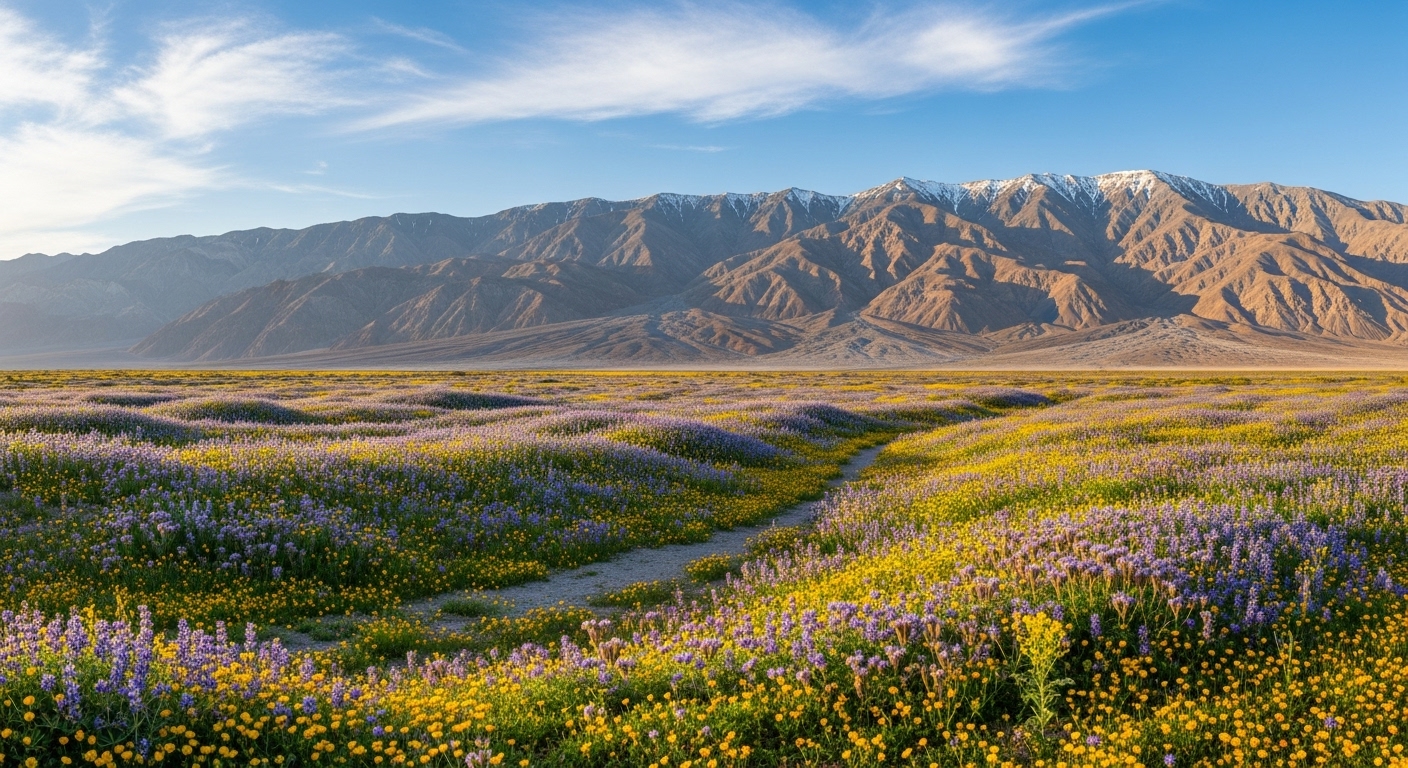
Imagine standing in the middle of what’s usually a barren, sun-scorched desert — only to find yourself surrounded by a sea of color. Violets, yellows, oranges, and pinks stretching to the horizon, carpeting the sand like nature’s own festival. These rare, fleeting miracles are known as desert blooms, and if you’ve ever dreamed of witnessing one, it’s time to learn how to become a true desert bloom chaser.
For most of the year, deserts look dry, empty, and lifeless to the casual observer. But under the surface, thousands of seeds lie sleeping — waiting for just the right amount of rain, sunlight, and temperature to awaken. When conditions align, what follows is nothing short of breathtaking. Fields of flowers burst into life, creating one of the most extraordinary displays on Earth. The phenomenon doesn’t happen every year, which makes chasing it even more special.
What Makes a Desert Bloom Happen?
Deserts might seem like the last place for flowers, but they’re actually home to resilient ecosystems. Wildflowers like the desert marigold, sand verbena, and evening primrose thrive when conditions are just right. What triggers a bloom? It’s all about timing — a rare combination of rainfall, cooler temperatures, and a pause in harsh winds.
Usually, a strong rainy season sets the stage. Seeds that may have lain dormant for years finally sprout, and within weeks, the desert transforms into a vivid dreamscape. If the temperatures rise too quickly, though, the flowers fade just as fast. That’s why planning your trip as a desert bloom chaser requires both patience and timing — the show can last anywhere from a few days to a few weeks.
Top Desert Bloom Destinations Around the World
Want to know where to find these colorful spectacles? Let’s take a journey through some of the world’s most stunning (and surprising) bloom destinations.
1. Death Valley, California, USA
One of the most famous locations for super blooms, Death Valley lives up to its name most of the year — harsh, hot, and seemingly lifeless. But when winter rains arrive, the desert explodes with life. Desert gold, evening primrose, and sand verbena stretch across the valley floor in shades of yellow, purple, and white.
Locals call it a “super bloom,” and it only happens once every decade or so. The last few major ones drew crowds of photographers, travelers, and nature enthusiasts from around the world. If you’re lucky enough to catch one, it’s an unforgettable experience.
2. Atacama Desert, Chile
Down in South America, the Atacama Desert is one of the driest places on Earth. Yet, even here, magic happens. Every few years, rainfall transforms this Martian landscape into a vibrant canvas of pinks and purples. The Chilean government even tracks the phenomenon, so visitors can plan ahead. Local towns like Copiapó turn into colorful hubs during bloom season, welcoming travelers eager to witness the spectacle.

3. Namaqualand, South Africa
Each spring (August to September), South Africa’s Namaqualand region bursts into color. Orange daisies, lilies, and succulents turn the dusty plains into a painter’s paradise. Locals often plan road trips just to see it — a true pilgrimage for flower lovers. The diversity here is astounding, with over 3,500 plant species, many found nowhere else on Earth.
4. Western Australia’s Wildflower Trail
Australia’s deserts and bushlands also come alive each year with over 12,000 wildflower species. From the outback near Perth to the Coral Coast, you’ll find breathtaking displays of everlastings, orchids, and wattles. Western Australia’s government even provides maps and updates for travelers planning a wildflower road trip — perfect for anyone ready to be a desert bloom chaser.
5. Arabian Desert, Oman
The Arabian Peninsula’s arid lands occasionally host rare wildflower blooms after unexpected rains. The Dhofar region, for instance, becomes lush and green during the khareef (monsoon) season, creating a surreal transformation in what is normally a harsh desert landscape.
When to Go: Timing Is Everything
Now, here’s the tricky part — predicting a bloom. Even meteorologists sometimes get it wrong. That’s why many desert bloom chasers follow social media groups, weather reports, and even local park rangers for updates. In California, for example, you can check the U.S. National Park Service website for real-time reports. In South Africa or Chile, local tourism boards provide similar updates.

If you want to plan smartly, here’s a general guide:
- North America: February to April
- South America: September to November
- Africa: August to September
- Australia: July to October
Remember, it’s not just about the month — it’s about rainfall patterns, temperature shifts, and sometimes, pure luck.
What to Bring When Chasing a Desert Bloom
Desert conditions can be unpredictable. It might be cool and breezy one morning and blazing hot the next afternoon. To stay comfortable and safe, make sure to bring:
- Plenty of water (dehydration happens quickly in dry climates)
- A hat, sunscreen, and sunglasses
- Sturdy shoes or hiking boots
- A camera or drone (trust us, you’ll want the photos!)
- A map or GPS — cell service can be spotty in remote regions
Respect the environment while you’re there. Stay on designated paths, avoid picking flowers, and don’t trample delicate plants. The blooms may seem endless, but they’re incredibly fragile.
Why Desert Blooms Feel So Magical
Part of what makes desert blooms so extraordinary is their impermanence. They remind us that beauty often exists in fleeting moments. You can’t force a bloom — you can only wait, watch, and hope nature decides to perform. That makes seeing one feel almost like being part of a secret that not everyone gets to witness.
Standing in the middle of a desert filled with flowers changes how you see the world. It’s a reminder that life thrives even in the harshest places — that resilience can be breathtaking.
Becoming a True Desert Bloom Chaser
Being a desert bloom chaser isn’t just about photography or travel; it’s about patience, respect, and appreciation. You might travel thousands of miles and not see a bloom — or you might stumble upon one by surprise. That uncertainty is part of the adventure.
Start by following regions known for their periodic super blooms. Connect with online communities of nature lovers who share real-time updates. Some travelers even plan flexible road trips, staying within driving distance of potential bloom areas and moving when reports come in. It’s part detective work, part devotion.
Would you plan a trip around a rare bloom? Have you ever witnessed a desert transform into a garden overnight? How far would you travel for a once-in-a-decade natural event?
We’d love to hear your stories! Drop your thoughts or experiences in the comments below — and maybe share a photo of your favorite bloom moment! Deserts often symbolize emptiness or isolation. But for those who chase their beauty, they become places of awe and transformation. To stand in a blooming desert is to see the Earth breathe — to witness resilience in its most vibrant form.
So, next time you hear about an unexpected rainfall in a desert somewhere, maybe don’t just scroll past the news. Pack a bag, grab your camera, and go chase that fleeting magic. Because once the petals fall and the heat returns, you’ll know you witnessed something that may not happen again for years. Follow us on our social media platforms for more unique travel inspiration and once-in-a-lifetime adventure ideas!
Catch up on the top stories and travel deals by subscribing to our newsletter!