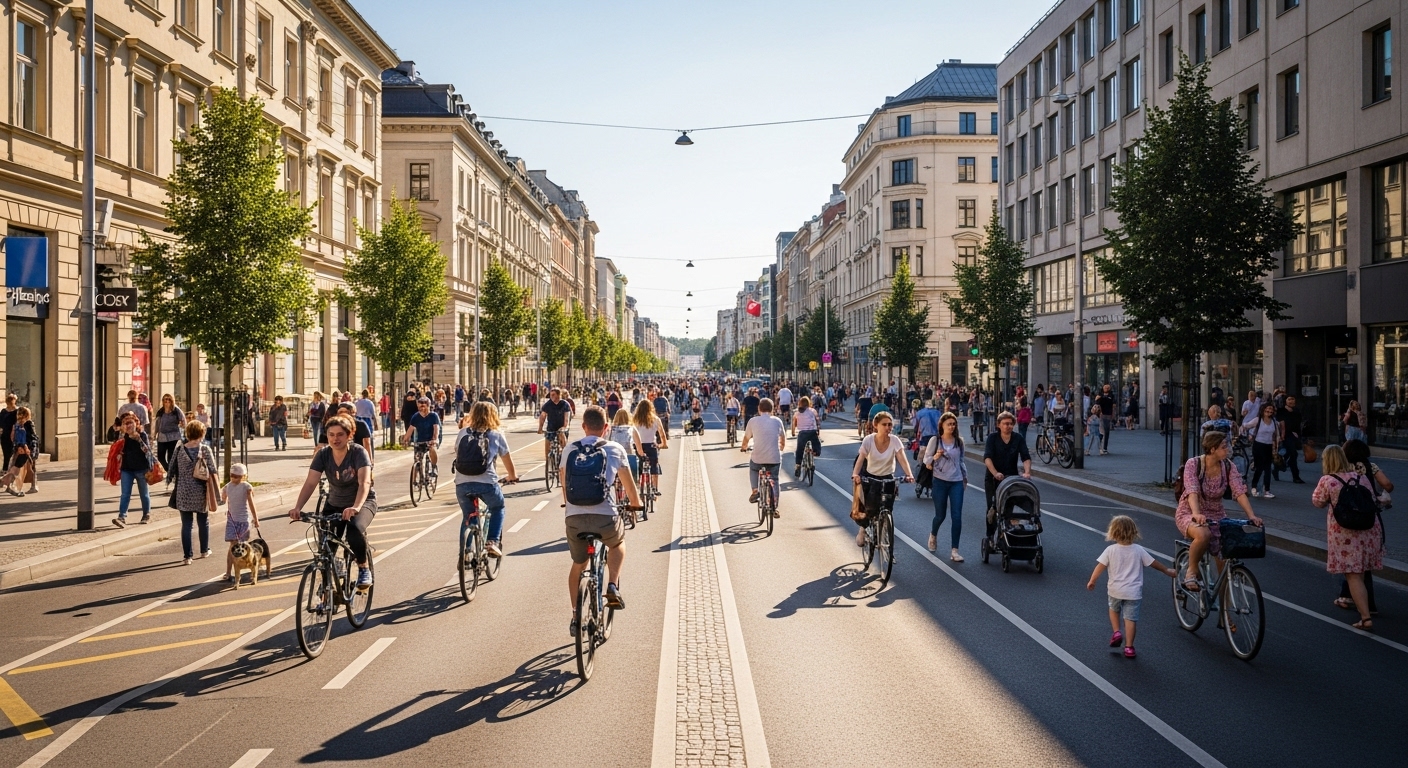
Once a week, in cities around the world, something quietly powerful happens. Engines go silent, streets open up, and neighborhoods breathe differently. Cities with weekly car-free Sundays transform roads normally dominated by traffic into shared public spaces filled with walkers, cyclists, families, and music.
These weekly pauses are not festivals in the traditional sense. They are intentional resets. Cities with weekly car-free Sundays remind residents and visitors alike that streets can be more than transit corridors. They can be places to connect, move freely, and experience urban life at a human pace.
Have you ever wondered what your city would feel like if cars simply stepped aside for a day?
What Are Weekly Car-Free Sundays
Weekly car-free Sundays are planned initiatives where selected streets or entire districts are closed to private vehicles on a recurring basis, usually every Sunday. Unlike one-time events, these programs are predictable and consistent, allowing people to build routines around them.
Some cities close a single main boulevard, while others block multiple neighborhoods or city centers. Emergency services, public transport, and essential vehicles continue to operate, but private cars stay off the streets. The result is a city that feels calmer, safer, and unexpectedly spacious.
Why Cities Commit to Car-Free Sundays
Cities with weekly car-free Sundays aim to improve quality of life. Reduced traffic lowers air pollution and noise levels. Streets become safer for children, elderly residents, and cyclists. Businesses often see increased foot traffic, while communities gain space to interact.
These programs also act as living experiments. City planners observe how people use streets when cars are removed. This insight influences long-term urban design, pedestrian zones, and cycling infrastructure.
Could one day a week change how a city thinks about mobility?
Famous Cities Leading the Movement
Bogotá is widely known for its weekly car-free program called Ciclovía. Every Sunday, over 100 kilometers of roads close to cars and open to people. Millions participate weekly, turning the city into one of the largest public spaces in the world. Information about urban initiatives in Colombia is available through Colombia Travel.
Paris also embraces car-free Sundays along sections of the Seine. Residents stroll, cycle, and relax where traffic once dominated. These weekly closures reinforce the city’s broader push toward pedestrian-friendly urban living, highlighted by Paris Info.

In Mexico City, Paseo de la Reforma closes to cars every Sunday, inviting families, joggers, skaters, and cyclists to reclaim one of the city’s most important avenues. Similar initiatives exist across Latin America, Europe, and Asia, each adapted to local culture.
What Streets Feel Like Without Cars
The transformation is immediate. Conversations replace horns. Children ride bicycles freely. Street performers appear, cafés extend seating, and neighbors linger longer. Cities with weekly car-free Sundays reveal how much public space cars quietly occupy every other day.
People often report feeling safer and more relaxed. The absence of traffic encourages eye contact, spontaneous interaction, and slower movement. Even familiar streets feel new when experienced without vehicles.
When was the last time you walked down the middle of a main road without fear?
How to Join as a Visitor or Local
Joining a car-free Sunday is simple. Most cities publish route maps and schedules online through municipal websites or tourism boards. Visitors do not need special passes or registration. You simply arrive and participate.
Walking is the most accessible option, but many people bring bicycles, roller skates, scooters, or even yoga mats. Some cities offer free bike rentals or fitness classes during these hours. Comfortable shoes, water, and sun protection are usually all you need.
Airlines such as Iberia and Avianca connect travelers to cities with established car-free Sunday traditions, making it easy to plan visits around these weekly events.
The Cultural Layer of Car-Free Streets
Cities with weekly car-free Sundays often develop unique street cultures. Local musicians perform informally. Food vendors set up temporary stalls. Community groups host dance sessions, art workshops, or fitness activities.
These gatherings strengthen neighborhood identity. People who rarely meet during busy weekdays suddenly share space and experiences. Streets shift from anonymous passageways into social environments.

Health and Environmental Benefits
Removing cars even temporarily reduces emissions and improves air quality. Studies show measurable drops in pollution levels during car-free hours. Noise pollution decreases as well, creating a calmer urban soundscape.
From a health perspective, car-free Sundays encourage physical activity. Walking, cycling, and outdoor exercise become accessible to all ages. Cities with weekly car-free Sundays effectively promote wellness without formal campaigns.
Challenges and How Cities Adapt
Not everyone immediately supports car-free initiatives. Concerns include access, traffic rerouting, and business impact. However, cities that commit long-term often see attitudes shift as benefits become visible.
Clear communication, gradual expansion, and community involvement help programs succeed. Over time, residents begin to plan weekends around car-free hours rather than resist them.
Why Weekly Matters More Than Occasional
Weekly repetition creates habit. Cities with weekly car-free Sundays allow people to rely on these hours as part of their routine. This consistency transforms the initiative from an event into a cultural norm.
Instead of novelty, car-free Sundays become expected. Streets belong to people, not just temporarily, but regularly.
If your city offered car-free Sundays every week, how would you use the streets? Would you walk, cycle, relax, or simply observe?
We would love to hear your thoughts and experiences with car-free initiatives.
For more stories about cities reimagining how people move, gather, and live, follow WentWorld on our social media platforms and stay inspired.
Catch up on the top stories and travel deals by subscribing to our newsletter!