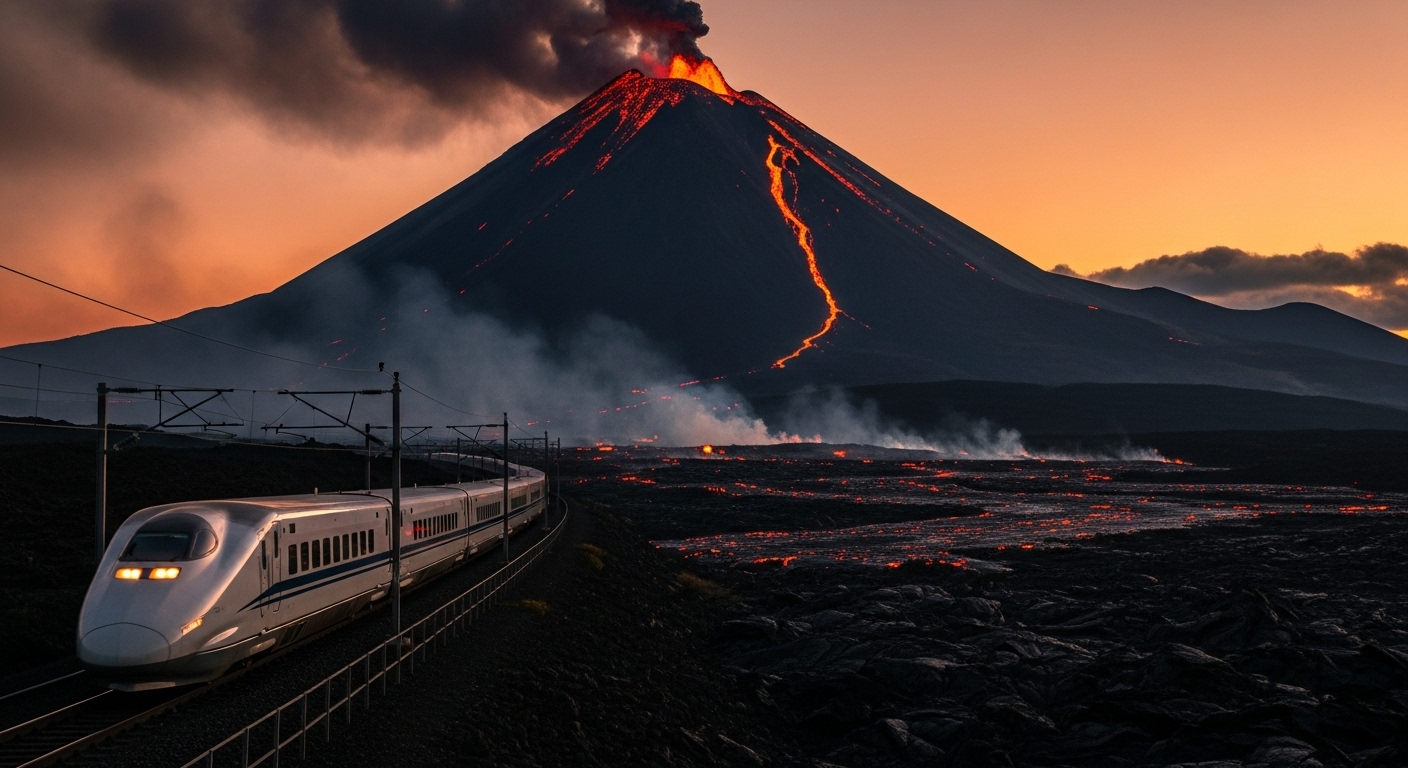
Train journeys crossing active volcano regions are unlike any ordinary ride. The steady rhythm of wheels on rails blends with dramatic scenery, while the knowledge that the Earth beneath is alive adds a thrill. Imagine peering out the window to see hardened lava fields, steaming vents, and towering volcanic peaks that have erupted within living memory. This experience is both humbling and exhilarating. Once you embark on such a journey, you never see train travel in the same way again.
At WentWorld.com, we believe travel should tell a story. Few stories are as powerful as those shaped by volcanoes. Several railway routes worldwide cross or skirt active volcanic regions, offering travelers a rare chance to witness nature’s raw power from the comfort of a train carriage. Have you ever wondered how it feels to travel through a place still shaped by molten rock? How engineers manage to construct railways in such unpredictable terrain?
Train journeys crossing active volcano regions combine geology, history, engineering brilliance, and breathtaking scenery. Humans have always been drawn to volcanoes, despite their risks. Fertile soil, strategic trade routes, and stunning landscapes have attracted civilizations for centuries. Consequently, railways followed, threading through landscapes that are still evolving.
Why Volcano Train Journeys Capture Our Imagination
Volcanoes command attention even when dormant. When active, they inspire awe and respect. Train journeys crossing active volcano regions tap into this fascination. Unlike flying overhead or speeding past by car, trains slow the pace. This allows travelers to observe the terrain closely, notice changes in vegetation, and understand how communities adapt to living near volcanoes.
These journeys focus less on thrill-seeking and more on perspective. One moment, you pass peaceful farmland; the next, you see black lava rock that looks freshly poured. The contrast sparks curiosity. How do people live here? What happens during eruptions? Would you feel safe settling in such regions?
For those who enjoy learning along with sightseeing, these routes are deeply rewarding. Many pass through areas where volcanoes are actively studied, monitored, and integrated into local culture. Here, volcanoes act as neighbors, teachers, and sometimes protectors.
Italy’s Mount Etna and the Circumetnea Railway
One iconic example lies in Sicily, Italy. Mount Etna, Europe’s most active volcano, has erupted for thousands of years. The Circumetnea Railway, a narrow-gauge line, circles its base, winding through vineyards, lava fields, villages, and forests shaped by centuries of eruptions.
This railway offers more than scenic views; it showcases coexistence. As the train progresses, you notice how lava flows have been repurposed into stone walls, buildings, and roads. The soil is incredibly fertile, supporting vineyards that produce some of Italy’s most distinctive wines. Here, destruction and creation coexist seamlessly.
Passengers often describe the Circumetnea journey as surreal. Moments of lush greenery contrast sharply with blackened, lunar-like landscapes. To plan a visit, Italy’s national rail service Trenitalia connects travelers to Catania, the starting point for this unforgettable ride.
Japan’s Volcanic Heart and the Kyushu Rail Routes
Japan’s Kyushu island offers remarkable train journeys crossing active volcano regions. Mount Aso, one of the world’s largest active calderas, dominates the landscape. Trains here run close to volcanic features, allowing views of steaming vents, vast grasslands, and rugged mountains.
Kyushu is compelling because volcanoes are seamlessly integrated into daily life. Trains operate under strict monitoring, with schedules adjusted during volcanic activity. This creates a sense of respect for nature rather than fear.
The JR Kyushu Railway Company designs many routes with large windows and slower pacing, ensuring passengers fully absorb the surroundings. While riding through the Aso region, you may wonder how many eruptions shaped this massive landscape. For more information, visit JR Kyushu.
Hawaii’s Historic Volcano Rail Lines
While modern passenger rail is limited in Hawaii, historic lines once crossed active volcanic terrain, especially on the Big Island. Sugar plantations relied on railways traversing lava fields from volcanoes such as Kīlauea and Mauna Loa. These routes played a vital role in shaping Hawaii’s economy and settlements.
Many lines no longer operate, yet remnants exist through guided tours and historical parks. Hawaii Volcanoes National Park provides insights into how transportation adapted when lava flows could reshape the landscape overnight. Official park information is available through the National Park Service.
Considering these historic routes raises interesting questions. Could modern railways withstand lava flows today? Would you ride a train knowing volcanic eruptions could alter the land within weeks?
Indonesia’s Java Railways and Living Volcanoes
Indonesia, part of the Pacific Ring of Fire, boasts more active volcanoes than any other country. On Java, railway lines pass near Mount Merapi, one of the world’s most active volcanoes. Train journeys crossing active volcano regions in Indonesia offer authentic, unfiltered experiences.
Trains traverse countryside where volcanoes rise abruptly, slopes covered in dense vegetation and farmland. Villages cluster around fertile volcanic soil, continuing daily life with full awareness of potential danger. This coexistence is remarkable. There is no dramatization—just a quiet acceptance that the volcano is part of life.
Indonesia’s rail network, managed by Kereta Api Indonesia, maintains strict safety protocols. Travelers gain a unique sense of realism, prompting reflection on resilience and why humans choose to inhabit volcanic zones for generations.

Engineering Marvels Behind Volcano Railways
One fascinating aspect of train journeys crossing active volcano regions is the engineering involved. Railways must endure earthquakes, ground deformation, ash fall, and extreme weather. Tracks often require adjustments as the land slowly shifts.
Continuous monitoring of seismic activity, gas emissions, and ground movement ensures safety. Rail operators collaborate with geologists and volcanologists to assess risks. Some track sections are designed for rapid repair or rerouting during increased volcanic activity.
Knowing this may spark curiosity. Does understanding the science and preparation behind these railways make you feel safer, or does it highlight nature’s unpredictability?
Cultural Life Along Volcanic Rail Routes
Train journeys crossing active volcano regions also offer cultural insights. Volcanoes influence architecture, agriculture, religion, and folklore. Towns built from volcanic stone, cuisines nourished by fertile soil, and festivals honoring volcanic forces showcase this relationship.
Many cultures view volcanoes as sacred, housing spirits or deities. Rituals maintain harmony between humans and nature. Observing this from a train allows travelers to absorb how volcanoes shape community life and identity.
Have you considered how landscape influences culture? Would your traditions differ if you lived in the shadow of an active volcano?
Why These Journeys Stay With You
Memories of traveling through volcanic regions linger long after the train ride ends. The contrast between calm and danger, the realization that the Earth beneath is alive, and the reflection it sparks create lasting impressions.
Train journeys crossing active volcano regions slow travelers down, encourage curiosity, and inspire respect for natural forces. They remind us that innovation often works alongside nature rather than against it.
Have you experienced train journeys crossing active volcano regions, or is this a dream destination? Which locations intrigue you most, and why? Share your thoughts and stories—they may inspire fellow travelers.
For more unique travel experiences, follow WentWorld.com on our social media platforms. We regularly share guides, stories, and hidden gems from around the world.
Catch up on the top stories and travel deals by subscribing to our newsletter!