Deserts are usually associated with endless sand, harsh heat, and extreme dryness. However, once a year, something extraordinary happens in certain parts of the world. Rainfall, underground water, and rare climatic conditions combine to create desert lakes that appear only once a year, transforming barren landscapes into temporary oases.
These lakes are not permanent features. They arrive quietly, shimmer for weeks or months, and then vanish without a trace. For travelers and locals alike, witnessing these fleeting bodies of water feels almost unreal.
Have you ever imagined seeing water where none should exist? Exploring desert lakes that appear only once a year reveals how unpredictable and magical nature can be.
How Temporary Desert Lakes Form
Desert lakes typically form after seasonal rains, monsoons, or rare storm systems. Dry basins known as playas or salt flats suddenly fill with water.
Because the ground beneath is often compacted clay or salt, water does not drain quickly. Instead, it spreads across the surface, creating shallow but expansive lakes.
These lakes last only until evaporation reclaims them.
Lake Eyre – Australia
Lake Eyre, located in South Australia, is one of the most famous examples of a disappearing desert lake. Most of the year, it is a vast salt flat.
However, after heavy rainfall in distant regions, water flows into the basin. The result is a massive lake that attracts birds, fish, and wildlife.
Lake Eyre stands as one of the most remarkable desert lakes that appear only once a year. Learn more at Tourism Australia.
Badwater Basin Flooding – United States
Badwater Basin in Death Valley is the lowest point in North America. Most years, it remains dry and cracked.
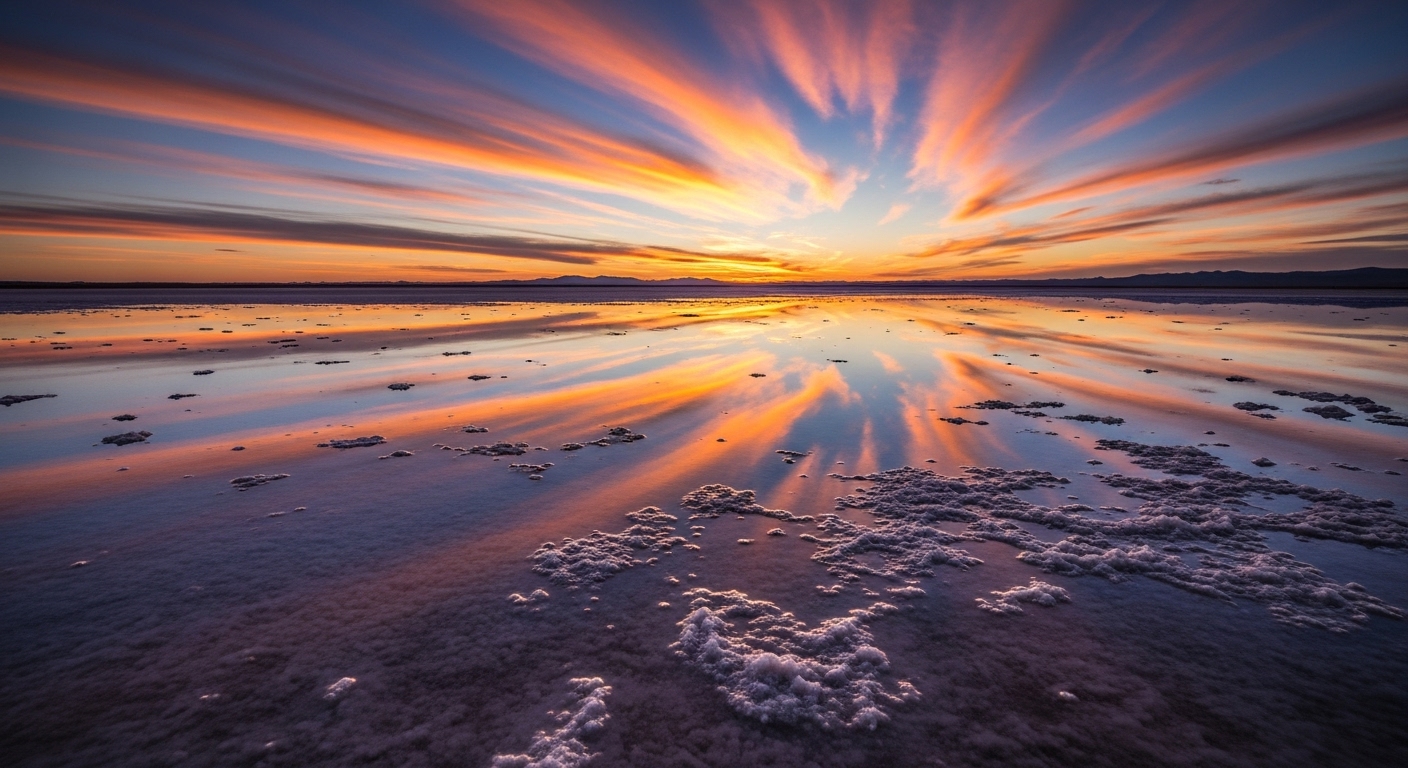
After rare winter storms, water briefly pools across the salt flats, reflecting mountains like a mirror. The transformation lasts only a short time.
This phenomenon highlights how even the driest places can temporarily host life. More details are available at National Park Service.
Makgadikgadi Pans – Botswana
The Makgadikgadi Pans are vast salt flats that stretch across Botswana. For much of the year, they appear lifeless.
During seasonal rains, shallow lakes form across the pans. Flamingos, zebras, and wildebeest arrive in large numbers.
These seasonal waters make the pans one of Africa’s most dramatic desert lakes that appear only once a year. Learn more at Botswana Tourism.

Chott el Jerid – Tunisia
Chott el Jerid is a massive salt lake in the Sahara Desert. Most of the year, it appears as an endless white plain.
After winter rains, water collects in shallow pools. The surface reflects sunlight, creating surreal colors and mirage-like views.
This transformation attracts photographers and explorers from around the world. Learn more at Discover Tunisia.
Salar de Uyuni Flooding – Bolivia
Salar de Uyuni is known as the world’s largest salt flat. During the rainy season, a thin layer of water covers the surface.
This creates a mirror effect, blurring the line between sky and ground. While not a deep lake, it functions as a temporary body of water.
This seasonal flooding places Uyuni among the most visually striking desert lakes that appear only once a year. More information is available at Bolivia Tourism.
Why These Lakes Matter Ecologically
Temporary desert lakes support life in surprising ways. Migratory birds rely on them for breeding and feeding.
Fish eggs and microorganisms lie dormant in dry soil, reactivating when water appears. Entire ecosystems emerge rapidly.
These cycles demonstrate nature’s ability to adapt to extreme conditions.
What It Feels Like to Witness a Desert Lake
Visitors often describe disbelief when encountering water in the desert. The contrast feels almost dreamlike.
Silence, reflection, and vast open space amplify the emotional impact. Many travelers describe the experience as humbling.
Have you ever stood somewhere that challenged everything you expected?
Tips for Visiting Seasonal Desert Lakes
- Research rainfall seasons carefully.
- Check local access and safety conditions.
- Travel with experienced guides when possible.
- Protect delicate ecosystems by staying on permitted paths.
- Prepare for extreme weather changes.
Why These Lakes Remain Rare and Precious
Because they appear briefly, desert lakes remain largely untouched. Their impermanence protects them from overdevelopment.
Climate change may alter rainfall patterns, making some appearances more unpredictable. This uncertainty adds urgency to witnessing desert lakes that appear only once a year.
Desert lakes that appear only once a year remind us that nature does not follow human expectations. For a short time, deserts bloom with water, life, and reflection, before returning to silence.
Which desert lake would you hope to see in person? Share your thoughts with us, and follow WentWorld on our social media platforms for more rare natural wonders, seasonal destinations, and unforgettable travel stories.
Catch up on the top stories and travel deals by subscribing to our newsletter!