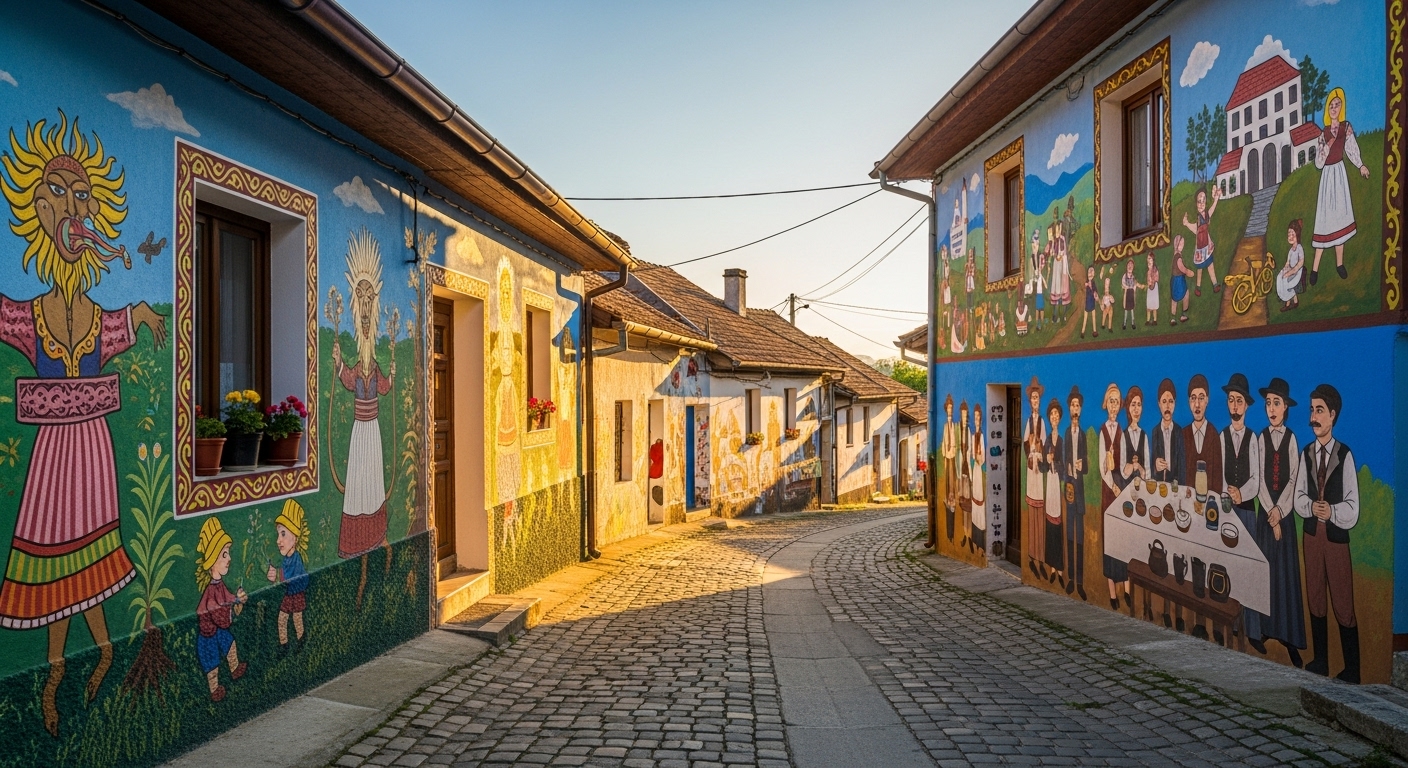
Have you ever walked into a town where the walls feel alive—where every corner, every house, every staircase seems to tell a story? That’s exactly what makes fresco villages where every wall is art so enchanting. These are not ordinary destinations. They’re living outdoor museums, shaped by centuries of creativity, community spirit, and cultural pride. If you’ve ever wished to step into a place that feels like a real-life painting, then you’re in the right place.
In this guide, we’re heading far beyond the typical museum visit to explore villages where the art isn’t framed—it’s part of daily life. From Italy’s ancient fresco-painted alleyways to India’s dusty desert towns where murals rise like colorful surprises, these communities give “public art” a completely new meaning. And honestly, if you’re someone who loves culture, history, and visual storytelling, this might be the most magical kind of travel you can add to your bucket list.
So let’s dive deep into these vibrant destinations, peel back the layers of their art traditions, and uncover what makes them unforgettable. And while we go through this journey together, ask yourself: Which of these places would you want to wander first? And what kind of mural would you paint if you had the chance to leave your mark on a village wall?
Why Fresco Villages Matter More Than Ever
In an age dominated by digital screens, fresco villages offer something refreshingly human—art you can touch, art that breathes, and art that exists within the rhythms of everyday life. You won’t find velvet ropes or security guards here. Instead, you’ll find children playing under hand-painted walls, villagers sitting beside centuries-old frescos during morning tea, and entire streets that seem to glow during golden hour.
Fresco villages where every wall is art are more than just tourist spots; they’re cultural storytellers. These murals often depict myths passed down through generations, revolutions, local heroes, expressions of spirituality, and snapshots of rural life. Think of them as history books written in color.
You didn’t come here for a quick list—you came for a journey. So let’s explore some of the world’s most captivating fresco villages, one story-filled wall at a time.
Italy: The Birthplace of Fresco Traditions
If there’s one country that practically breathes fresco artistry, it’s Italy. Iconic masters like Michelangelo perfected the craft, but beyond famous churches and museums lie humble villages that have preserved the tradition for centuries.

Sant’Angelo di Roccalvecce – The Fairy Tale Village
Imagine walking through a village where famous fairy tales jump right out of the walls. Sant’Angelo di Roccalvecce, a small gem in the Lazio region, transformed itself through over 50 vibrant murals based on beloved childhood stories. Painted directly onto the buildings, these works invite visitors to explore familiar tales while meeting the artisans who created them.
This village shows how modern communities can use art to revive spaces—and spirits. It’s a perfect example of fresco villages where every wall is art in the most literal and magical way.
Dozza – Where Art Is a Way of Life
Dozza is another masterpiece. Located in Emilia-Romagna, this fortified medieval town holds a famous Biennale del Muro Dipinto (the Painted Wall Biennale), turning the entire village into a giant open-air gallery. Frescos here range from abstract to traditional, blending centuries-old architecture with bold creativity.
Walk its winding streets, and you’ll find frescos about food, folk tales, historic battles, and whimsical creatures. Every wall whispers something different.
Worth Asking Yourself:
What kind of mural do you think you would create if you had an entire house wall to paint? Something abstract, or a story from your own culture?
India: Where Folk Traditions Burst with Color
India is home to some of the world’s most vibrant mural traditions, and its fresco villages are astonishingly diverse. Each region has its own visual language, painting techniques, and storytelling style.
Nawalgarh – The Open-Air Art Gallery of Rajasthan
Located in the Shekhawati region, Nawalgarh is famous for its havelis—historic mansions covered in elaborate murals. These aren’t simple decorations; they’re sprawling storyboards painted directly onto lime-plastered walls. Scenes depict royal processions, folklore, festivals, and even early interactions with modern technology.
Walking through Nawalgarh feels like stepping into a time capsule where art, architecture, and daily life blend seamlessly.
Lodhi Art District – A Modern Indian Fresco Village
Though not a traditional village, Delhi’s Lodhi Art District has adopted the spirit of a fresco community. This neighborhood showcases murals by global artists, turning concrete walls into canvases that address social issues, cultural identity, wildlife preservation, and everyday beauty.
It serves as a reminder that fresco traditions don’t always belong to the past—they’re evolving, adapting, and finding new meaning.
Mexico: Where Murals Speak Loudly
Mexico has a legendary relationship with muralism. Diego Rivera, David Alfaro Siqueiros, and José Clemente Orozco revolutionized it—but the spirit thrives even in small villages far from city museums.
Pooray, Guanajuato – A Village Reborn Through Color
One of Mexico’s lesser-known fresco villages, Pooray, turned its fading houses into a rainbow of murals portraying Indigenous heritage, farmers’ stories, and bold symbolic art. The result? Visitors now flock to this once-sleepy area to explore its walls.
These murals are deeply personal and community-driven. They reflect real lives, real struggles, and real pride.

Colombia: Art as a Symbol of Resilience
Colombia’s small pueblos are embracing mural traditions to heal after decades of conflict. Here, art isn’t just decoration—it’s renewal.
Guatapé – The Village That Glows
Guatapé is renowned for its colorful zócalos—relief murals carved and painted onto the bases of buildings. These pieces blend tradition with vibrant storytelling, capturing everything from farm animals to local legends.
While Guatapé is not a fresco village in the classic sense, it embodies the spirit of places where walls celebrate identity.
Greece: Sunlit Villages Full of Texture and Myth
In Greece, art and architecture go hand-in-hand, and you’ll find fresco-like designs adorning old villages tucked between mountains and sea.
Pyrgi – The Village of Black-and-White Geometric Frescos
Located on the island of Chios, Pyrgi is instantly recognizable thanks to its patterned facades known as “xysta.” Created through a unique scratching technique, these designs aren’t painted—they’re carved, revealing geometric fresco-like motifs.
Standing in Pyrgi feels like walking inside a giant piece of mosaic art.
Why People Fall in Love with Fresco Villages
There’s something profoundly grounding about fresco villages where every wall is art. Maybe it’s the tactile nature of the artwork, or the way murals connect people to their heritage. Maybe it’s because they turn ordinary streets into extraordinary experiences.
Whatever the reason, visitors often describe these destinations as “immersive outdoor museums,” “human-scale masterpieces,” or “living galleries you never want to leave.”
Have you ever been somewhere that instantly inspired your creativity? These villages have that effect on almost everyone.
How Fresco Villages Built Their Identity
These communities didn’t become art-filled overnight. Many began centuries ago through local traditions tied to religion, festivals, and cultural pride. Others emerged recently through government-supported revivals or community-led beautification projects.
In several villages, mural painting became a form of communication long before mass literacy. Walls became the storytellers.
The Art Techniques Behind Fresco Villages
Fresco painting is both simple and sophisticated. The main method involves applying pigments to wet plaster, allowing colors to fuse with the wall as it dries. This makes frescos extremely durable, often surviving centuries.
Other villages use sgraffito (scratching designs into layered plaster), lime-based paints, carved panels, or mosaic-like reliefs to decorate their walls.
Each technique reveals something about the region’s resources, traditions, and artistic evolution.
How to Explore a Fresco Village Like a Pro
Here are some ways to make your visit more meaningful and immersive:
- Start at the village’s oldest quarter—this is where original murals usually survive.
- Talk to local artists; they love sharing stories behind their work.
- Visit during festivals, when new murals are often created.
- Take a guided walk if available.
- Look closely at textures—fresco details often hide miniature symbols.
- Ask locals about their favorite murals; you’ll get insider insight.
Fresco villages where every wall is art reward slow travel. The more time you spend wandering, the more details reveal themselves.
Questions to Spark Your Imagination
If you could design a mural representing your hometown, what colors would you use? What story would you tell?
And do you think your city should embrace a similar concept—turning blank walls into shared canvases?
Why These Villages Are Perfect for Photographers
For photographers, fresco villages are a dream. Natural light bouncing off painted plaster, textured walls, narrow alleys, traditional clothing, and seasonal festivals make these places visually irresistible.
Even beginner photographers can capture incredible shots here—there’s no shortage of vibrant backdrops or soulful subjects.
The Future of Fresco Villages
More communities around the world are beginning to embrace mural culture as a way to highlight heritage, attract tourism, and inspire their youth. Innovative projects even involve eco-friendly pigments, solar-lit murals, and interactive storytelling walls.
The essence remains the same: walls with meaning.
Fresco villages where every wall is art are some of the most unforgettable places you can visit. They’re rich with history, overflowing with creativity, and full of people who take pride in preserving their identity through color. Whether you’re an art lover, culture explorer, photographer, or simply someone seeking something refreshingly different, these villages invite you to wander slowly and with curiosity.
Have you ever visited such a village? What was the experience like? Share your thoughts—we love hearing from you. And don’t forget to follow us on social media for more creative travel inspiration and story-filled journeys.
Catch up on the top stories and travel deals by subscribing to our newsletter!