Have you ever wondered how some cities manage to seamlessly blend nature with urban life? Cities With Elevated Parks and Urban Nature Walks are revolutionizing how we experience urban landscapes. From walking above bustling streets surrounded by greenery to enjoying panoramic city views, these elevated parks are more than just a trend—they are transforming city living into a rejuvenating experience. In this blog, we will explore some of the most iconic elevated parks, their unique features, and why incorporating nature into urban spaces is essential for our wellbeing.
Urbanization often comes at the cost of green spaces, leaving residents craving a connection with nature. Elevated parks and urban nature walks are a brilliant solution, offering a sanctuary above the noise and chaos of city life. Imagine stepping onto a historic railway line that has been converted into a lush park, strolling through a canopy of trees, or discovering hidden gardens above street level. Cities With Elevated Parks and Urban Nature Walks not only provide these experiences but also create sustainable, eco-friendly environments within the urban fabric.
Why Elevated Parks Are Changing Urban Life
Elevated parks are more than just pretty walkways. They play a critical role in enhancing mental health, reducing urban heat, improving air quality, and fostering social interactions. Walking through greenery has been shown to reduce stress levels, boost creativity, and even improve focus. In densely populated cities where ground-level parks are scarce, elevated parks provide a vital connection to nature. Urban nature walks allow city dwellers to escape the concrete jungle temporarily, offering a serene environment right above the busy streets.
Iconic Cities With Elevated Parks and Urban Nature Walks
Let’s take a closer look at some cities that have mastered the art of blending urban life with nature through elevated parks and urban nature walks:
1. New York City, USA
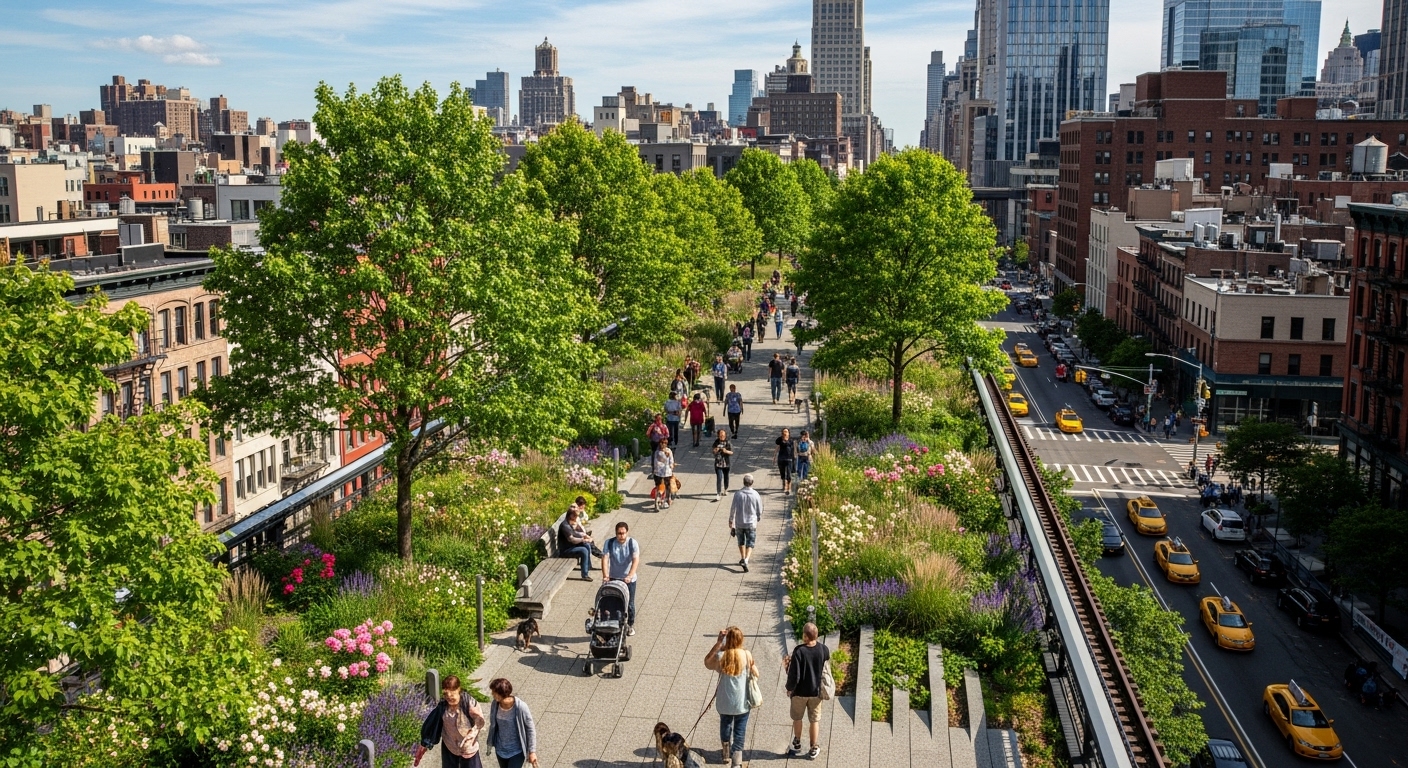
The High Line in New York City is perhaps the most famous elevated park in the world. Built on a historic freight rail line, it stretches over 1.45 miles, offering art installations, gardens, and breathtaking views of Manhattan’s skyline. Visitors can walk above the city streets, enjoy seasonal flowers, and participate in cultural events. The High Line demonstrates how Cities With Elevated Parks and Urban Nature Walks can transform neglected infrastructure into vibrant, green community spaces.
2. Seoul, South Korea
Seoul’s Seoullo 7017 Skygarden is another remarkable example. This elevated walkway, once a highway overpass, has been transformed into a 1 km long urban jungle featuring over 24,000 plants. It connects neighborhoods, provides space for cafes, and encourages walking instead of driving short distances. By incorporating urban nature walks, Seoul has enhanced accessibility to green spaces and encouraged sustainable city living.
3. Paris, France
Paris is well-known for its love of gardens, but the Promenade Plantée—also known as Coulée verte René-Dumont—pioneered the concept of elevated parks. Stretching nearly 5 km, this elevated green corridor allows visitors to stroll above the streets while admiring the historic architecture of the city. It has inspired similar projects worldwide, demonstrating the global impact of integrating elevated parks into urban landscapes.
Benefits of Urban Nature Walks
Urban nature walks are not just visually appealing—they offer tangible benefits for residents and city planners alike. Some key advantages include:
- Health and Wellbeing: Walking amidst greenery lowers cortisol levels, reduces anxiety, and boosts overall mental health.
- Environmental Impact: Elevated parks help reduce air pollution, lower urban heat, and create habitats for urban wildlife.
- Community Engagement: Green spaces encourage social interactions, cultural events, and outdoor activities.
- Urban Connectivity: Elevated parks often link neighborhoods, improving accessibility and walkability.
Have you ever visited an elevated park or urban nature walk? How did it make you feel compared to traditional city streets? Share your experiences with us in the comments below—we’d love to hear your thoughts!
Designing Cities With Elevated Parks and Urban Nature Walks
Designing these elevated green spaces requires innovative planning, architectural creativity, and community involvement. Architects must consider factors like structural safety, plant selection, public amenities, and accessibility. Cities with elevated parks focus on sustainability, using native plants, rainwater harvesting systems, and eco-friendly materials. Urban nature walks encourage people to explore cities from a fresh perspective, turning mundane commutes into enjoyable, healthy experiences.
Incorporating elevated parks into urban planning is a long-term investment in the city’s environmental and social health. These parks not only improve air quality and reduce noise pollution but also enhance the aesthetic appeal of urban neighborhoods. By walking through elevated pathways lined with greenery, residents can reconnect with nature and rediscover their city in an inspiring way.

Global Inspiration: Other Notable Elevated Parks
While New York, Seoul, and Paris are often highlighted, other cities around the world are embracing elevated parks and urban nature walks:
Singapore: The Southern Ridges Trail offers a unique elevated walkway connecting parks, hills, and forested areas. It provides panoramic views of the city and the ocean, showing how urban nature walks can double as adventure trails.
Chicago, USA: The Bloomingdale Trail, or The 606, repurposes an old rail line into a 4.3-mile elevated park. It includes bike trails, running paths, and community spaces, making it a prime example of multi-functional urban green design.
Madrid, Spain: Madrid Río is a linear park along the river, featuring elevated walkways, cycling paths, and open green spaces. It emphasizes how cities with elevated parks and urban nature walks can integrate natural features like rivers into urban planning.
These examples show that regardless of a city’s size or infrastructure, it is possible to design elevated parks that cater to residents’ needs, promote sustainability, and enhance the city’s visual appeal.
Tips for Exploring Elevated Parks and Urban Nature Walks
If you are planning to explore cities with elevated parks and urban nature walks, here are a few tips to maximize your experience:
- Plan your visit during early mornings or late afternoons to enjoy cooler temperatures and beautiful natural light.
- Bring a camera or smartphone to capture panoramic views and unique landscapes.
- Wear comfortable walking shoes to navigate the elevated pathways safely.
- Take your time to enjoy the art installations, gardens, and seating areas along the path.
- Engage with local guides or information boards to learn about the history and design of the park.
By following these tips, you’ll not only enjoy the natural beauty but also gain a deeper appreciation for the planning and creativity behind elevated parks and urban nature walks.
Conclusion: Reimagining Urban Life
In conclusion, Cities With Elevated Parks and Urban Nature Walks are transforming how we interact with our cities. They offer a perfect blend of greenery, culture, and architecture while promoting health, sustainability, and community engagement. Whether you are a local resident or a curious traveler, elevated parks provide a unique opportunity to experience urban life from a refreshing perspective. As more cities embrace these green initiatives, we can look forward to healthier, more vibrant, and more enjoyable urban spaces.
Have you ever walked through an elevated park or experienced an urban nature walk in your city? What was your favorite part, and what would you like to see more of? Share your thoughts in the comments below—we love hearing from our readers! And don’t forget to follow us on social media for the latest updates, stories, and tips about urban life and nature.
Catch up on the top stories and travel deals by subscribing to our newsletter!