
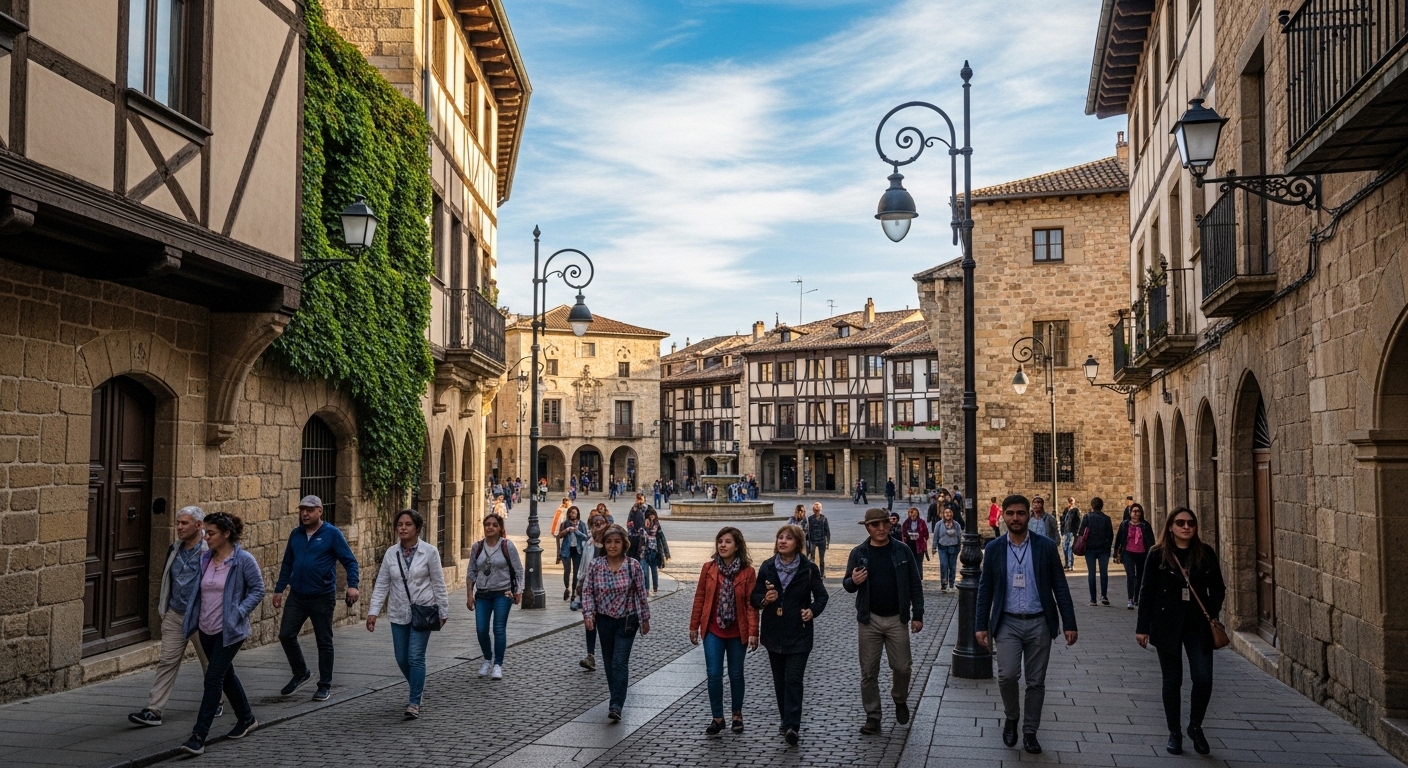
There is something powerful about slow travel. And nothing captures it better than walking routes that connect historic town centers. These pathways are more than pedestrian corridors. They are living timelines. They link medieval squares to Renaissance streets, colonial plazas to riverside markets, and ancient fort walls to modern cafés. When you follow these routes, you are not just walking — you are stepping across centuries.
Across Europe, Asia, and the Americas, cities are reviving and promoting walking routes that connect historic town centers to preserve heritage, reduce traffic, and encourage cultural exploration. Instead of isolated tourist attractions, entire historic districts are stitched together through beautifully designed pedestrian trails. Have you ever wondered how different your travel experience would feel if you explored a city entirely on foot?
Why Walking Routes That Connect Historic Town Centers Matter
Historic towns were not built for cars. They were built for footsteps, horses, and handcarts. Narrow alleys, cobbled lanes, and public squares formed the backbone of social life. Over time, modernization disrupted this flow. But now, urban planners are restoring pedestrian continuity to bring these spaces back to life.
Walking routes that connect historic town centers offer several benefits:
- They preserve architectural heritage.
- They reduce congestion and pollution.
- They boost local businesses along the path.
- They create immersive tourism experiences.
- They encourage healthier lifestyles.
Instead of jumping between landmarks by taxi, you discover hidden courtyards, artisan shops, and quiet chapels along the way. Isn’t that the kind of travel memory that lasts longer?
Florence: A Renaissance Walk Through Time
Florence is one of the finest examples of walking routes that connect historic town centers seamlessly. From Piazza del Duomo to Ponte Vecchio, the city feels like an open-air museum. Every street between landmarks tells a story.
Visitors can begin near the Florence Cathedral, wander through medieval streets, explore artisan workshops, and cross the Arno River toward the Pitti Palace — all without needing transport. The experience is fluid and cohesive.
According to Visit Florence, pedestrian exploration remains the best way to understand the city’s layered history. Walking reveals details you would otherwise miss: carved doorframes, faded frescoes, family crests etched in stone.
Would Florence feel as magical if you only saw it through a car window?
Kyoto: Temple Paths Linking Historic Districts
Kyoto offers walking routes that connect historic town centers through serene temple paths and preserved wooden neighborhoods. The Philosopher’s Path, for example, links multiple temples along a canal lined with cherry blossoms.
From Gion’s traditional streets to Higashiyama’s historic slopes, the city invites travelers to move slowly. You transition naturally from bustling tea houses to peaceful shrines.
Official tourism guides at Kyoto Travel emphasize walking as the most authentic way to experience the former imperial capital. It is not about rushing from site to site. It is about absorbing atmosphere.
Have you ever walked through a place so quiet that you could hear your own footsteps echo against history?
Quebec City: Fortifications and Old Town Trails
In North America, Quebec City demonstrates how walking routes that connect historic town centers can preserve colonial heritage. The fortified walls link Upper Town and Lower Town, guiding visitors through cobblestone streets and European-style plazas.
From Château Frontenac to Petit-Champlain, the walk unfolds like a storybook. Musicians play in courtyards. Cafés spill onto sidewalks. Stone staircases lead to panoramic river views.
More travel details are available through Quebec City Tourism, which highlights curated walking circuits for history lovers.
Can you imagine exploring North America while feeling like you are in 17th-century Europe?

Istanbul: Where Continents Connect on Foot
Istanbul may be vast, but its historic peninsula offers incredible walking routes that connect historic town centers. From Hagia Sophia to the Grand Bazaar, centuries of Byzantine and Ottoman history unfold along interconnected streets.
The journey between Sultanahmet Square and Spice Bazaar is filled with fountains, mosques, markets, and tea gardens. Walking allows visitors to witness daily life woven into historic surroundings.
According to Go Türkiye, pedestrian exploration is key to understanding Istanbul’s layered identity.
What other city lets you cross cultural worlds in a single afternoon walk?
The Economic Impact of Connected Historic Walkways
Walking routes that connect historic town centers do more than preserve beauty. They stimulate local economies. When pedestrians flow continuously between districts, small businesses benefit.
Street vendors, boutique hotels, cafés, museums, and artisans all gain visibility. Instead of clustering tourism in one square, walking routes distribute it evenly.
Cities like Barcelona and Prague have demonstrated how well-designed pedestrian corridors can increase visitor satisfaction and business revenue simultaneously.
Would you spend more time — and money — in neighborhoods that feel safe, beautiful, and walkable?

Sustainability and Urban Revival
Modern cities face environmental challenges. Encouraging walking instead of driving reduces emissions and noise pollution. Historic centers benefit from lower traffic stress on old infrastructure.
Urban planners increasingly design green corridors linking historic districts with parks and riverwalks. These routes promote biodiversity and improve air quality.
Walking routes that connect historic town centers represent a sustainable future rooted in the past. They prove that heritage and innovation can coexist.
Designing the Perfect Historic Walking Route
Successful walking routes share common features:
- Clear signage and storytelling panels.
- Accessible pathways and lighting.
- Rest areas and scenic viewpoints.
- Integration with public transportation hubs.
- Community involvement in preservation.
When these elements align, a city transforms into a seamless narrative experience. Visitors feel guided without feeling controlled.
What features make a walking route memorable for you?
The Future of Walking Routes That Connect Historic Town Centers
Technology is enhancing pedestrian experiences. Some cities now offer augmented reality guides, allowing travelers to see historical reconstructions through smartphones.
Interactive maps, QR codes, and digital storytelling platforms help deepen engagement. Yet, the essence remains simple: putting one foot in front of the other.
Walking routes that connect historic town centers will likely expand as cities prioritize sustainability and cultural preservation. They represent a shift toward thoughtful tourism and community-centered urban planning.
So next time you travel, ask yourself: will you rush between attractions, or will you walk the path that connects them?
We would love to hear from you. Have you experienced a walking route that transformed how you saw a city? Share your thoughts in the comments.
Follow WentWorld on social media for more inspiring travel insights and unique urban discoveries from around the globe.
Catch up on the top stories and travel deals by subscribing to our newsletter!










Leave a Reply
You must be logged in to post a comment.