If you thought metro rides were just about getting from point A to point B, think again. Underground art metro lines worth riding end-to-end are transforming daily commutes into immersive cultural journeys. These transit systems are not only feats of engineering but also open-air (well, underground) galleries where murals, sculptures, light installations, and interactive art turn the underground into a playground for the senses.
From Moscow to Stockholm, from Naples to Montreal, cities around the world are investing in artistic metro experiences. Art in these metro systems isn’t just decoration — it’s storytelling, social commentary, and sometimes even political reflection. Each station becomes a snapshot of local culture, history, and imagination. Have you ever found yourself staring at a mural for minutes, forgetting you were supposed to catch a train?
In this WentWorld.com feature, we take you through some of the most visually stunning underground art metro lines worth riding end-to-end. We’ll explore how they came to life, what makes them unique, and why planning an entire ride, rather than hopping on for a single stop, can be an unforgettable experience.
Moscow Metro, Russia
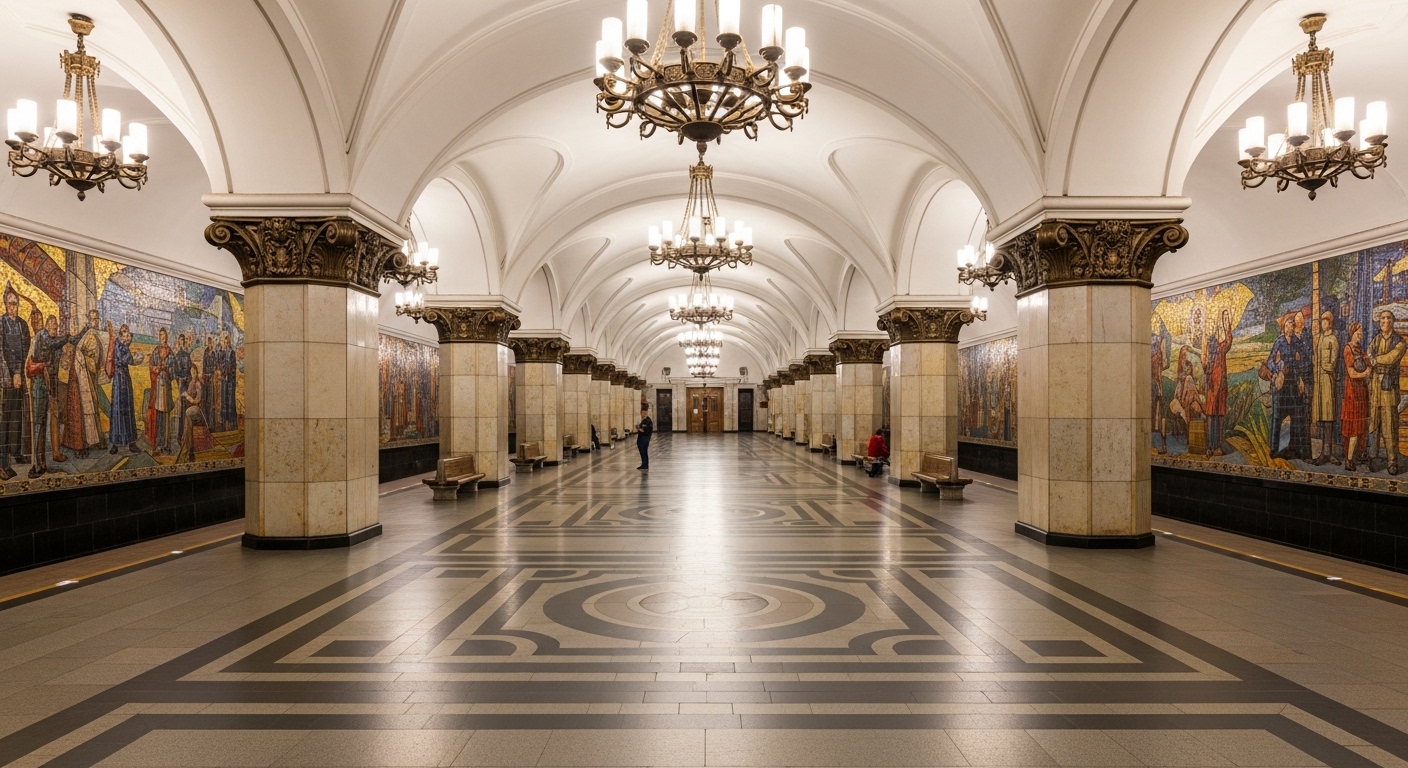
The Moscow Metro is often called the “palace of the people,” and for good reason. Many stations were built during the Soviet era with opulent architecture, chandeliers, mosaics, and statues that showcase national history and socialist ideals. Riding the entire line isn’t just a commute — it’s like taking a walking tour through a museum, except the museum is constantly moving.
Stations like Komsomolskaya and Mayakovskaya offer high ceilings, marble floors, and intricate mosaics that reflect both grandeur and precision. The Moscow Metro has been documented extensively by The Moscow Times and art historians alike, yet experiencing it firsthand is incomparable.
Stockholm Metro, Sweden
Stockholm often claims the title of “world’s longest art gallery” with its metro system. Over 90 of its 100 stations feature unique artworks ranging from neon installations to conceptual sculptures. Some of the most famous stations include Solna Centrum, with its red cavern walls and dramatic murals, and Kungsträdgården, which showcases archaeological-inspired motifs.
Riding Stockholm’s metro end-to-end gives travelers a sense of Sweden’s commitment to integrating art into public spaces. The transit authority provides detailed station guides via SL – Storstockholms Lokaltrafik, yet nothing compares to walking or riding through the illuminated tunnels yourself.
Naples Metro, Italy
Naples’ underground art metro, often called the “Art Stations of Naples,” is a colorful and modernist experience. Artists like Jannis Kounellis, Merz, and Mimmo Paladino have turned metro stations into experimental galleries. Toledo station, recognized by Lonely Planet, features LED lighting, ceramic mosaics, and textured walls that simulate underwater caverns.
Travelers can ride multiple lines to experience stations as entirely different art exhibits. Unlike Moscow or Stockholm, Naples blends contemporary artistic expression with historical references, reflecting the city’s vibrant personality.

Montreal Metro, Canada
Montreal’s Metro system is another example where architecture meets public art. Opened in 1966, the network features stations designed by prominent architects and decorated with murals, sculptures, and stained-glass pieces. Berri-UQAM, the network’s central hub, and Place-des-Arts station highlight how Canadian modernism interacts with functional design.
The Société de transport de Montréal (STM) encourages cultural engagement by hosting temporary exhibitions in station spaces. Riding the metro end-to-end allows visitors to trace Montreal’s artistic evolution from 1960s modernist optimism to contemporary interpretations of urban life.
Naples to Stockholm and Beyond: What Makes a Line Worth Riding Fully?
Some metro systems are visually appealing at select stations, but the ones that truly qualify as underground art metro lines worth riding end-to-end offer continuous experiences. Look for lines where:
- Stations are intentionally designed with cohesive themes.
- Art spans multiple styles and mediums — murals, sculptures, mosaics, and lighting installations.
- The architecture complements the art rather than competes with it.
- Historical context or storytelling is embedded into the design.
- Interactive elements or digital displays engage passengers directly.
Planning a ride with the intention of enjoying the art requires time and patience. Consider getting off at multiple stations, observing details, and taking photos responsibly. How often do we treat commuting as a form of cultural exploration rather than a task to complete?
Tokyo Metro, Japan
Tokyo’s metro system is vast and efficient, but several stations have incorporated art in subtle, yet captivating ways. For example, Roppongi Station and Omotesando feature minimalist installations and large-scale murals that reflect Japan’s aesthetics of simplicity and precision. Although not as overtly grandiose as Moscow or Stockholm, Tokyo demonstrates how art can enhance the commuter experience even in a high-speed, high-density network.
Information on Tokyo Metro’s art can be accessed via Tokyo Metro, yet discovering hidden artistic details requires exploration — a treat for patient travelers.
Why End-to-End Rides Offer More Than Individual Stops
Riding a single station here or there can give you glimpses of creativity, but the real magic happens when you journey from one terminus to the next. End-to-end rides let you experience:
- The narrative flow of the artwork along the line.
- How different artists’ works interact in context.
- The emotional progression from station to station.
- Unexpected surprises that might only be noticeable from the train perspective.
Many metro art lines also host cultural programs, temporary exhibitions, and seasonal lighting events. These make full-line exploration even more worthwhile. Have you ever been surprised by art in a place you least expected it? Metro art lines provide that same thrill repeatedly.

Practical Tips for Experiencing Art Metro Lines
To make the most of a full-line art metro journey:
- Start early to avoid rush hours.
- Use official maps to identify art highlights.
- Take note of stations with interactive or digital installations.
- Be mindful of other commuters — enjoy without blocking the flow.
- Carry a camera or smartphone for personal memories, but respect station rules.
Most metro authorities provide online guides. For example, Moscow Metro and Stockholm SL publish station artwork guides, but nothing replaces the experience of riding the line yourself.
The Emotional and Cultural Impact
Riding underground art metro lines worth riding end-to-end is more than visual pleasure. It shifts your perspective on public spaces and civic pride. Cities are using these systems to express cultural identity and connect communities through shared experiences. For commuters, it’s a daily reminder that art doesn’t have to be confined to galleries or museums.
Moreover, travelers often report a sense of calm and inspiration after riding lines like Stockholm or Naples. This combination of functional transport and artistic immersion is uniquely modern — and uniquely human.
So next time you’re planning a metro trip in any city, consider taking it slow. Explore the tunnels, observe the walls, and appreciate the creativity that turns a routine ride into an extraordinary journey. If you’ve experienced a metro line that left a lasting impression, we’d love to hear your story. Share it with us, and let’s celebrate the art hiding beneath our cities together.
Follow WentWorld.com on our social media platforms for more inspiring travel stories and cultural adventures around the world.
Catch up on the top stories and travel deals by subscribing to our newsletter!