
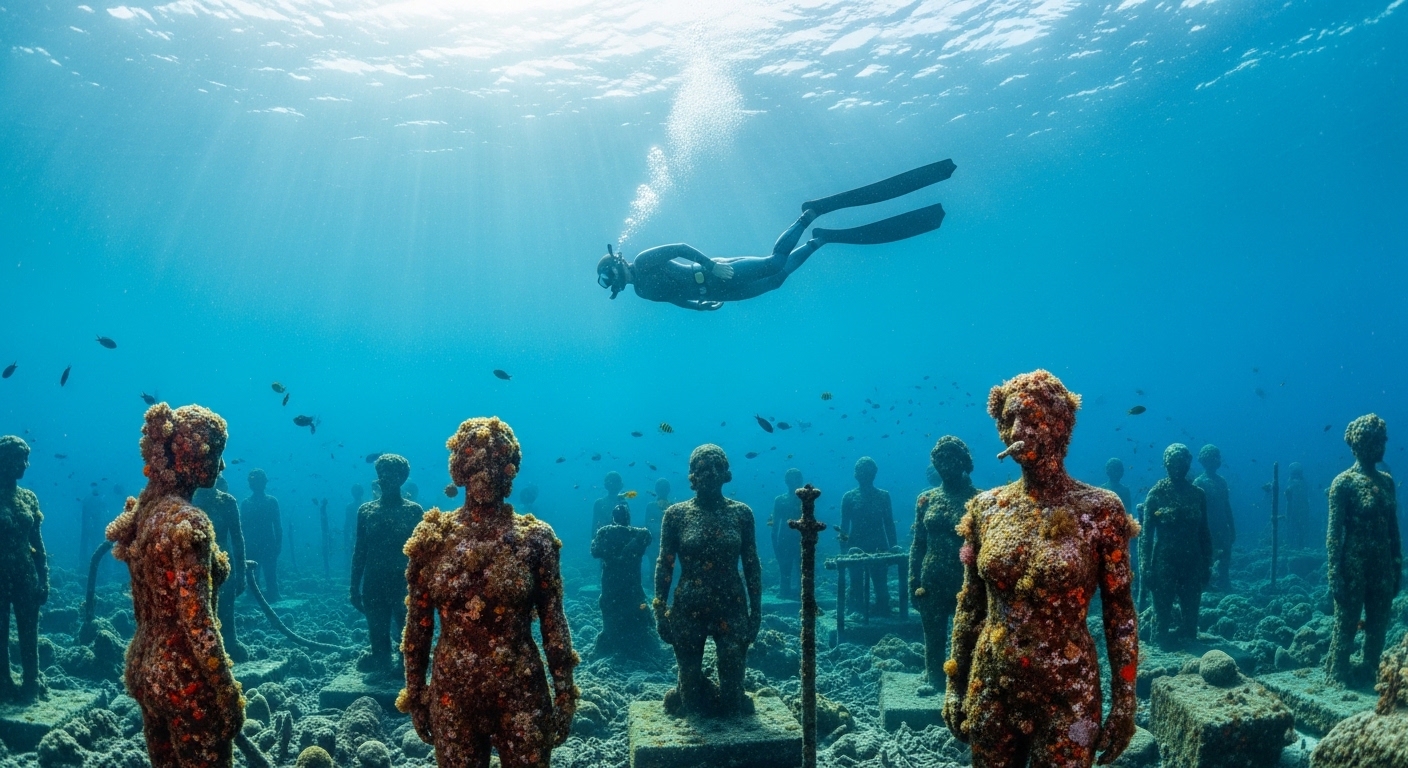
Experiencing submerged sculpture trails for free divers is unlike visiting any conventional museum. Beneath the ocean, art comes alive in an environment that constantly changes. You don’t walk through halls or stand behind ropes; instead, you hold your breath, descend, and glide through a silent world where water and light dictate the exhibition. Silence amplifies every detail, while currents and shifting sunlight transform each sculpture in unique ways.
Free diving itself has always carried a sense of intimacy with the sea. Adding art to this experience elevates it further. Sculptures placed underwater do not remain static. Coral, algae, and marine life slowly claim the figures, creating living artworks that evolve over months and years. In this guide by WentWorld.com, we explore why these trails have become global phenomena, how they merge art and ecology, and what makes the experience so unforgettable.
Why Underwater Art Feels Unlike Anything Else
Unlike traditional galleries, underwater sculpture trails immerse you in nature’s control. Temperature, light, and movement are determined entirely by the ocean. Fish and other creatures weave through sculptures, creating a living performance. The experience is interactive, personal, and deeply sensory.
Many free divers describe a profound sense of presence while exploring these installations. When weightless in water, every movement feels deliberate. Every heartbeat and every breath matters. The absence of conventional boundaries forces you to slow down and notice the subtleties of both art and environment. Can you imagine a place where stillness and motion exist simultaneously?
The Origins of Submerged Sculpture Trails
Submerged sculpture trails were not originally intended purely for aesthetics. They began as environmental projects. Scientists and artists realized that placing carefully designed structures underwater could encourage coral growth and restore damaged marine ecosystems. As a result, art became a tool for ecological conservation, blending creativity with functionality.
Artists like Jason deCaires Taylor pioneered the practice, creating sculptures meant to evolve over time. Instead of preserving pristine figures, these works are designed to integrate with the ocean. Corals, sponges, and marine life gradually transform the sculptures, highlighting nature as a co-creator. Consequently, each visit offers a unique perspective depending on time, light, and tidal conditions.
MUSA, Mexico
The Museo Subacuático de Arte (MUSA) in Cancun is one of the largest underwater sculpture sites in the world. Featuring over 500 life-sized sculptures, it offers free divers the chance to explore figures frozen in everyday poses. As coral grows over their surfaces, the sculptures become intertwined with marine life, creating an ever-changing underwater landscape.
MUSA also contributes to reef preservation. By diverting tourist traffic away from natural reefs, it helps protect fragile ecosystems. Travelers arriving via carriers such as American Airlines or Aeromexico can experience these installations firsthand, witnessing the delicate balance between art, nature, and human interaction.

Moliniere Underwater Sculpture Park, Grenada
Located off the coast of Grenada, the Moliniere Underwater Sculpture Park presents hauntingly beautiful sculptures along shallow reef areas, ideal for free divers. One of the most iconic pieces depicts children holding hands in a circle on the ocean floor. Over time, coral has softened their edges and integrated them into the reef, creating a dynamic, living artwork.
This park is accessible through local operators who prioritize sustainability. While flights to Grenada are available via regional and international hubs listed on Skyscanner, the Moliniere Park maintains a sense of tranquility, allowing divers to experience art without crowds.
Ocean Atlas, Bahamas
In Nassau, Bahamas, Ocean Atlas stands as one of the largest single underwater sculptures ever created. This massive figure of a young girl appears to hold the weight of the ocean, embodying strength and fragility at the same time. Free divers often describe the sensation as almost spiritual, as sunlight filters down through the water, casting dramatic shadows over her immense form.
Observing Ocean Atlas encourages reflection on both human vulnerability and environmental responsibility. Over time, coral growth enhances the sculpture, making each dive a different encounter. Experiencing art in this way offers a rare combination of awe, introspection, and ecological awareness.
Environmental Impact of Underwater Sculpture Trails
These submerged galleries serve critical ecological purposes. Sculptures are created from pH-neutral materials designed to support coral growth and attract fish. As artificial reefs, they help restore damaged marine ecosystems while simultaneously providing educational and aesthetic value.
Organizations such as the World Wildlife Fund emphasize sustainable tourism practices, highlighting how these installations benefit both marine life and travelers who seek immersive experiences. By interacting responsibly with the environment, divers contribute to long-term conservation efforts.
The Emotional Connection
Floating silently above submerged sculptures creates a unique emotional connection. Free divers often report feeling vulnerable yet empowered, as if suspended between two worlds: the air above and the ocean below. This duality fosters mindfulness and a deep sense of presence, making the experience memorable far beyond the visual spectacle.
Have you ever felt more in tune with yourself than when suspended underwater? Such experiences redefine how we engage with art, blending introspection with exploration.
Tips for Experiencing Submerged Sculpture Trails
To fully appreciate these underwater galleries, preparation and respect are essential. Free diving allows intimate access without disturbing marine life. However, divers must adhere to safety protocols, dive with partners, and avoid touching sculptures. Responsible behavior ensures both personal safety and the preservation of these evolving artworks.
Planning can be aided through travel platforms like Tripadvisor, which offer insights on local operators and current conditions. Timing, weather, and tidal movements all affect visibility and the quality of the experience.

Why Free Divers See More
While scuba divers often experience these sites as sightseeing opportunities, free divers encounter them as immersive journeys. Without bubbles or bulky gear, movement is quiet, intentional, and fluid. Each sculpture visit becomes personal, with the diver choosing pace, direction, and duration, enhancing the meditative quality of the exploration.
The Future of Underwater Art
Underwater sculpture trails are expanding globally, from Asia to Europe and the Middle East. New installations increasingly combine artistry with ecological research, supporting coral regeneration and educating divers about environmental change. This fusion of creativity and conservation exemplifies how travel can become meaningful, immersive, and impactful.
Final Thoughts From WentWorld
Submerged sculpture trails are more than attractions—they are experiences that fuse art, nature, and human presence. They challenge conventional ideas about museums and redefine how we interact with creativity. These underwater galleries invite reflection, inspire awe, and remind us of the delicate balance between human action and environmental stewardship.
Have you ever explored an underwater art site or considered free diving? Would you prioritize the serenity of the ocean or the thrill of discovering living art? Share your thoughts and experiences with us.
If stories like these spark your curiosity, follow WentWorld.com on social media to stay updated on journeys to the world’s most extraordinary and hidden destinations.
Catch up on the top stories and travel deals by subscribing to our newsletter!







Leave a Reply
You must be logged in to post a comment.