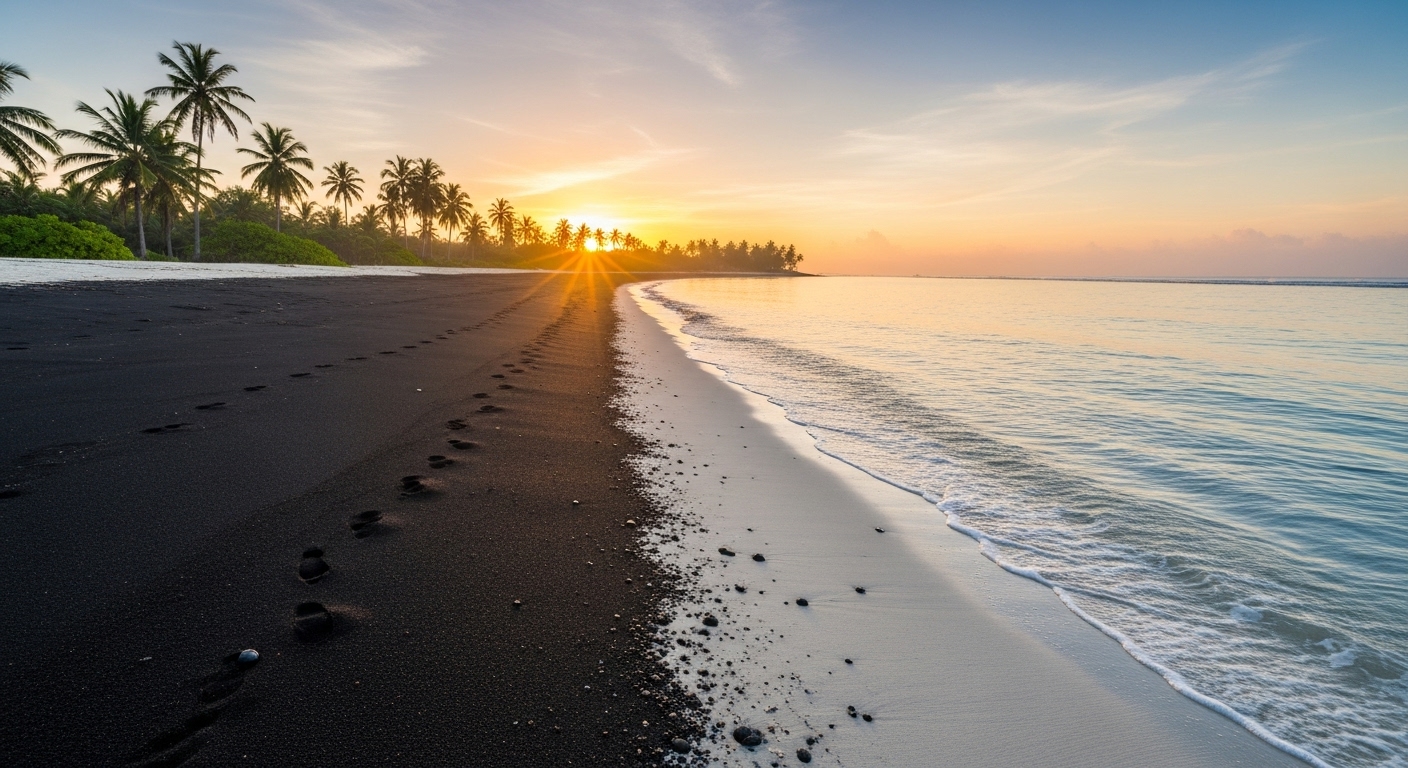
Have you ever walked along a beach and noticed two completely different colors of sand blending seamlessly along the shoreline? It feels like nature decided to paint with two palettes at once. Islands with dual-color sands on one beach are rare geological wonders that combine volcanic history, coral remnants, and mineral deposits into a stunning visual spectacle. From black volcanic sands meeting bright white coral sands to red and green mixtures, these beaches are more than just beautiful—they’re living history.
These beaches evoke questions about how landscapes are shaped and how the planet continues to surprise us. How did the contrasting sands form? Why are they side by side? And what is it like to experience the unusual sensation of walking on two different types of sand at once? WentWorld.com invites you to explore some of the world’s most amazing dual-color beaches and discover the stories hidden in their grains.
What Makes Dual-Color Beaches So Unique?
Most beaches have a uniform appearance because sand comes from one dominant source, usually nearby rocks or coral. Dual-color beaches occur when two distinct sand sources converge. For example, black volcanic sand might flow from a lava cliff, while pale white sand could be the erosion product of nearby coral reefs. When waves and currents meet in just the right way, these sands align on the same shore without completely mixing, creating an extraordinary visual effect.
The contrast isn’t just beautiful—it’s fascinating scientifically. Black volcanic sand is rich in iron and magnesium, often heavy and coarse, while white coral sand is lighter and composed mostly of calcium carbonate. Walking on such a beach, you can literally feel the differences between the sands beneath your feet. Imagine switching from warm, gritty black sand to soft, cool white sand as you stroll along a single coastline. It’s an experience that engages all your senses.
Have you ever felt sand beneath your feet and wondered about the journey it took to get there? Dual-color beaches make that journey tangible.
Hawaiian Islands: Big Island’s Black and Green Sands
Hawaii is home to some of the world’s most famous colored sands. The Big Island, in particular, offers both black and green sand beaches. The black sands at Punalu’u Beach are formed from cooled lava fragments, creating a dramatic backdrop against the Pacific Ocean. The rare green sands of Papakōlea Beach, on the other hand, come from olivine crystals that weather from volcanic rocks over millennia.
Experiencing both types of sand on the same island gives visitors a chance to appreciate nature’s contrasts. The stark black sands can feel almost surreal under the sun, while the green sands have a jewel-like quality that makes the beach feel magical. For photographers and travelers alike, these locations offer a dreamlike canvas.

Sicily’s Beaches: Black and White Sands Together
In Europe, Sicily offers another example of dual-color beaches shaped by volcanic activity. The island’s Mount Etna, one of the most active volcanoes in the world, has contributed black sands to nearby coastlines, while white sands are often washed down from limestone cliffs and coral reefs. At some beaches, you can literally see the line where black and white sands meet, creating a natural border that photographers and beachgoers find mesmerizing.
Italy’s tourism board highlights these unique formations in the official tourism guide. Visitors are encouraged to respect the natural formations while walking along the contrasting sands, as erosion and human activity can disturb these delicate boundaries.
New Zealand: Red and Black Sands in Harmony
New Zealand is known for its dramatic coastlines, and dual-color beaches add to the country’s natural allure. The North Island hosts beaches where volcanic black sands meet red sands stained by iron-rich rocks and soils from inland cliffs. The interplay of color is not only stunning but also tells the story of volcanic activity, erosion, and sediment transport. Hikers and photographers often trek along these beaches early in the morning to catch the light at the perfect angle for reflections and color contrast.
New Zealand’s Department of Conservation provides guidelines for responsible beach exploration at doc.govt.nz. Following these ensures that visitors can enjoy the beaches without damaging the delicate balance of colors and local ecosystems.
Bali’s Black and White Sand Beaches
Bali, Indonesia, is famous for tropical beaches, but it also offers stunning dual-color shores. On some beaches, black volcanic sands meet softer white sands, creating a striking visual transition. This is especially dramatic during sunrise or sunset when the contrast of colors is amplified by golden light. Tour operators often recommend visiting quieter sections to avoid crowds, ensuring that you can fully appreciate the natural beauty without distraction.
Indonesia’s Ministry of Tourism highlights Bali’s unique beaches in its cultural and natural travel programs. Visitors are encouraged to explore beyond the popular tourist hubs to discover dual-color sands that feel like hidden gems.
The Science of Dual-Color Sands
Dual-color sands are not just visually stunning—they’re geologically informative. Volcanic sands are typically dark because they contain heavy minerals like magnetite and basalt. Coral sands are pale due to calcium carbonate content. Red sands often come from iron oxidation, giving them rich earthy tones. When these sands meet, they provide a real-world laboratory for understanding erosion, mineral distribution, and ocean currents.
Researchers often study these beaches to understand sediment dynamics, coastal erosion patterns, and even climate change impacts on beach formation. They remind us that every grain of sand has a story, from deep beneath the Earth’s crust to the shore where you feel it beneath your toes.
Experiencing Dual-Color Beaches
Visiting an island with dual-color sands is more than a visual treat—it’s an immersive experience. As you walk along the shore, you can notice how the black volcanic sand retains heat more than the lighter sand, sometimes warming your feet in surprising ways. The texture difference is also noticeable: black sands are often coarser, while white sands are soft and powdery. Some beaches even allow you to see small fossils or mineral crystals in the sand, adding to the sense of wonder.
Have you ever run your hands through sand and wondered about its history? Dual-color beaches make that curiosity come alive. Standing between two contrasting sands, you can almost feel the millions of years that shaped the landscape.

How to Travel Responsibly
Dual-color beaches are fragile environments. Walking carefully, avoiding littering, and not taking sand home are simple yet crucial actions to preserve these natural wonders. Many islands have local conservation programs that guide responsible tourism, ensuring that the next generation of travelers can enjoy these breathtaking coasts.
Airlines such as Finnair and Qantas offer routes to some of the world’s dual-color beach destinations, making them accessible for curious explorers. Planning visits during early mornings or late afternoons often enhances the experience, as the light accentuates the color contrasts and crowds are minimal.
Why These Beaches Capture Our Imagination
There is something poetic about seeing two colors coexisting naturally, side by side, without blending. It reminds us that the world is full of contrasts that complement each other perfectly. Just as night and day, sun and rain, or calm and storm exist in balance, so too do these sands create harmony on the shore.
Islands with dual-color sands on one beach are rare, and that rarity makes them even more compelling. They invite us to reflect on nature’s artistry and to question how much we understand about the forces shaping our planet. Have you ever been amazed by a natural contrast so perfect it felt intentional? These beaches offer that experience in abundance.
We would love to hear your thoughts. Have you visited a dual-color beach? Did it leave a lasting impression on you? Share your stories and experiences with us. If you enjoy discovering such extraordinary natural wonders, follow WentWorld.com on our social media platforms for more breathtaking journeys around the globe.
Catch up on the top stories and travel deals by subscribing to our newsletter!