Have you ever stood at the base of a hill, staring up at a city that seems to climb into the clouds? In many funicular cities, that’s not just a view—it’s an experience waiting to happen. From the steep slopes of Valparaíso to the clifftop views of Lisbon, funiculars are more than a way to get around; they’re a window into the character, history, and charm of some of the world’s most beautiful places. Whether you’re an architecture lover, a thrill-seeker, or just someone who appreciates a good view, exploring these cities will leave you breathless—sometimes literally! And if you’re planning your next trip, this might just change how you think about urban transport forever.
What Makes Funicular Cities So Fascinating?
Funiculars are one of those rare intersections of art, engineering, and adventure. They’re railways designed for steep inclines, usually connecting lower city areas with high-elevation neighborhoods. As you ride, you glide smoothly between worlds—the bustling modern streets below and the tranquil, scenic outlooks above. It’s almost magical, isn’t it? These systems were created out of necessity but have become icons of their cities.
For travelers, funicular cities offer more than transportation. They provide a sense of time travel. When you step into one of these narrow cars, you’re not just moving up a hill—you’re traveling through history, culture, and innovation. Each creak of the cable and each view from the window tells a story of how communities adapted to their landscapes. In many ways, they are symbols of resilience, creativity, and charm.
The Global Appeal of Funicular Travel
Why do so many travelers fall in love with funicular cities? Because these rides are short yet unforgettable. They combine the ease of urban exploration with the thrill of vertical adventure. Think about it—how many cities can you say literally pull you uphill while you sit back and watch the skyline unfold?
From a sustainability perspective, funiculars are also incredibly efficient. They use counterbalanced cars, meaning when one goes up, another comes down, conserving energy. This makes them one of the earliest and greenest forms of public transport. So, as travelers become more eco-conscious, these systems are being celebrated anew as symbols of smart and sustainable design.
Europe’s Most Beloved Funicular Cities
Europe is practically the continent of funiculars. Cities like Lisbon, Budapest, and Bergen proudly maintain their old but perfectly functional systems. Take Lisbon’s “Ascensor da Bica,” for instance—it’s more than 130 years old, yet still climbs effortlessly through the city’s colorful lanes. The sounds of bells and tramlines blend into the rhythm of daily life, giving every visitor an authentic feel of old-world charm. Meanwhile, in Budapest, the Buda Castle Funicular whisks you from the Danube River up to the palace district in less than two minutes. Short? Yes. Unforgettable? Absolutely.
And then there’s Bergen, Norway—a city where the funicular isn’t just transportation, it’s an event. The Fløibanen funicular takes you to the top of Mount Fløyen, where you’ll find panoramic views that seem straight out of a dream. Imagine stepping out of the car and seeing the city lights twinkle below you like a reflection of the stars above. Now that’s travel magic.

Hidden Funicular Treasures Outside Europe
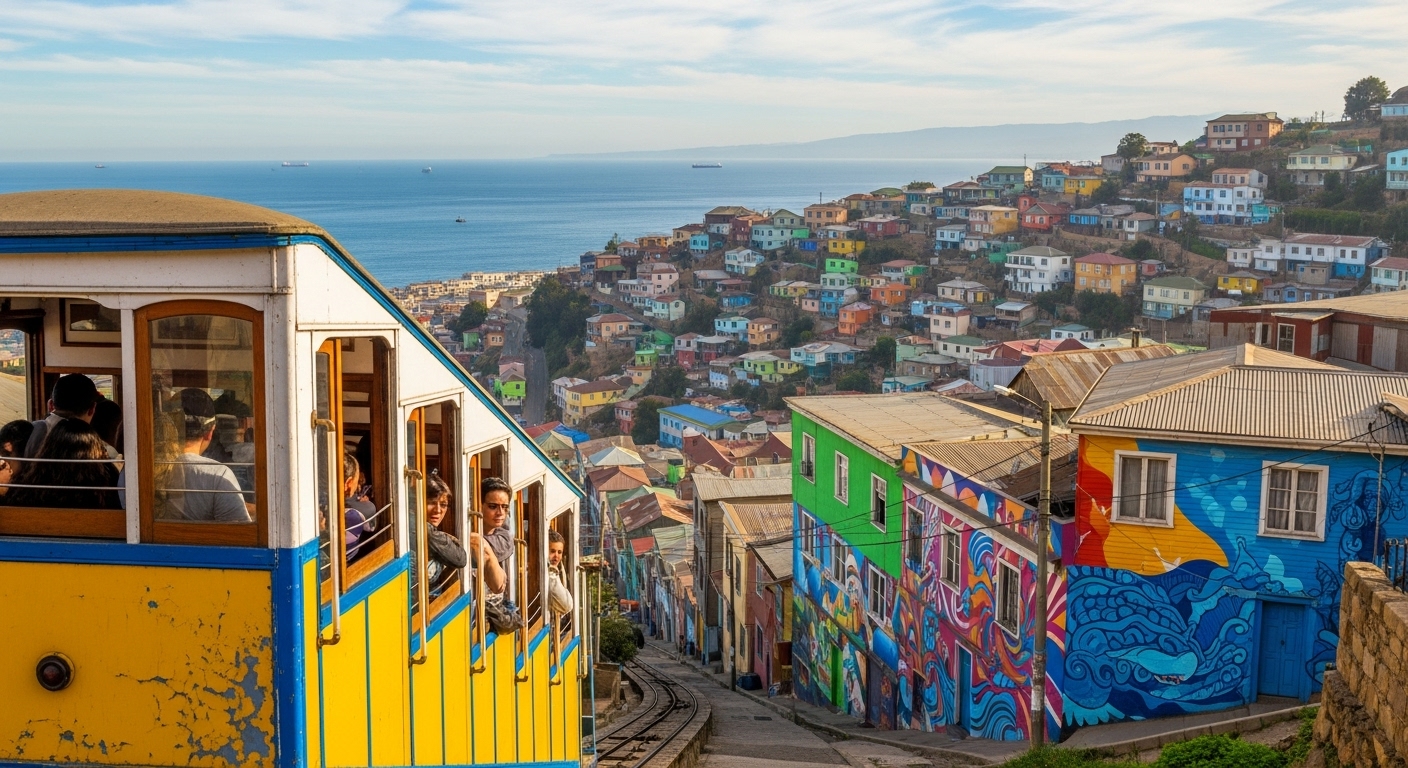
Although Europe dominates the list of famous funicular cities, other parts of the world are full of surprises. In Valparaíso, Chile, dozens of these hillside elevators, known locally as “ascensores,” have connected neighborhoods for more than a century. Each has its own personality, from bright colors to unique mechanical quirks. Valparaíso’s funiculars are UNESCO-protected, a recognition of their historical and cultural value.
Meanwhile, Hong Kong’s Peak Tram is one of Asia’s steepest and most iconic rides, pulling passengers up to Victoria Peak since 1888. The ride itself offers breathtaking cityscape views—especially at sunset. Have you ever seen a skyline that seems to tilt with you as you climb? That’s the Peak Tram experience in one sentence.
Funiculars Meet Modern Design
Interestingly, many cities are reviving or reinventing their funicular systems with sleek, modern designs. Switzerland’s Stoosbahn, for example, is the world’s steepest funicular—with a gradient of 110%! Its futuristic circular cars keep passengers upright as the track rises dramatically up the mountain. It’s an engineering marvel and a thrilling adventure rolled into one.
These innovations prove that funicular cities aren’t just living in the past—they’re adapting. New systems integrate digital controls, safety sensors, and eco-friendly braking mechanisms. As urban areas expand vertically, funiculars offer efficient solutions to connect neighborhoods separated by elevation instead of distance. They’re both nostalgic and forward-thinking—a rare combination.
Why Travelers Should Experience Funicular Cities
If you love discovering the heartbeat of a city, a funicular ride offers something most tourist buses or taxis can’t: authenticity. You’ll often share the ride with locals heading home, schoolchildren laughing, or elderly residents who’ve ridden the same track for decades. That small shared experience gives you a real sense of place—something no tour guide could replicate.
Besides, these rides are photogenic! From street art visible along Lisbon’s steep walls to the sweeping views of Bergen’s harbor, your camera will thank you. And unlike hiking or long commutes, you get the same spectacular vistas without breaking a sweat. So, next time you plan a trip, ask yourself—does the city have a funicular? If so, it deserves a spot on your itinerary.
Funiculars and Sustainability: A Perfect Pairing
As cities work to reduce carbon footprints, the revival of funiculars makes perfect sense. They require minimal power, produce almost no emissions, and can operate for decades with minimal maintenance. In fact, some are even powered by renewable energy sources like hydroelectric systems. That means you’re not just sightseeing—you’re participating in a cleaner, greener form of urban exploration.
Moreover, funiculars encourage slow travel—a growing movement among responsible travelers. Instead of rushing from one attraction to another, you can enjoy the journey itself. The view changes slowly, the wind feels fresh, and you have time to observe how people live, work, and move. Isn’t that what true travel is all about?
Here’s a thought: what if your next trip revolved around finding the most interesting funiculars in the world? You could start in Europe, hop to South America, and finish in Asia—all connected by these charming hillside railways. You’d experience architecture, history, and local life in a completely new way. So, tell us—would you consider it? Which city would you visit first?
We’d love to hear from you! Have you ever been on a funicular before? Which one left the biggest impression? Drop your experiences in the comments below and share your photos if you can. Your story might just inspire someone else’s next great adventure. And don’t forget—follow WentWorld on social media for more offbeat travel insights, destination guides, and behind-the-scenes stories from around the globe. Your next unforgettable ride could be waiting just one click away.
Catch up on the top stories and travel deals by subscribing to our newsletter!