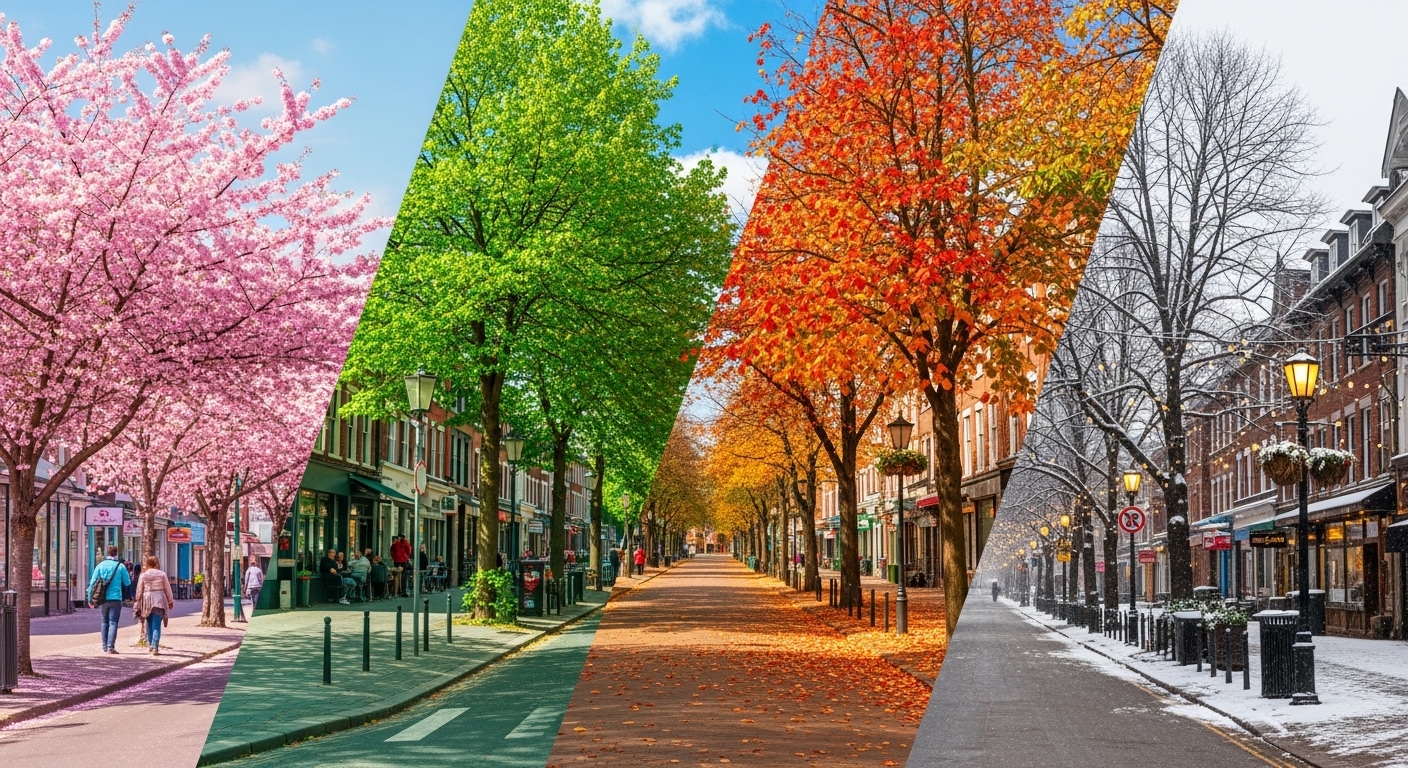
Cities with color-themed neighborhoods by season feel like living galleries, where streets shift moods as months pass. Instead of staying visually constant, these places transform through coordinated colors, seasonal plants, painted facades, lighting choices, and cultural traditions.
In spring, soft pastels emerge. During summer, bold and bright tones dominate. Autumn brings warm earth shades, while winter highlights whites, blues, and glowing lights. These seasonal color changes influence how people experience neighborhoods and how visitors remember them.
Have you ever noticed how color alone can change the way a place feels?
What Are Color-Themed Neighborhoods
Color-themed neighborhoods are areas where buildings, public spaces, and natural elements follow a shared color identity. In some cities, this theme remains constant year-round. In others, the palette changes deliberately with the seasons.
Cities with color-themed neighborhoods by season use flowers, banners, lighting, murals, and temporary installations to guide these transformations. As a result, neighborhoods feel alive rather than static.
Why Cities Embrace Seasonal Color Planning
Color affects emotion, movement, and memory. Urban planners and cultural groups use seasonal color themes to improve well-being, encourage walking, and strengthen neighborhood identity.
Additionally, rotating color themes reduce visual fatigue. Residents experience familiarity without boredom, while visitors encounter something new each season.
Chefchaouen’s Shifting Blues and Natural Accents
Chefchaouen in Morocco is famous for its blue-painted streets. However, seasonal elements subtly alter its appearance throughout the year.
In spring and summer, green plants and colorful textiles contrast against blue walls. During cooler months, lighting and softer tones dominate. Tourism details can be explored through Visit Morocco.
Tokyo Neighborhoods and Seasonal Color Culture
Tokyo offers one of the clearest examples of cities with color-themed neighborhoods by season. While buildings remain mostly neutral, nature and design do the work.
Spring brings pink cherry blossoms to districts like Meguro. Summer festivals add vivid reds and yellows. Autumn turns parks and streets golden. Winter replaces foliage with lights and minimal palettes.
Each season reshapes the same streets into entirely different experiences.
Burano’s Constant Color With Seasonal Contrast
Burano, near Venice, is known for its brightly painted houses. While colors remain year-round, the surrounding environment changes dramatically by season.
Summer sunlight intensifies hues, while winter fog softens them. Seasonal flowers and shutters add subtle shifts that locals maintain carefully. Visitor information is available at Venezia Unica.
Paris and Its Seasonal Visual Rhythm
Paris may not repaint neighborhoods each season, yet it achieves seasonal color themes through trees, storefronts, and lighting.
Spring introduces green and pastel tones along boulevards. Summer emphasizes café umbrellas and bright florals. Autumn brings copper and amber leaves. Winter highlights white stone paired with warm golden lights.
These subtle changes guide how people move and gather.
Latin American Cities and Festival Colors
In many Latin American cities, seasonal color shifts align with festivals. Neighborhoods decorate streets with banners, paper art, and painted motifs tied to specific times of year.
These changes often involve entire communities, reinforcing shared identity and tradition rather than top-down planning.
How Seasonal Colors Affect Daily Life
Cities with color-themed neighborhoods by season influence how residents interact with their environment. People walk more, photograph more, and engage with public spaces differently.
Color cues also signal seasonal activities. Bright tones invite celebration, while muted palettes encourage calm and reflection.
The Role of Nature in Seasonal Palettes
Nature plays a central role in seasonal color planning. Trees, flowers, vines, and water reflections often do most of the visual work.
Instead of repainting buildings, cities rely on planting strategies that shift color naturally throughout the year.

Challenges of Maintaining Seasonal Identity
Coordinating seasonal color changes requires effort and collaboration. Plants need care. Installations need replacement. Community buy-in remains essential.
However, when residents feel ownership, maintenance becomes a shared responsibility rather than a burden.
Traveling With Seasonal Color in Mind
Timing matters when visiting cities with color-themed neighborhoods by season. The same destination can feel entirely different depending on the month.
Airlines such as Air France and Japan Airlines connect travelers to cities known for seasonal transformations.
Why These Cities Feel More Memorable
Memory connects strongly to color. Seasonal palettes help visitors remember not just where they went, but how a place felt at a specific moment in time.
Cities with color-themed neighborhoods by season create emotional bookmarks rather than static images.
If your neighborhood changed colors with each season, would you experience it differently?
Follow WentWorld to explore cities that express identity, rhythm, and emotion through unexpected design choices.
Catch up on the top stories and travel deals by subscribing to our newsletter!