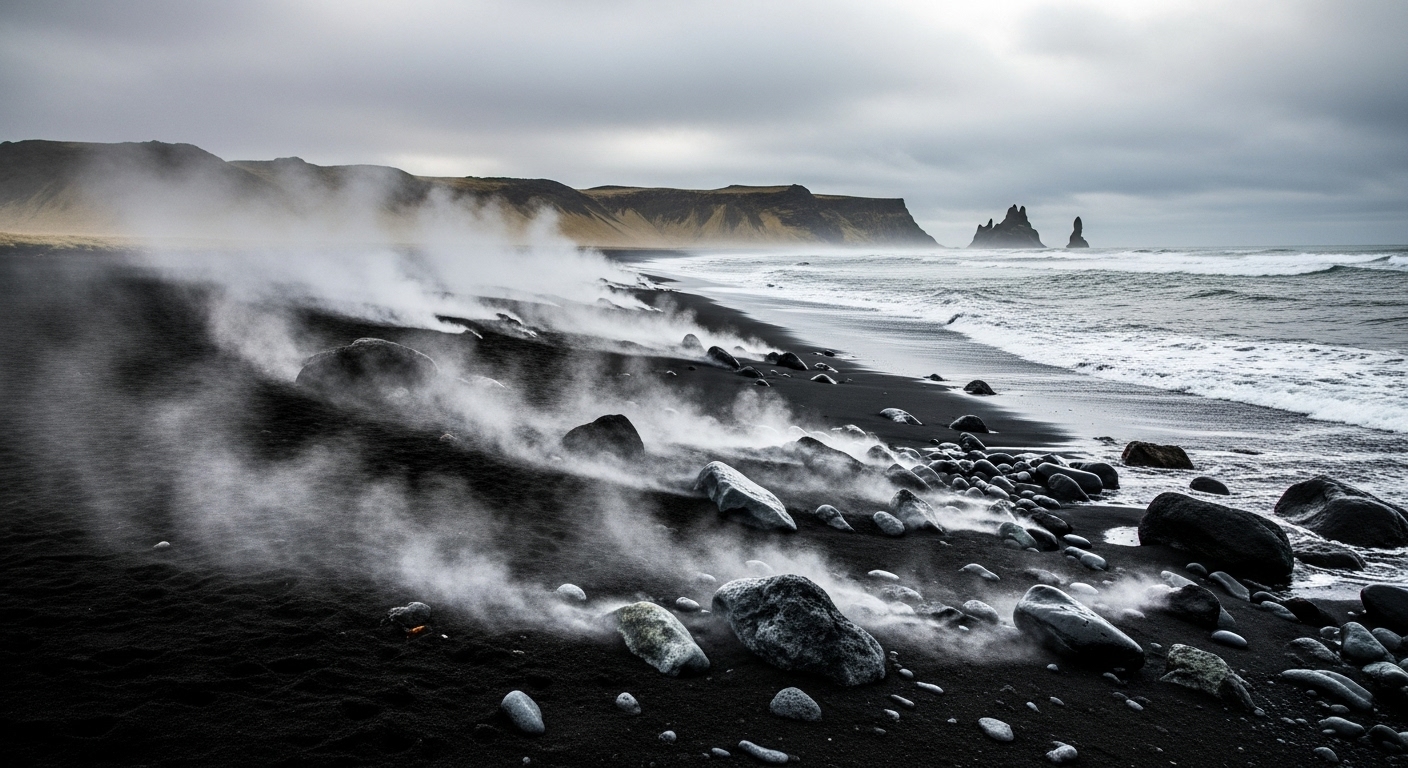
Some beaches feel cold even under bright sun. Others surprise you the moment your feet touch the sand. Lava-warm beaches: geothermally heated sand changes the entire idea of a coastal walk. Instead of rushing toward the water for warmth, you find it beneath you, radiating quietly from volcanic systems hidden below the surface.
Lava-warm beaches: geothermally heated sand exists where the planet’s internal heat meets the shoreline. These beaches feel alive in a subtle way. You don’t see flames or lava flows. You feel warmth rising through grains of sand, especially near volcanic vents or underground fissures. It turns an ordinary beach into something closer to a natural spa.
Have you ever stepped onto sand that felt warm without sunlight explaining it?
What creates lava-warm beaches with geothermally heated sand
Lava-warm beaches: geothermally heated sand forms in volcanic regions where magma heats groundwater beneath the surface. That heat travels upward through rock and sediment, warming sand from below.
Unlike tropical beaches warmed only by sun, these shores stay warm even during cloudy weather or cooler seasons. The heat comes from the Earth itself, not the atmosphere.
Some beaches warm evenly, while others develop hot pockets that shift over time. The experience feels unpredictable yet natural.
Why geothermal warmth feels different from sunlight
Lava-warm beaches: geothermally heated sand produces heat that rises steadily rather than fading quickly. Sun-warmed sand cools as soon as clouds appear or evening approaches. Geothermal warmth lingers.
This warmth feels deeper. It penetrates rather than resting on the surface. Many visitors describe it as calming rather than sharp.
Because the heat comes from below, even night walks can feel surprisingly comfortable.
Playa de la Caleta, Tenerife
Tenerife’s volcanic history shapes many of its beaches. In certain areas, lava-warm beaches: geothermally heated sand reveals itself through patches of warm shoreline.
Black volcanic sand absorbs and retains geothermal heat efficiently. Walking barefoot here feels grounding rather than hot.
Local volcanic information is available through Volcano Teide.
Reynisfjara and Iceland’s geothermal coastlines
Iceland offers some of the most striking lava-warm beaches: geothermally heated sand experiences. Along certain stretches, underground geothermal activity warms black sand even as cold Atlantic air moves overhead.
The contrast feels dramatic. Steam rises faintly in cooler temperatures. Visitors often stop mid-walk to feel the sand with their hands.
Safety and geological context are explained by Visit Iceland.
Hot Water Beach, New Zealand
Hot Water Beach is one of the most interactive examples of lava-warm beaches: geothermally heated sand. At low tide, visitors dig shallow pools where hot water rises naturally through the sand.
The beach changes daily as tides expose and conceal geothermal vents. Timing becomes part of the experience.
Information about geothermal systems is provided by New Zealand Department of Conservation.
Why black sand enhances geothermal warmth
Lava-warm beaches: geothermally heated sand often appears black due to volcanic minerals. These sands absorb heat efficiently and release it slowly.
The texture feels finer and heavier than typical beach sand. Heat distributes evenly, creating comfortable warmth rather than burning heat.
This combination makes walking and resting on these beaches unusually pleasant.

The science beneath your feet
Geothermal warmth travels through porous rock. As magma heats groundwater, convection pushes warmth upward. Sand acts as insulation.
Lava-warm beaches: geothermally heated sand reflects active geological systems operating quietly beneath the surface.
According to US Geological Survey, geothermal gradients vary significantly near volcanic zones.
Why these beaches feel restorative
Warmth relaxes muscles. Combined with ocean air, lava-warm beaches: geothermally heated sand creates a soothing environment.
Many cultures associate geothermal heat with healing. While these beaches are not medical treatments, visitors often describe reduced tension and improved relaxation.
The experience encourages stillness rather than activity.
Best times to experience geothermal beaches
Early morning and evening reveal geothermal warmth most clearly. Cooler air increases contrast.
Lava-warm beaches: geothermally heated sand feels most noticeable when sunlight does not dominate temperature perception.
Cloudy days often deliver the strongest impression.
Safety considerations
Not all geothermal heat distributes evenly. Some areas may be too hot for prolonged contact.
Following posted guidelines and observing local behavior helps avoid discomfort.
Many geothermal authorities recommend testing sand temperature with hands before standing still.
Why WentWorld explores places like this
WentWorld highlights landscapes shaped by invisible forces. Lava-warm beaches: geothermally heated sand shows how the Earth continues working beneath calm surfaces.
These beaches invite travelers to slow down and feel geology rather than just see it.
If you’ve visited a beach that surprised you physically, we’d love to hear about it.
Follow WentWorld on social media to discover more places where the planet quietly reshapes everyday experiences.
Catch up on the top stories and travel deals by subscribing to our newsletter!