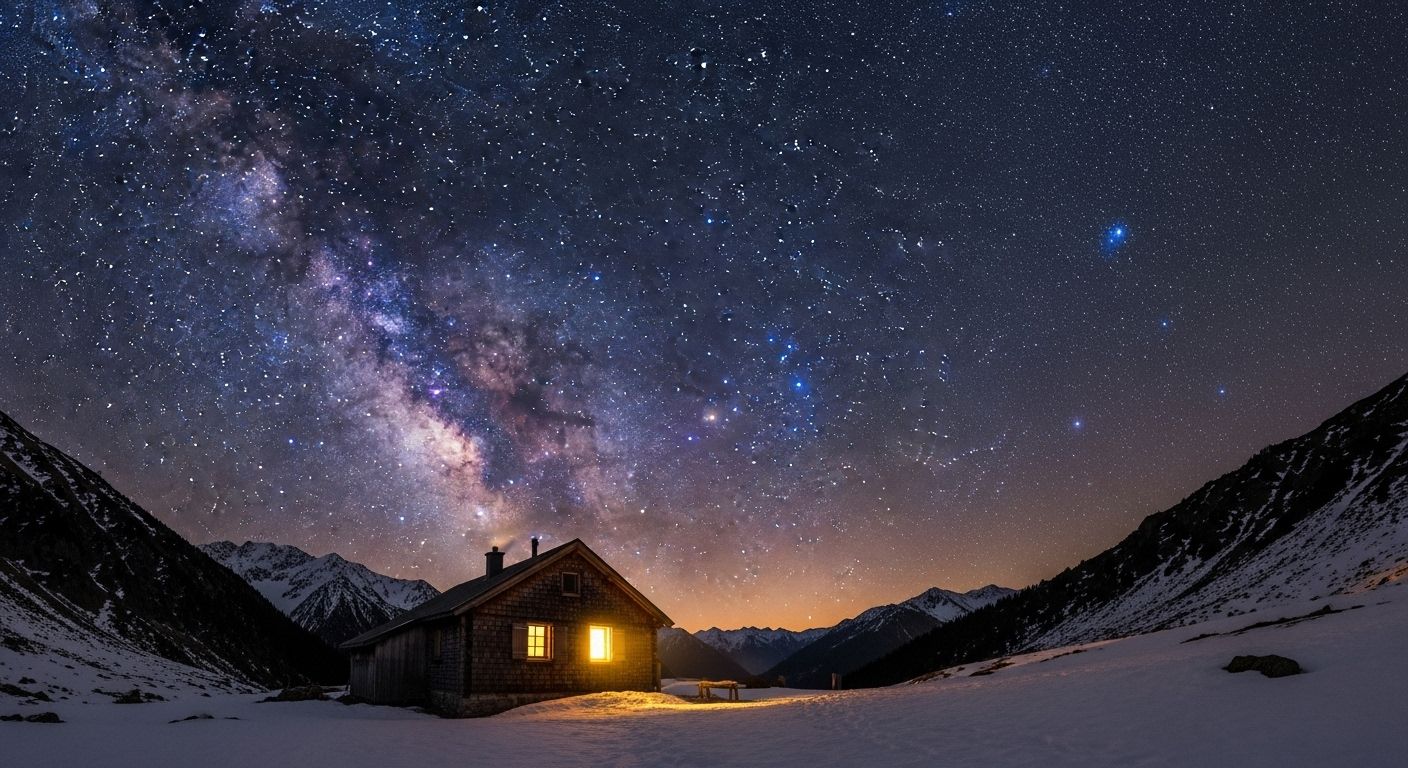
Imagine spending your night high above the clouds, wrapped in the quiet of the mountains, while millions of stars sparkle overhead. No traffic noise, no city lights, no distractions. Just you, the mountains, and the universe stretching endlessly above you. This is exactly what mountain huts that double as astronomy posts offer. These unique mountain shelters are not only built to protect hikers and adventurers, but they also serve as ideal locations for stargazing and space observation. In recent years, these huts have become dream destinations for both travelers and astronomy lovers. Have you ever watched the Milky Way with your own eyes instead of through a screen?
Mountain huts that double as astronomy posts exist in some of the darkest places on Earth. Because they sit far from cities and artificial light, they provide perfect conditions to observe stars, planets, and even distant galaxies. In this blog, we will explore some of the world’s most fascinating astronomy mountain huts, why they are so special, and how you can experience one for yourself.
Why Mountains Are Perfect for Stargazing
Mountains naturally offer the best conditions for astronomy. First of all, higher altitude means thinner air, which reduces light distortion and improves visibility. Secondly, remote mountain regions usually have almost zero light pollution. As a result, stars appear brighter, clearer, and more detailed than anywhere else.
Additionally, mountain weather patterns often create large windows of clear skies. While cities may suffer from smog and humidity, many mountain areas enjoy crisp, clean air. That is exactly why professional observatories are commonly built on mountain peaks. Mountain huts that double as astronomy posts take this same advantage and turn it into an unforgettable travel experience.
What Makes an Astronomy Mountain Hut Special
These huts are not just simple shelters for hikers. They are carefully designed to support stargazing activities. Many of them include:
- Outdoor viewing decks with 360-degree night sky access
- Mounted telescopes for public use
- Red lighting inside to protect night vision
- Educational charts, star maps, and astronomy guides
- Simple sleeping areas for overnight stays
Some huts also host guided astronomy sessions where visitors learn how to identify constellations, planets, meteor showers, and even satellites. Because of this, mountain huts that double as astronomy posts are becoming popular with students, couples, photographers, and families who want something more meaningful than ordinary tourism.
Famous Mountain Huts That Double as Astronomy Posts Around the World
1. Paranal Observatory Refuge, Chile
The Atacama Desert in Chile is considered one of the best stargazing locations on Earth. The Paranal Observatory sits high in this desert and is home to some of the most powerful telescopes ever built. Nearby mountain refuges allow astronomers and visitors to stay overnight while observing the southern sky.
Because the Atacama has extremely dry air and almost no clouds, the stars here appear unbelievably sharp. Visitors staying in these refuges often see the Milky Way, the Magellanic Clouds, and even distant nebulae with the naked eye. The silence of the desert combined with the massive sky creates an experience that many describe as life-changing.
2. Pic du Midi Mountain Hut, France
Located in the French Pyrenees, Pic du Midi is both a scientific observatory and a tourist destination. A special mountain lodge allows visitors to sleep at over 2,800 meters above sea level. The observatory here has been studying the sky for over a century, and today it offers both public stargazing nights and overnight science experiences.
Guests are guided by professional astronomers who explain the movement of planets, star clusters, and deep-space objects. In the morning, visitors wake up to golden cloud oceans beneath their windows, making it one of the most magical mountain hut experiences in Europe.
3. Teide Observatory Mountain Shelters, Spain
On the volcanic island of Tenerife, Spain, the Teide Observatory stands at over 2,300 meters above sea level. The surrounding national park includes mountain shelters that host astronomers, researchers, and astro-tourists.
The clear Atlantic skies, combined with strict light pollution laws on the island, make Teide one of the darkest and cleanest skies in the Northern Hemisphere. Visitors staying in nearby huts experience stunning views of Saturn, Jupiter, and meteor showers during peak seasons.
4. Mauna Kea Observatory Cabins, Hawaii
Mauna Kea is home to some of the world’s largest telescopes. At over 4,200 meters high, it rises above nearly all of Earth’s atmosphere. While most facilities are reserved for scientists, nearby support cabins and mountain shelters serve as overnight bases for astronomers and staff.
From these huts, observers witness skies so dark that shadows are cast by starlight alone. The view includes everything from bright planets to distant galaxies. The astronomical importance of Mauna Kea is recognized worldwide, and it remains one of the most famous astronomy locations on the planet.
5. Sutherland Mountain Huts, South Africa
In South Africa’s Karoo region, the Southern African Large Telescope operates under incredibly dark skies. Simple mountain huts near the observatory host visiting scientists and astronomy enthusiasts.
The Karoo desert has extremely low humidity and almost zero air pollution. Because of this, the southern stars appear sharp and vivid. Visitors often see the Southern Cross, bright star clusters, and distant galaxies with remarkable clarity.

The Science Behind Dark Sky Locations
Dark sky locations are measured based on how little artificial light interferes with natural night vision. The lower the light pollution, the more stars we can see. In cities, we might see only 50 to 100 stars. In a true dark sky location, we can see over 5,000 stars with the naked eye.
Mountain huts that double as astronomy posts are often located within protected dark sky reserves. These areas follow strict lighting rules to protect the clarity of the night sky. This is essential not just for astronomy but also for wildlife, which depends on natural light cycles for survival.
What It Feels Like to Sleep in an Astronomy Hut
Staying overnight in one of these huts feels completely different from a hotel stay. There are no screens glowing, no loud entertainment systems, and no city rush. Instead, evenings are spent under star-filled skies, wrapped in warm blankets, listening to wind move across the mountains.
Many travelers describe a deep sense of peace while watching the stars rise and set through the night. Some even report seeing shooting stars every few minutes during meteor showers. The experience often creates a strong emotional connection to the universe and to nature itself.
Who Should Experience These Mountain Huts
These unique huts attract many different kinds of travelers:
- Astrophotographers looking for perfect skies
- Students and science lovers
- Couples seeking quiet, romantic escapes
- Adventure travelers and hikers
- Families who want educational vacations
Because mountain huts that double as astronomy posts combine nature, science, and solitude, they appeal to anyone who wants meaningful travel rather than ordinary sightseeing.

Tips for Visiting an Astronomy Mountain Hut
Planning your visit carefully is important. Here are a few useful tips:
- Always check lunar phases, as a full moon reduces star visibility
- Bring warm clothing even in summer, as mountain nights are cold
- Carry a red flashlight to protect night vision
- Learn basic constellations before your visit for a better experience
- Follow safety rules, especially at high altitudes
Because many huts are in remote areas, booking early and preparing properly guarantees a safer and more enjoyable stay.
The Future of Astronomy Tourism
Astro-tourism is growing rapidly across the world. More countries are protecting dark skies and developing mountain huts that double as astronomy posts for visitors. These efforts not only support science but also promote eco-tourism and sustainable travel. As cities become brighter, dark sky regions become more valuable. These mountain huts allow future generations to experience the universe in its natural form, without digital filters or screens.
Mountain huts that double as astronomy posts offer something rare and powerful. They give us a chance to slow down, look up, and reconnect with the sky that humans have admired for thousands of years. Whether you visit the deserts of Chile, the peaks of France, or the volcanoes of Hawaii, these huts offer nights filled with wonder and discovery.
Would you like to spend a night under the galaxy in one of these remote mountain shelters? Which destination excites you the most? Share your thoughts with us and follow us on our social media platforms for more unique travel inspirations.
Catch up on the top stories and travel deals by subscribing to our newsletter!