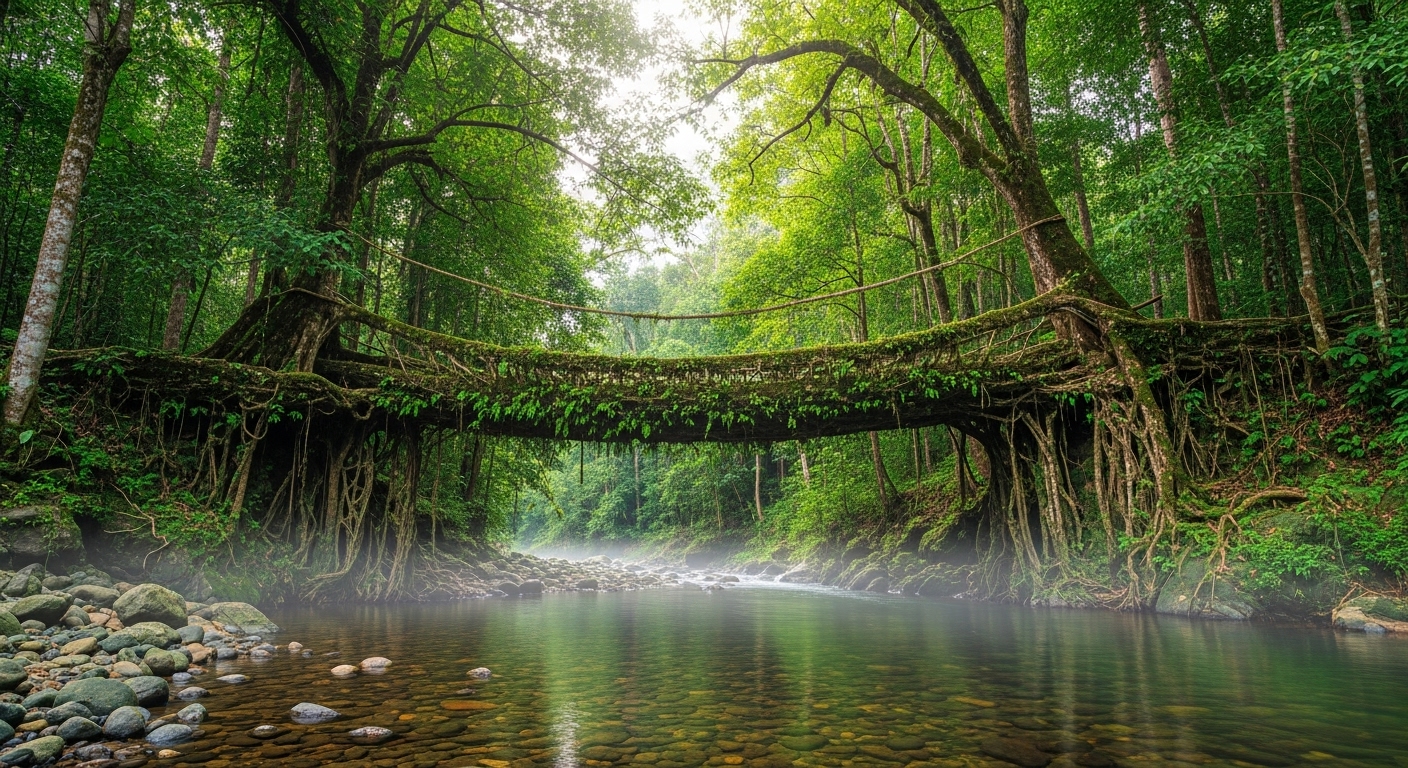
Few experiences compare to walking across a natural bridge formed entirely by trees. These living structures captivate travelers with their beauty and uniqueness. Destinations with natural bridges formed by trees offer adventure, tranquility, and a deep connection with nature. Unlike man-made bridges, these living walkways grow and adapt over time. They encourage visitors to slow down, observe, and appreciate the ingenuity of nature.
If you have imagined walking on a bridge that feels alive beneath your feet, these tree-made structures will inspire you. Destinations with natural bridges formed by trees often hide in remote corners of the world. Reaching them requires effort, making the journey itself an adventure. These sites also teach lessons about patience, sustainability, and the ways humans can harmonize with nature. Ask yourself: Would you prefer a living bridge that grows over centuries or a traditional bridge designed for practicality?
In this guide, we explore forests, rivers, and mountains to discover astonishing natural tree bridges. We discuss how they form, their cultural significance, and tips for travelers who want to cross them safely. By the end, you may share your experiences or dream destinations with us.
The Wonders of Living Tree Bridges
Living tree bridges form when the roots of certain trees grow across gaps like rivers or valleys. Local communities often guide these roots to create functional bridges. In India, the Indian rubber tree (Ficus elastica) produces strong aerial roots that can span long distances. Villagers carefully train the roots over bamboo or temporary scaffolds. Over decades, the roots thicken, merge, and form stable bridges capable of supporting people and livestock.
Destinations with natural bridges formed by trees highlight centuries of human ingenuity. They show how people can work with nature rather than against it. The bridges also attract visitors with lush vegetation, moss, ferns, and waterfalls. Walking on a living bridge engages all senses and leaves lasting memories.
How Natural Tree Bridges Are Created
The creation of living tree bridges involves both nature and human guidance. In Meghalaya, India, villagers plant trees on either side of a river or gap. They weave young roots over scaffolds and carefully direct their growth. Over decades, the roots strengthen and merge into a sturdy bridge. Local communities continue this practice to preserve and expand these natural pathways. National Geographic notes that some living root bridges are over 500 years old.
In other areas, natural bridges form without human help. Fallen trees and intertwined roots occasionally create crossing points over streams or gorges. However, human-guided bridges are more predictable and functional. They allow safe passage and become cultural landmarks.

Famous Destinations With Living Tree Bridges
The Cherrapunji and Meghalaya region in India hosts the most famous living root bridges. The Khasi and Jaintia tribes perfected this art over centuries. Some bridges, like the Umshiang Double Decker Living Root Bridge, span over 30 meters and feature multiple layers. Travelers describe walking across these bridges as stepping into a magical forest, where every root seems alive.
Outside India, tropical forests in Indonesia and Malaysia also contain impressive tree root bridges. In some Indonesian islands, banyan tree roots stretch across gorges, providing natural walkways. In Borneo, Malaysia, local communities use root formations to navigate dense jungle terrain safely.
Even in temperate climates, old-growth forests display tree roots and trunks forming natural crossings. For instance, Redwood National and State Parks in California offer fallen or intertwined trees that hikers can cross over streams. These bridges provide unique views of rivers and ravines and give adventurers unforgettable experiences.
In Australia, Ficus macrophylla produces massive aerial roots that sometimes grow into arches over rivers. These natural structures may form without human guidance but remain just as remarkable, demonstrating how trees can create functional pathways while supporting ecosystems.
Cultural Significance of Tree Bridges
Destinations with natural bridges formed by trees carry deep cultural meaning. In Meghalaya, living root bridges symbolize patience, collaboration, and respect for nature. Villagers teach children how to guide roots, ensuring the bridges grow stronger over generations. Local folklore, songs, and rituals often reference these bridges, reflecting human connection to the environment.
In Southeast Asia, some root and tree formations hold sacred status. They appear near temples or spiritual pathways. Crossing these natural bridges often involves reflection or ritual acknowledgment, highlighting the bond between humans and the natural world.

Visiting Natural Tree Bridges Safely
Travelers should prepare before visiting destinations with natural bridges formed by trees. Many bridges exist in remote areas with steep or uneven trails. Wear sturdy shoes and carry water, snacks, and a first aid kit. Check weather conditions, especially during the rainy season, when rivers swell and paths become slippery. Respect local customs, such as crossing one person at a time or avoiding touching roots to preserve the bridge.
Guided tours provide valuable context about the history and ecology of these areas. Local guides share stories of bridge creation, age, and maintenance. The Indian Tourism Board offers trekking experiences highlighting living root bridges while promoting sustainable tourism.
Why Travelers Love Living Tree Bridges
Part of the appeal of destinations with natural bridges formed by trees is their rarity. These living structures cannot be replicated elsewhere. They provide adventure, mystery, and a sense of timelessness. Walking across a bridge that has grown for decades allows visitors to connect with nature profoundly.
The visual beauty is unmatched. Intertwined roots form intricate patterns, often covered with moss, ferns, and flowers. Sunlight filtering through the canopy enhances the magical feel. Travelers report a deep sense of calm and awe that stays long after the hike ends.
Now that you know about destinations with natural bridges formed by trees, we want your thoughts. Would you cross a bridge that continues to grow over decades? Have you visited a living root bridge, or is this on your travel bucket list? Share your experiences and questions in the comments—we love hearing from you.
If you enjoy discovering unique natural wonders, follow us on our social platforms for more travel guides, rare destinations, and unforgettable adventures.
Catch up on the top stories and travel deals by subscribing to our newsletter!