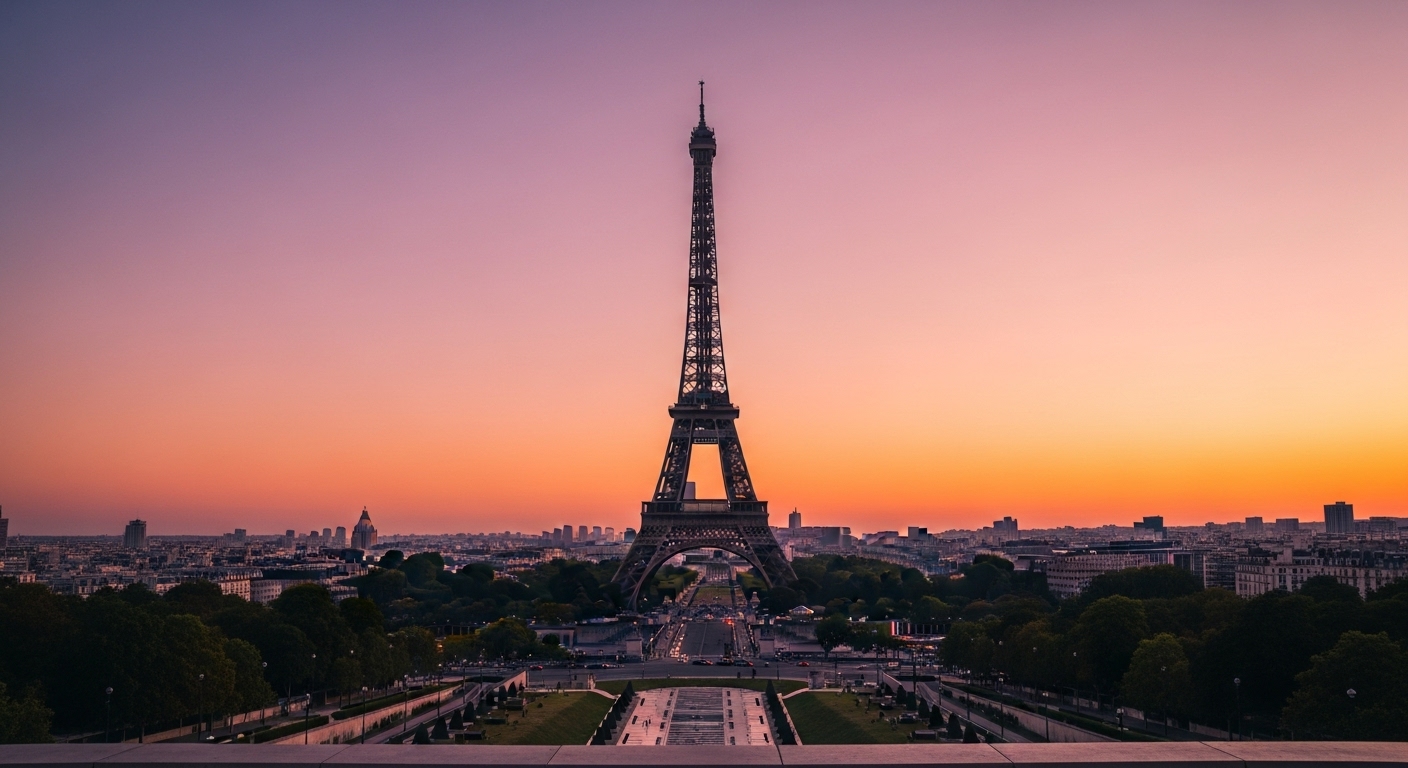
Ever stood in front of a world-famous structure and thought, “What really happened here?” Whether it’s the Eiffel Tower piercing the sky in Paris or the Great Wall snaking through the hills of China, many famous landmarks with fascinating backstories hold secrets most tourists never hear about. Let’s go beyond the surface—because these aren’t just places, they’re pages from a living storybook of humanity.
Settle in, fellow wanderer. What you’re about to read isn’t your typical travel guide. These are the little-known legends, bizarre tales, and spine-tingling secrets hidden behind some of the world’s most iconic sights. Get ready for a journey through time, curiosity, and a few surprises.
The Eiffel Tower: Paris’ Iron Controversy
We start with a landmark that’s as romantic as a love letter—yet it began as anything but. When Gustave Eiffel presented the idea for the tower in 1887, Parisians were furious. Artists and intellectuals called it “a monstrosity.” But Eiffel persisted. After all, it was built for the 1889 World’s Fair—and once completed, it stood defiant, tall, and elegant.
What’s wild? Eiffel built a small apartment at the top. Not for rent. Not for show. Just for him—to enjoy the Parisian skyline in peace while critics ranted below. Now, more than 7 million people visit every year. Funny how time turns ‘ugly’ into iconic, right?
The Leaning Tower of Pisa: A Mistake Worth Millions
Ever seen an engineering fail become a cultural treasure? The Leaning Tower of Pisa was meant to stand tall and straight. But poor planning and weak soil caused it to tilt during construction in the 12th century. Instead of abandoning it, builders kept working around the problem—layer by layer, adjusting the tilt. And it leaned more. And more.
Today, people flock to take those cheesy photos holding it up—and Pisa’s economy thrives on a happy accident. It’s truly a famous landmark with a fascinating backstory that proves mistakes can become masterpieces.
The Great Wall of China: Sticky Rice & Secrets
Sure, the wall is huge (over 13,000 miles!). But here’s the kicker: parts of the Great Wall are held together using sticky rice. Yes, rice—the stuff you eat with chopsticks. Ming Dynasty builders discovered that mixing sticky rice with slaked lime created a super-strong mortar. The amylopectin in the rice made the wall earthquake-resistant.
Isn’t it fascinating how a simple grain helped build one of the world’s most enduring landmarks? Talk about delicious innovation. No wonder it’s a famous landmark with a fascinating backstory.
Petra, Jordan: A City Carved in Stone and Lost in Time
Picture this: you’re walking through a narrow canyon. Sunlight bounces off pinkish-red cliffs. Suddenly, the path opens—and there it is. Petra’s Treasury, carved into rose-colored rock. Built by the Nabataeans in the 4th century BC, Petra was once a bustling trading city. Then… silence. It was forgotten for centuries, swallowed by sand and myth.
In 1812, Swiss explorer Johann Burckhardt disguised himself as an Arab traveler and “rediscovered” it. Locals had always known about it, of course—but the Western world hadn’t. The secrecy only added to its mystique. If you’ve ever wanted to walk into a fantasy novel, Petra is the real deal.

The Colosseum: More Than Just Gladiators
Rome’s Colosseum may be the most misunderstood stadium in history. Yes, gladiators fought. But it also hosted elaborate naval battles. Engineers flooded the arena to stage sea combat. Imagine spectators cheering as miniature warships clashed in real water!
There were trapdoors, underground cages, and elevators to raise animals into the ring. Think about the level of planning and drama—it makes today’s sports look tame. No surprise this ancient arena tops the list of famous landmarks with fascinating backstories.
Machu Picchu: The Hidden City in the Clouds
Lost in the misty mountains of Peru, Machu Picchu was unknown to the outside world until 1911. American explorer Hiram Bingham stumbled upon it while searching for Vilcabamba, the last Inca stronghold. Instead, he found a ceremonial retreat, astronomically aligned and ingeniously engineered.
Its terraced slopes prevented erosion. Its stone structures, built without mortar, have survived centuries of earthquakes. And yet, the Inca left no written records. It’s a story wrapped in silence—and nature protects it like a secret.
The Statue of Liberty: A Torch That Almost Didn’t Shine
We know her as a symbol of freedom. But the Statue of Liberty’s journey was rocky. Built in France, it was shipped in 350 pieces to New York in 1885—but there was a problem: America didn’t want to fund the pedestal.
It took a grassroots campaign, thousands of small donations, and Joseph Pulitzer’s newspaper to get the money. Only then could Lady Liberty stand tall. She’s now a beacon—and proof that public support can literally raise monuments.

The Taj Mahal: A Love Story—and an Unfinished One
Mughal emperor Shah Jahan built the Taj Mahal as a tomb for his beloved wife Mumtaz Mahal. But here’s the twist: he wanted to build a second Taj in black marble across the Yamuna River—his own tomb. A black-and-white Taj, mirroring each other.
His son Aurangzeb overthrew him before it could happen. Shah Jahan spent his last years imprisoned, gazing at the Taj from afar. Romantic? Heartbreaking? Probably both. And that vision of symmetry—of light and shadow—makes it one of the most poetic famous landmarks with fascinating backstories in the world.
Mount Rushmore: The Sculptor’s Struggle
When Gutzon Borglum began carving Mount Rushmore, he faced storms, funding cuts, and controversy. His vision? 60-foot heads of four U.S. presidents—symbolizing the birth, growth, development, and preservation of America.
He died before finishing. His son took over. Even now, the mountain remains incomplete—just like the American experiment it represents. And beneath it all lies a secret chamber intended to house national documents and treasures. Conspiracy theorists, start your engines!
Stonehenge: Still a Mystery
No blog about famous landmarks with fascinating backstories would be complete without Stonehenge. It’s prehistoric, it’s mysterious, and despite decades of research, we still don’t know exactly why it was built.
Was it an astronomical observatory? A religious site? A burial ground? Maybe all three. What we do know is that some stones were hauled from 200+ miles away. That’s commitment—whether by manpower, sleds, or alien tractor beams (depending on who you ask).
Because they’re more than history. They’re human. These tales speak to our fears, passions, flaws, and dreams. They remind us that the world isn’t just built with bricks and steel, but with legends, love, mistakes, and imagination. Now it’s your turn. Have you ever visited a famous place and learned something unexpected? Maybe a guide whispered a legend, or you stumbled onto a forgotten plaque. What story stuck with you the most?
Drop a comment below—I’d love to hear your favorite famous landmark with a fascinating backstory. Who knows, maybe it’ll end up in our next blog! If you enjoyed this ride through history, follow us on social media for more travel tales, historic twists, and global wonders. We’re always cooking up something surprising—and we’d love to share it with you.
Catch up on the top stories and travel deals by subscribing to our newsletter!