
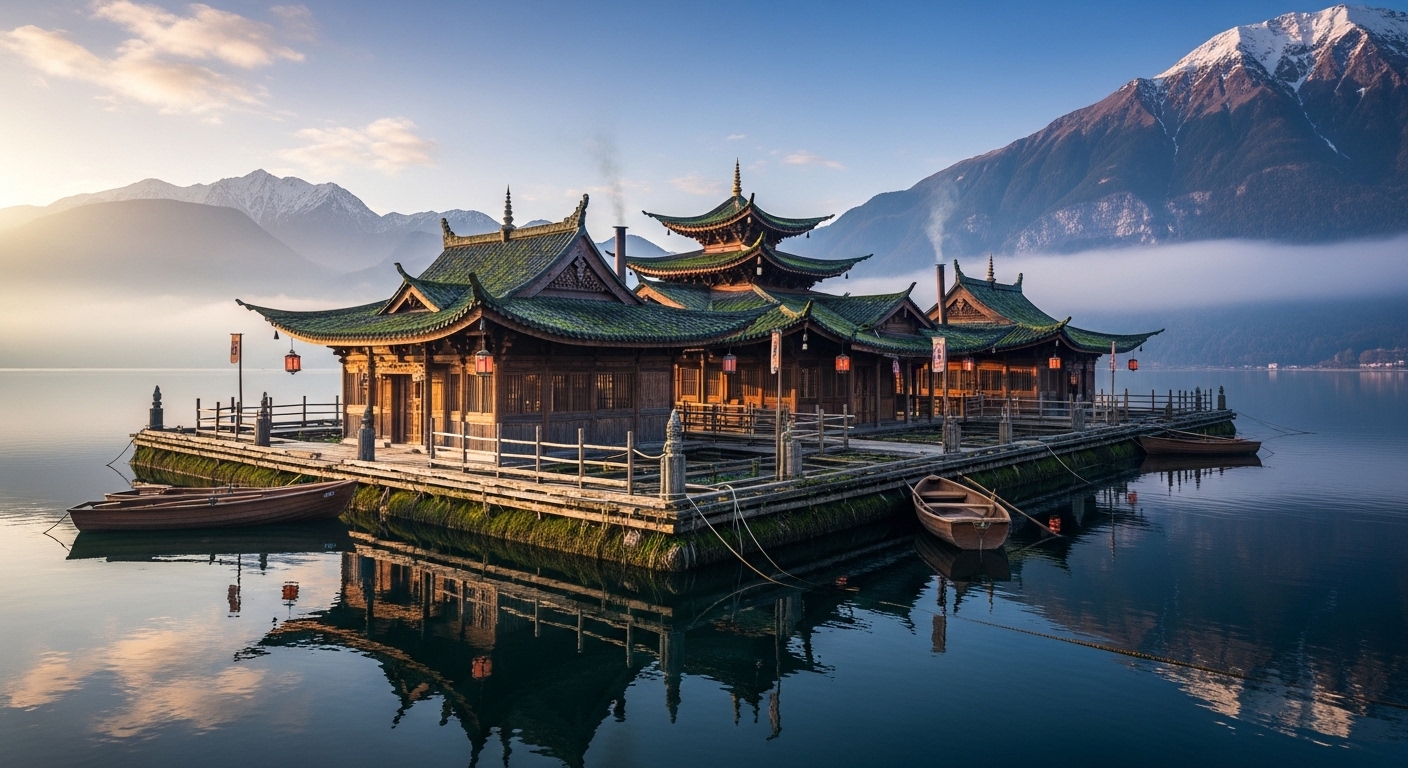
Across the world, travelers seek quiet places where time slows down and reflection becomes natural. Few destinations offer this sense of calm better than floating monasteries on anchored platforms. These unusual spiritual spaces combine faith, engineering, and nature into one peaceful experience. Built on stable floating structures or anchored platforms, these monasteries create environments where water replaces walls and horizons replace ceilings.
Floating monasteries represent a unique way humans adapt sacred traditions to changing environments. Instead of retreating to mountain caves or remote forests, some spiritual communities have chosen water as their foundation. Visitors often describe a powerful sense of stillness when surrounded by gentle waves and open skies.
Have you ever wondered how it feels to meditate while water quietly moves beneath your feet? Could floating monasteries offer a new form of spiritual travel in a busy modern world?
The Origins of Floating Monasteries on Anchored Platforms
The idea of floating monasteries on anchored platforms is rooted in centuries-old traditions of water-based spirituality. Many religions associate water with purification, renewal, and peace. Monasteries near lakes, rivers, and seas have existed for thousands of years.
Over time, some communities began building actual floating structures. Early examples were simple wooden platforms tied to riverbanks. These modest structures allowed monks and spiritual seekers to live close to water while remaining protected from floods.
Modern floating monasteries use advanced engineering to ensure stability and safety. Anchored platforms allow structures to move gently with tides and currents while remaining securely in place.
Why Spiritual Communities Choose Water
Water creates a natural boundary between everyday life and spiritual reflection. Floating monasteries provide isolation without complete remoteness. Visitors can still access them by small boats while experiencing a sense of retreat.
The constant movement of water encourages mindfulness. Waves create natural rhythms that many spiritual traditions consider helpful for meditation.
Another advantage is environmental harmony. Floating monasteries often have minimal impact on land ecosystems.
Do you find peace near water? Many people say lakes and oceans help them think more clearly.
Remarkable Floating Monasteries Around the World
Several destinations illustrate the beauty of floating monasteries on anchored platforms and water-based spiritual architecture.
In Myanmar, the floating monastery on Inle Lake demonstrates how religious life adapts to aquatic environments. Wooden monasteries stand on stilts or floating bases, surrounded by fishermen and gardens.
Thailand offers peaceful floating temples and monasteries along rivers and lakes. Visitors exploring spiritual sites through Thailand tourism often discover quiet water-based retreats far from busy cities.
In Japan, lake temples and floating shrines inspire modern monastery concepts. Travelers can learn more through Japan National Tourism Organization.
European countries are also experimenting with floating architecture. Innovative projects described by ArchDaily include floating spiritual centers designed to adapt to rising sea levels.

Architecture and Engineering
Floating monasteries require careful planning and engineering. Anchored platforms must remain stable during storms and changing water levels.
Modern designs often use:
- Floating concrete foundations
- Anchoring cables
- Stabilizing pontoons
- Lightweight wooden structures
These technologies allow monasteries to function safely throughout the year.
Engineers work closely with spiritual leaders to ensure buildings support quiet reflection while remaining structurally sound.
Daily Life in Floating Monasteries
Life inside floating monasteries on anchored platforms is usually simple and disciplined.
Typical routines include:
- Morning meditation
- Study and prayer
- Maintenance work
- Cooking and cleaning
- Evening reflection
The surrounding water shapes daily life. Transportation often depends on boats.
Supplies arrive by water, and visitors usually travel by small ferries or local boats.
Electricity often comes from solar panels. Rainwater collection systems are common.
These self-sufficient systems allow monasteries to operate sustainably.
The Experience for Visitors
Travelers visiting floating monasteries often describe a rare sense of calm.
Unlike crowded tourist attractions, these spiritual places encourage quiet observation.
Visitors may participate in meditation sessions or simply enjoy the peaceful setting.
Sunrise and sunset are especially memorable moments.
Soft light reflecting off the water creates an atmosphere that feels timeless.
Would you stay overnight in a floating monastery if the opportunity existed?
Environmental Benefits
Floating monasteries on anchored platforms demonstrate environmentally friendly building techniques.
Because they do not require large foundations, floating structures reduce land disturbance.
Many projects use renewable energy and sustainable materials.
Floating architecture may become more important as coastal cities adapt to rising sea levels.
Spiritual communities often lead environmental awareness efforts.

Challenges of Floating Monasteries
Despite their beauty, floating monasteries face challenges.
Weather can damage structures.
Maintenance costs may be high.
Access may be limited during storms.
Regulations sometimes restrict floating construction.
Still, many communities continue building and preserving these sacred places.
The Future of Floating Monasteries on Anchored Platforms
The future of floating monasteries on anchored platforms looks promising.
Architects and spiritual leaders are exploring new designs that combine tradition with innovation.
Floating structures may provide solutions for communities facing environmental change.
As travelers seek meaningful experiences, floating monasteries offer something rare: quiet connection.
They remind us that sacred spaces can exist anywhere — even on water.
Have you ever visited a monastery or spiritual retreat? Would a floating monastery interest you?
Share your thoughts and travel dreams in the comments.
Follow WentWorld on social media for more unique travel discoveries and unusual destinations around the world.
Catch up on the top stories and travel deals by subscribing to our newsletter!






Leave a Reply
You must be logged in to post a comment.