There is something deeply haunting, yet strangely beautiful, about places where life once thrived and then slowly faded away. Streets where footsteps no longer echo, homes where laughter once lived, and buildings that now stand as quiet witnesses to history. Around the world, many forgotten settlements have found a second life as Abandoned Towns Turned Into Open-Air Museums, preserving stories that would otherwise be lost to time.
These places are not frozen in decay by accident. Instead, they are intentionally protected so visitors can walk through history itself — not behind glass cases, but under open skies. If you’ve ever wondered what it feels like to step inside a living history book, these towns offer that rare experience.
Why Abandoned Towns Become Open-Air Museums
When a town is abandoned, the reasons are often dramatic: war, economic collapse, environmental disasters, or industrial decline. In many cases, authorities face a choice — demolish everything or preserve it. Some communities choose preservation, recognizing that even in silence, these towns have something powerful to say.
Abandoned Towns Turned Into Open-Air Museums allow us to explore history in its rawest form. Instead of reading about the past, you walk its streets. You see the wear on doorframes, the fading paint on shop signs, and the layout of homes that once sheltered families. It raises an important question: do ruins tell stories better than restored monuments?
For travelers, historians, photographers, and curious minds, these places offer an experience unlike any other.
Pompeii, Italy – A City Preserved by Catastrophe
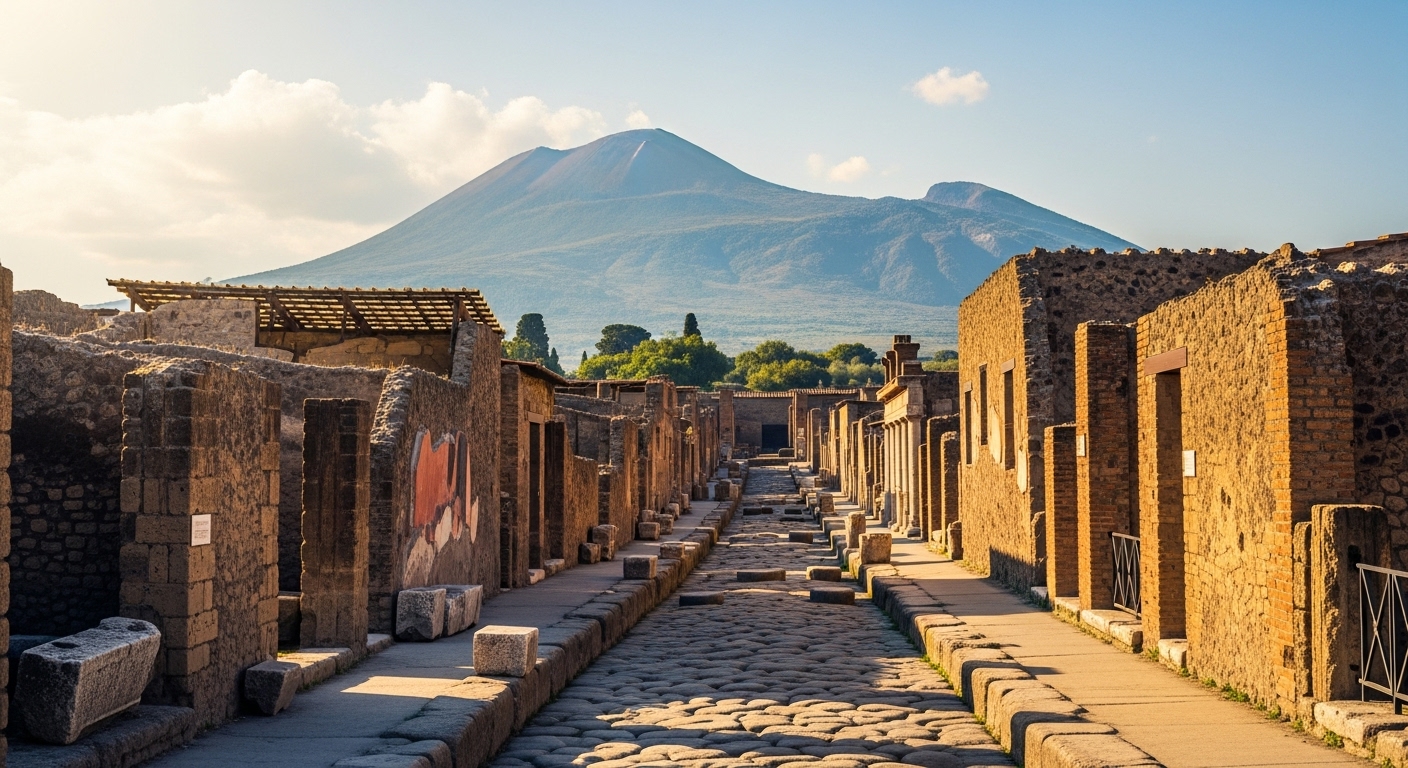
No list of abandoned towns would be complete without Pompeii. Once a bustling Roman city, Pompeii was buried under volcanic ash when Mount Vesuvius erupted in 79 AD. While the disaster claimed thousands of lives, it also preserved the city in extraordinary detail.
Today, Pompeii stands as one of the world’s most famous open-air museums. Visitors walk past ancient bakeries, amphitheaters, villas, and public baths. The town’s layout reveals everyday Roman life in ways textbooks never could.
What makes Pompeii especially powerful is its realism. The preserved streets, graffiti on walls, and even food remnants provide a deeply human connection to the past. As you walk through Pompeii, you don’t just observe history — you feel it.
Craco, Italy – A Hilltop Ghost Town Frozen in Time
Perched dramatically on a hill in southern Italy, Craco is a medieval town abandoned due to landslides and earthquakes. Once home to thousands, it slowly emptied during the 20th century as safety concerns grew.
Rather than tearing it down, Craco was preserved. Today, it functions as an open-air museum where visitors can explore crumbling stone houses, churches, and narrow alleyways. The town has also served as a filming location for international movies, giving it a second cultural life.
Craco’s appeal lies in its raw authenticity. There are no modern reconstructions here — only the original bones of a town left to speak for themselves. Standing there, one can’t help but wonder: what would it have felt like to be the last family to leave?
Bodie, California – The American West Left Behind
In the eastern Sierra Nevada of California lies Bodie, a former gold-mining town that boomed in the late 1800s and collapsed just as quickly. When the gold ran out, so did the people.
Bodie is now preserved in a state of “arrested decay.” Buildings remain exactly as they were left — furniture, bottles, clothing, and even schoolbooks still sit where residents abandoned them. It’s one of the best examples of how Abandoned Towns Turned Into Open-Air Museums can tell stories of ambition, hardship, and sudden change.
Walking through Bodie feels like stepping into a paused moment. The wind whistles through broken windows, and the silence feels heavy with memory.

Hashima Island, Japan – Concrete Ruins at Sea
Also known as Gunkanjima or “Battleship Island,” Hashima Island sits off the coast of Japan. Once a densely populated mining community, the island was abandoned in 1974 when coal production ceased.
Today, Hashima is an open-air museum showcasing Japan’s industrial past. Visitors can explore concrete apartment blocks, schools, and communal facilities that once housed thousands of workers and their families.
Hashima stands as a reminder of how rapidly progress can both create and erase communities. It also raises ethical questions: how should we remember places tied to difficult labor histories?
Oradour-sur-Glane, France – A Memorial in Ruins
Unlike towns abandoned due to economic or environmental reasons, Oradour-sur-Glane in France was intentionally preserved after a wartime massacre during World War II.
The village was destroyed in 1944, and rather than rebuilding it, the French government chose to leave it exactly as it was — a permanent open-air memorial. Burned cars, destroyed homes, and collapsed buildings remain untouched.
Oradour-sur-Glane is not a tourist attraction in the traditional sense. It is a place of remembrance, silence, and reflection. It shows that open-air museums are not always about curiosity — sometimes, they exist so the world never forgets.
Kolmanskop, Namibia – Desert Swallowing Civilization
In the Namib Desert lies Kolmanskop, a former diamond mining town abandoned in the mid-20th century. As mining operations moved south, residents left, and the desert slowly reclaimed the settlement.
Today, sand dunes pour through windows and doorways, filling rooms that once held furniture and family life. Kolmanskop is now a carefully managed open-air museum, attracting photographers and travelers from around the world.
The town offers a powerful visual metaphor: nature eventually reclaims everything. Yet by preserving Kolmanskop, humans ensure the story of its rise and fall is not forgotten.

What Makes Open-Air Museums So Impactful
Traditional museums organize history neatly — dates, labels, glass cases. Open-air museums, however, are immersive and emotional. You don’t just look at artifacts; you stand inside them.
Abandoned Towns Turned Into Open-Air Museums allow visitors to experience scale, distance, and environment. You feel how isolated Bodie was, how exposed Kolmanskop is, or how compact life must have been on Hashima Island.
These towns ask important questions: What causes communities to disappear? How do we decide what is worth preserving? And what lessons can modern cities learn from abandoned ones?
Tourism, Preservation, and Responsibility
Opening abandoned towns to visitors brings both benefits and challenges. Tourism can fund preservation, create jobs, and raise awareness. Airlines such as ITA Airways and Air France help connect travelers to these historic locations, making global exploration possible.
However, preservation also requires respect. Many open-air museums limit visitor numbers or restrict access to fragile structures. The goal is not entertainment, but education and remembrance.
As visitors, we carry responsibility too. How we behave in these spaces determines whether they can be preserved for future generations.
Would You Walk Through an Abandoned Town?
Some people find abandoned towns unsettling. Others find them fascinating. Where do you stand? Would you explore a place where time seems to have stopped, or does the silence make you uncomfortable? These towns offer more than history — they offer perspective. They remind us that prosperity is fragile, cities are temporary, and human stories deserve to be remembered.
The world is full of destinations built to impress. But sometimes, the most meaningful journeys lead us to places that no longer exist in the way they once did. Abandoned Towns Turned Into Open-Air Museums are powerful reminders that every street has a story, even if no one lives there anymore.
If you enjoyed exploring these forgotten places, follow us on our social media platforms for more travel stories that go beyond the usual destinations. And tell us — which abandoned town would you want to walk through, and why?
Catch up on the top stories and travel deals by subscribing to our newsletter!