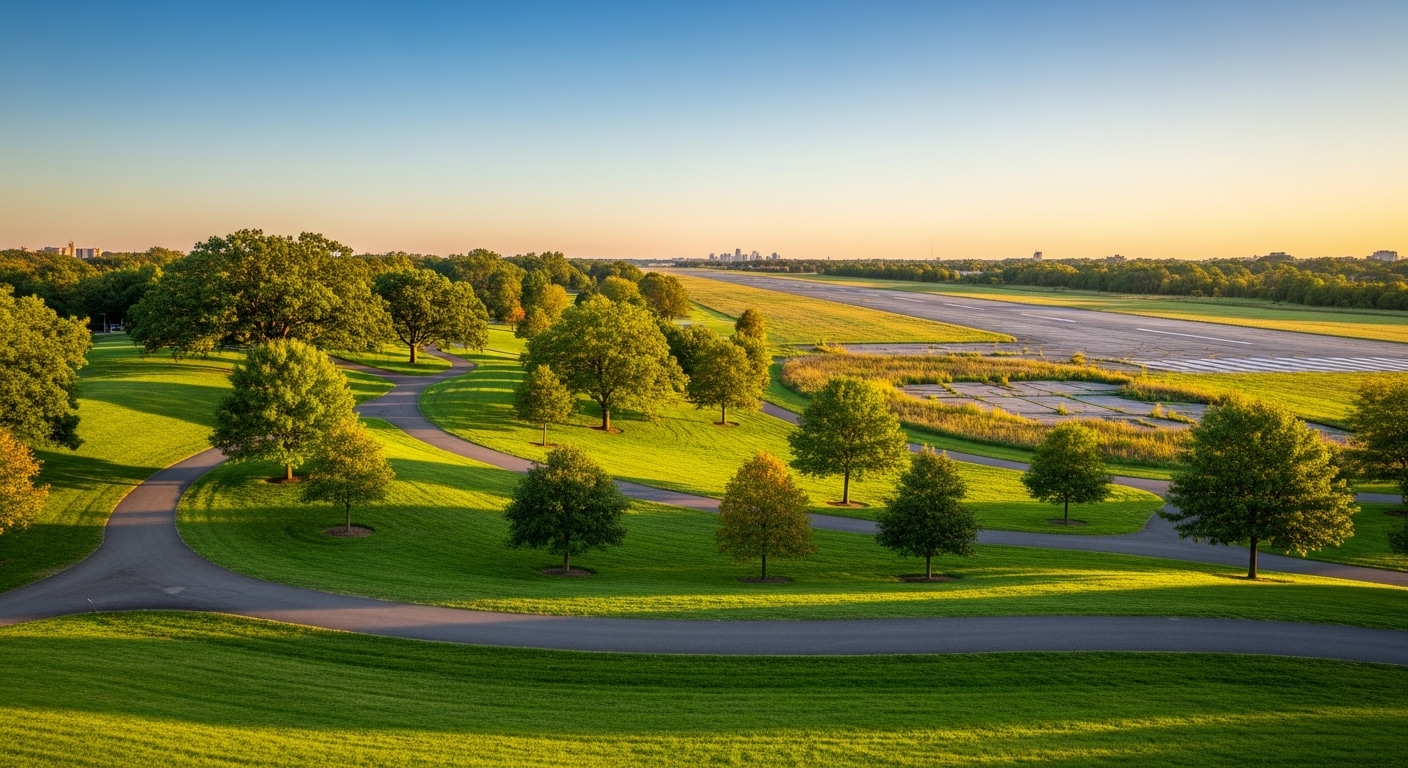
Airports are usually seen as symbols of movement, departure, and travel. But what happens when they are abandoned? Instead of letting massive runways, terminals, and hangars sit unused, some communities are transforming these former aviation hubs into beautiful parks. Abandoned airports turned into parks are becoming urban oases, combining history, nature, and recreation. These unique spaces give cities a second life for areas once dominated by airplanes.
Imagine jogging along a former runway, surrounded by green lawns, trees, and playgrounds. Or picnicking in a park where planes once taxied to takeoff. Abandoned airports turned into parks showcase human creativity, sustainability, and urban planning at its best. Have you ever visited a park that used to be an airport? The transformation is incredible and often full of surprises.
Why Abandoned Airports Make Perfect Parks
Large open spaces are rare in urban areas, and abandoned airports provide them in abundance. Runways and taxiways offer long, flat areas perfect for walking, cycling, and sports. Terminals can be converted into community centers, cafés, or exhibition spaces. Hangars provide sheltered areas for events, markets, or indoor sports.
Additionally, airports are usually located near cities, making them accessible to residents while providing room for greenery and wildlife. By converting abandoned airports into parks, cities not only preserve unused land but also create recreational opportunities for the public.
The Environmental Benefits of Airport Parks
Transforming old airports into parks has significant ecological benefits. Green spaces reduce urban heat islands, improve air quality, and provide habitats for birds, insects, and small mammals. Abandoned runways often feature soil that can be revitalized with native plants, creating urban biodiversity hotspots.
Urban planners and ecologists often collaborate to turn these concrete landscapes into environmentally friendly parks. By planting trees, building wetlands, and encouraging sustainable landscaping, these areas become crucial for both wildlife and human well-being.
Famous Abandoned Airports Turned Into Parks Around the World
1. Tempelhof Field, Berlin, Germany
Tempelhof Airport, once a critical hub in Berlin and famously part of the Berlin Airlift, was closed in 2008. Instead of leaving the massive space unused, the city converted it into Tempelhofer Feld. Today, it is one of the largest urban parks in the world. Visitors walk, cycle, kite-surf with land kites, or simply relax on the vast open lawns that were once runways.
The park’s history is visible everywhere. Old terminal buildings serve as event spaces, while remnants of the airport remind visitors of the past. Tempelhofer Feld is an excellent example of blending urban history with recreational green space.

2. Meigs Field, Chicago, USA
Meigs Field Airport, located on the lakefront in Chicago, closed in 2003. The city transformed the site into a green park with sports fields, walking paths, and picnic areas. While most people remember Meigs as a small city airport, today it’s cherished as a public space where families gather and joggers enjoy the view of Lake Michigan.
This transformation demonstrates how cities can turn an aviation site into a community-friendly park while keeping the waterfront accessible to the public.
3. Kai Tak Airport, Hong Kong
Kai Tak Airport, famous for its dramatic approach flights over the city, closed in 1998. Since then, parts of the airport have been redeveloped into the Kai Tak Cruise Terminal and green public spaces. Old runways have been converted into cycling paths and recreational areas.
Although the city has grown around the airport, the legacy of Kai Tak lives on in its repurposed spaces, providing residents and visitors with a glimpse of aviation history intertwined with urban greenery.
4. Ellinikon International Airport, Athens, Greece
Ellinikon Airport closed in 2001, making way for plans to transform the area into a massive public park. While redevelopment is ongoing, parts of the abandoned airport are already accessible to visitors for walking and community events. The future Ellinikon Park aims to become a symbol of urban renewal, connecting the city with recreational nature.
Such large-scale redevelopment projects demonstrate the enormous potential of abandoned airports when vision and planning come together.
5. Berlin’s Tempelhof to Tegel Corridor, Germany
Beyond Tempelhof itself, Berlin also repurposed Tegel Airport lands for green spaces and urban projects. Even temporary parks and gardens have emerged on former airport grounds, showing how flexible and creative airport transformations can be. This trend reflects a broader movement of converting post-industrial sites into urban recreational areas.
The Social Benefits of Airport-to-Park Transformations
Abandoned airports transformed into parks provide significant social benefits. They offer safe and accessible public spaces for recreation, social gatherings, sports, and cultural events. Community gardens, outdoor theaters, and fitness areas often occupy former airport grounds.
In addition, airport parks can serve as educational hubs. Visitors learn about aviation history, urban planning, and environmental restoration. They can see the transformation of concrete runways into wetlands, fields, and forested areas, inspiring awareness about sustainability and conservation.

Challenges in Transforming Airports Into Parks
While the idea is appealing, converting airports into parks comes with challenges. Airports may have soil contamination from fuel, chemicals, or construction materials. Terminals and hangars require structural assessment before public use. Large-scale redevelopment also involves significant investment and long-term planning.
Despite these challenges, cities worldwide are increasingly choosing to reclaim abandoned airports for public benefit, proving that with vision and collaboration, such projects are feasible and highly rewarding.
Tips for Visiting Abandoned Airport Parks
- Check opening hours, as some sections may remain restricted during redevelopment.
- Wear comfortable walking shoes for long stretches along former runways.
- Bring bikes, kites, or picnic gear to enjoy the open spaces fully.
- Visit local information centers for history tours and guided walks.
- Respect signage and avoid areas under construction.
The Future of Abandoned Airport Parks
With urban populations growing and green spaces shrinking, abandoned airports offer a rare opportunity for sustainable city planning. Future transformations may include eco-parks, community farms, cultural centers, and innovative recreational facilities. By blending history, ecology, and urban design, these spaces can redefine the way cities think about unused infrastructure.
Abandoned airports turned into parks showcase human creativity, resilience, and dedication to sustainability. They remind us that even the most industrialized, concrete-heavy spaces can be reborn into vibrant green areas for people and wildlife. Whether it’s jogging on a former runway, exploring a converted terminal, or enjoying a picnic beside old hangars, these parks prove that transformation is possible and inspiring.
Have you ever visited an airport-turned-park? Which transformation amazed you the most? Share your experiences and follow WentWorld on social media for more unusual and inspiring travel stories.
Catch up on the top stories and travel deals by subscribing to our newsletter!