
There’s something deeply fascinating about places where old industrial sites became attractions. What was once filled with smoke, machinery, and the rhythm of heavy labor has transformed into spaces of culture, creativity, and connection. These former factories, power plants, shipyards, and steel mills now tell stories not just of industry, but of reinvention. And in a world constantly chasing the new, isn’t it refreshing to see the old reborn?
Across continents, cities have embraced the bold transformation of abandoned industrial spaces into thriving destinations. These places where old industrial sites became attractions are no longer reminders of economic decline; they are powerful symbols of resilience. They blend history with innovation, grit with beauty. Have you ever walked through a former warehouse turned art gallery and felt the walls whisper their past?
At WentWorld.com, we love exploring destinations that challenge expectations. Industrial tourism may not sound glamorous at first, but once you step into these repurposed spaces, you quickly realize they are some of the most inspiring travel experiences available today.
Why Industrial Transformations Matter More Than You Think
Industrial buildings were never designed to be beautiful. They were built for efficiency, durability, and productivity. Yet their vast spaces, exposed steel beams, brick facades, and towering chimneys hold a raw aesthetic that modern architecture often tries to replicate.
When cities choose to preserve rather than demolish, they protect more than structures; they protect identity. These places where old industrial sites became attractions keep history visible. They remind communities where they came from while creating opportunities for economic revival through tourism, art, dining, and events.
Isn’t it remarkable how a steel mill can become a concert venue? Or how a coal mine can turn into a cultural park? Let’s explore some of the world’s most extraordinary transformations.
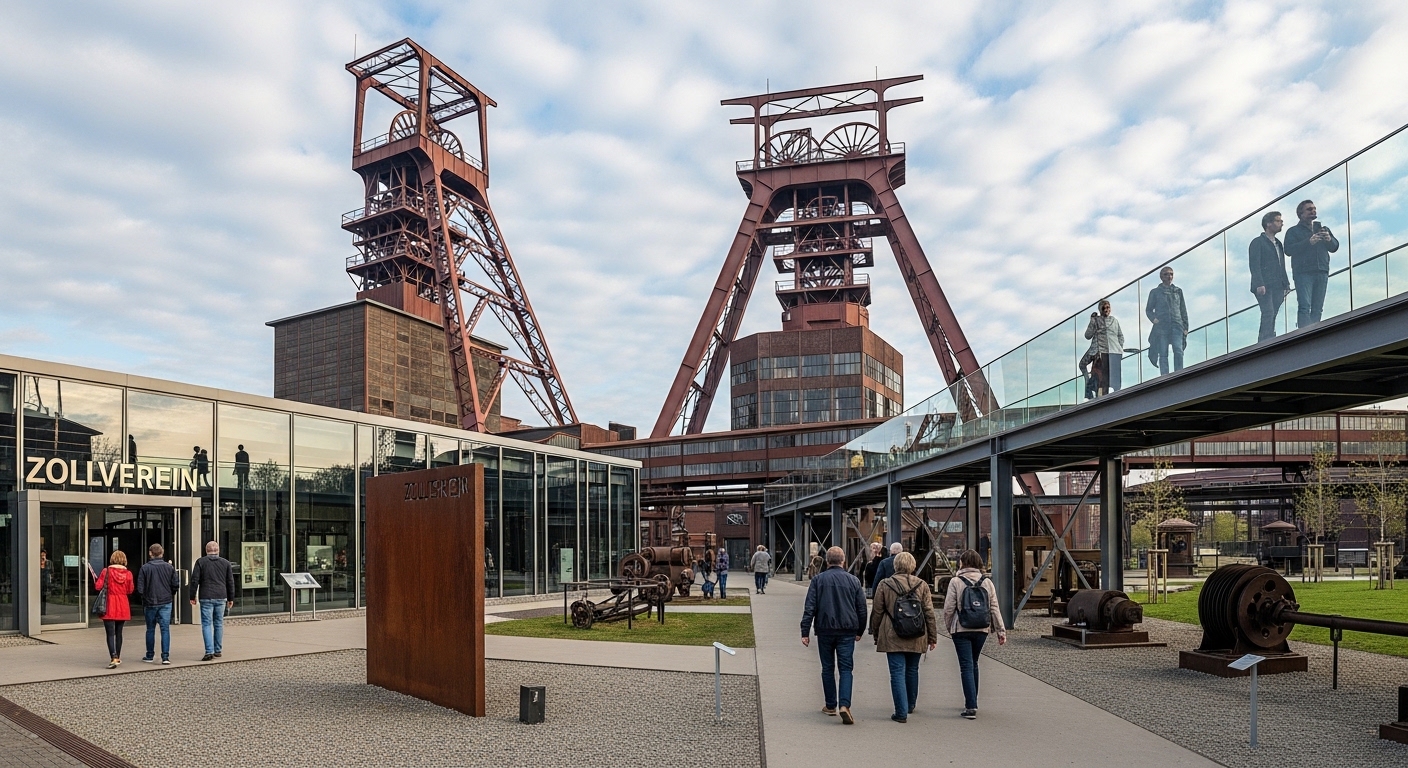
Zollverein Coal Mine Industrial Complex, Germany
Located in Essen, Germany, the Zollverein Coal Mine Industrial Complex is one of the most iconic examples of places where old industrial sites became attractions. Once one of Europe’s largest coal mines, it is now a UNESCO World Heritage Site.
Visitors can walk through preserved industrial buildings, explore design museums, and attend cultural events inside former boiler houses. The Bauhaus-inspired architecture gives the complex a unique aesthetic that blends industrial strength with artistic minimalism.
More details about visiting hours and exhibitions can be found through Germany’s official tourism portal at germany.travel. Standing beneath massive steel structures that once powered a nation’s economy feels humbling. Would you have imagined a coal mine becoming a global cultural landmark?

Tate Modern, London
Few transformations are as globally recognized as Tate Modern in London. Originally the Bankside Power Station, this massive industrial building now houses one of the world’s leading contemporary art museums.
Operated by the Tate organization (tate.org.uk), the museum preserves the towering Turbine Hall, where enormous art installations captivate visitors. The contrast between industrial concrete walls and modern masterpieces creates a dramatic atmosphere unlike traditional galleries.
When you stand inside the Turbine Hall, do you think about the electricity that once powered London? Or do you simply lose yourself in the art? That layered experience is what makes this transformation so powerful.
The High Line, New York City
New York City’s High Line is a brilliant example of places where old industrial sites became attractions through urban creativity. What was once an elevated freight rail line is now a green public park stretching above Manhattan’s streets.
Managed by Friends of the High Line (thehighline.org), the park combines art installations, gardens, city views, and community events. Walking along the tracks-turned-pathways offers a unique perspective of the city.
Instead of tearing down the aging rail infrastructure, the city embraced reinvention. It’s proof that industrial remnants can become urban sanctuaries. Have you ever thought about what unused structures in your own city could become?
Distillery District, Toronto
In Toronto, the historic Gooderham and Worts Distillery has evolved into a vibrant pedestrian-only village filled with galleries, boutiques, restaurants, and performance spaces. The preserved Victorian industrial architecture adds charm and authenticity.
Tourism information is available via destinationtoronto.com. Walking through cobblestone streets surrounded by red-brick warehouses feels cinematic. It’s a place where industrial heritage meets modern creativity.
These types of places where old industrial sites became attractions often become community hubs. They are not just for tourists; locals reclaim them as gathering spaces.
Gas Works Park, Seattle
Seattle’s Gas Works Park sits on the site of a former gasification plant. Instead of removing the rusted machinery, the city incorporated it into the park’s design. Today, families picnic beneath towering industrial structures that once processed coal into gas.
The park offers stunning views of Lake Union and downtown Seattle. Information about the park can be found at seattle.gov/parks.
It’s an unusual but compelling space. Children fly kites where workers once labored. Isn’t that transformation beautiful in its symbolism?
798 Art District, Beijing
Beijing’s 798 Art District was once a sprawling factory complex producing military electronics. Today, it is one of China’s leading contemporary art hubs, filled with galleries, cafes, and creative studios.
The preserved industrial pipes and high ceilings give the district a gritty authenticity that artists embraced rather than erased. These places where old industrial sites became attractions often attract creative communities because the spaces are flexible, open, and inspiring.
Would the art feel the same inside a polished modern mall? Probably not. The industrial past adds texture to every exhibition.

Why Travelers Are Drawn to Industrial Tourism
Travel trends have shifted in recent years. Many travelers now seek meaningful experiences rather than surface-level sightseeing. Industrial heritage tourism offers storytelling, authenticity, and depth.
These destinations allow visitors to understand economic history, labor movements, architecture, and urban development. They spark conversations about sustainability and adaptive reuse. Instead of consuming new resources, cities repurpose existing structures.
Have you noticed how some of the most Instagrammed places today are former factories or warehouses? There is an undeniable aesthetic appeal in exposed brick, steel frameworks, and open spaces.
The Sustainability Factor
Transforming industrial sites into attractions is also environmentally responsible. Demolition generates waste and emissions, while adaptive reuse conserves materials and reduces construction impact.
Organizations such as the World Tourism Organization (unwto.org) emphasize sustainable tourism development. Revitalizing industrial spaces aligns perfectly with this vision.
Instead of abandoning the past, cities reimagine it. And in doing so, they build sustainable futures.
What Could Your City Reinvent?
Look around your own town. Is there an abandoned factory, rail yard, or warehouse slowly fading into obscurity? What if it became an art center, food market, innovation hub, or green park?
The success of places where old industrial sites became attractions proves that reinvention is possible. It requires vision, investment, and community support, but the rewards can redefine a city’s identity.
At WentWorld.com, we believe travel is about discovering transformation. These industrial rebirths are more than attractions; they are stories of resilience, creativity, and hope.
Have you visited a former industrial site that amazed you? Did it change how you view urban spaces? We would love to hear your experiences and recommendations.
If you enjoy uncovering destinations with powerful stories, follow WentWorld.com on our social media platforms for more explorations into the world’s most surprising places.
Catch up on the top stories and travel deals by subscribing to our newsletter!







Leave a Reply
You must be logged in to post a comment.