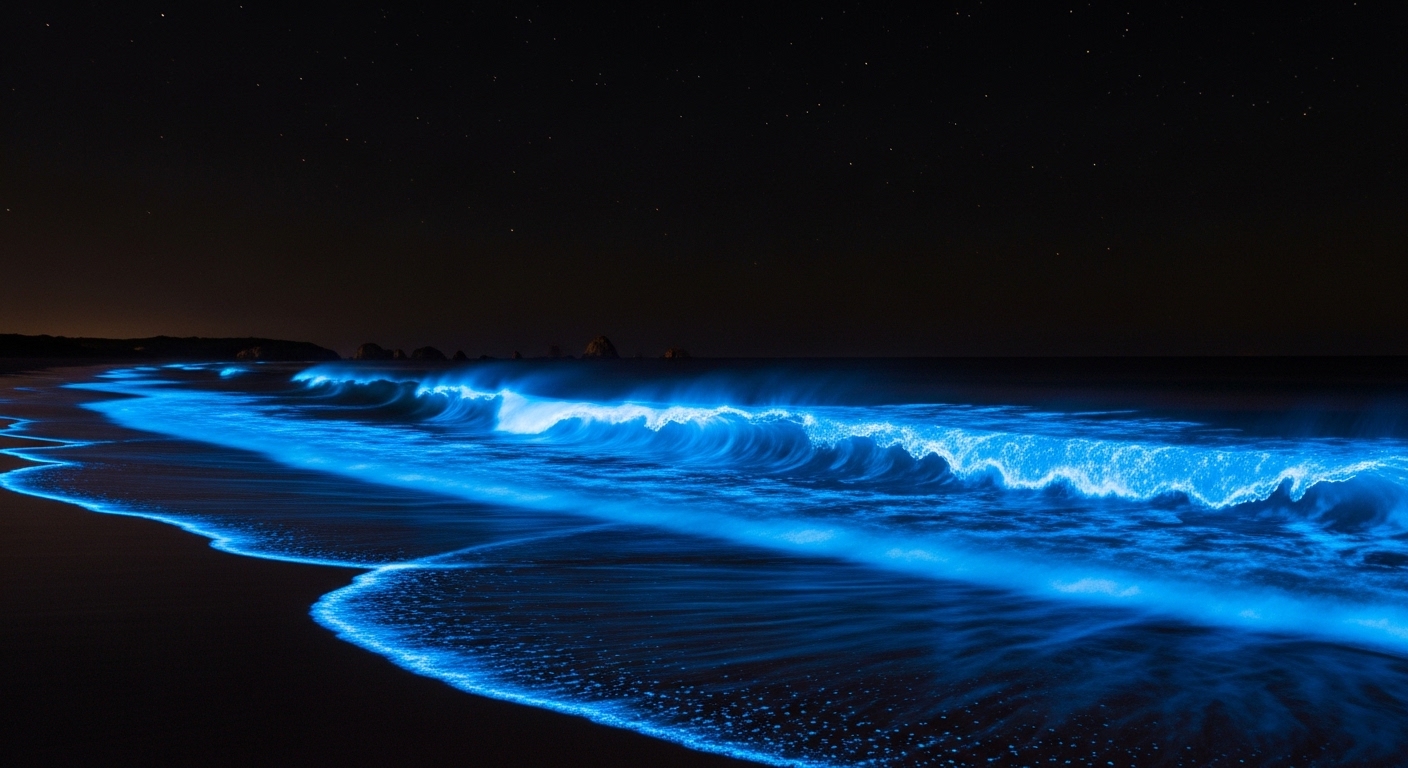
Few travel experiences feel as surreal as standing on a beach at night and watching the shoreline glow with electric blue light. Glow-in-the-dark beaches: bioluminescence timing guides exist to help travelers witness one of nature’s rarest spectacles—bioluminescent waves lighting up the ocean with every step, splash, or ripple.
These glowing beaches are not a myth, a trick of photography, or a special-effect illusion. They are real, fragile ecosystems powered by microscopic organisms that emit light when disturbed. However, timing is everything. Visit at the wrong moment, and the beach looks ordinary. Visit at the right time, and the sea turns into a living galaxy.
This WentWorld guide explores where glow-in-the-dark beaches exist, why bioluminescence happens, and—most importantly—how to time your visit correctly. Have you ever imagined walking along a shoreline where your footprints glow like stars?
What Causes Beaches to Glow at Night
Bioluminescence occurs when microscopic marine organisms, most commonly dinoflagellates, emit light in response to movement. This natural chemical reaction produces a blue or green glow that appears when waves crash, fish swim, or humans walk through the water.
These organisms thrive under specific environmental conditions. Water temperature, nutrient levels, tides, moonlight, and seasonal changes all affect visibility. That’s why glow-in-the-dark beaches: bioluminescence timing guides are essential for travelers hoping to experience this phenomenon.
Bioluminescence serves as a defense mechanism in nature, startling predators or attracting larger organisms to scare them away. Ironically, what began as a survival tactic has become one of the most breathtaking sights on Earth.
Why Timing Matters More Than Location
Many travelers make the mistake of focusing only on location. While certain beaches are famous for bioluminescence, timing determines success more than geography.
The ideal conditions usually include:
- Very low or no moonlight
- Warm water temperatures
- Calm seas with gentle waves
- Minimal light pollution
- Recent nutrient blooms in the water
Arriving during a full moon or peak tourist lighting can completely wash out the glow. That’s why experienced travelers rely on detailed bioluminescence timing rather than guesswork.
Would you plan your entire trip around a specific moon phase just to witness this natural event?

Maldives: Bioluminescence on Tropical Shores
The Maldives is one of the most famous destinations for glowing beaches, particularly on Vaadhoo Island. Here, bioluminescent plankton light up shorelines in brilliant blue waves.
The best time to visit is between late summer and early winter, when plankton concentrations increase. Moonless nights offer the most dramatic displays. Travelers flying with Emirates or regional carriers often plan late-night beach walks specifically for this experience.
Resorts sometimes track bioluminescence patterns, but nature remains unpredictable. Patience often rewards visitors with unforgettable moments.
Puerto Rico: Year-Round Bioluminescent Bays
Puerto Rico stands out among glow-in-the-dark beaches due to its bioluminescent bays, especially Mosquito Bay on Vieques Island. Unlike open beaches, these bays trap microorganisms, creating consistent glow activity.
According to Discover Puerto Rico, Mosquito Bay is considered one of the brightest bioluminescent locations on Earth. The best visibility occurs during new moon phases and late evening hours.
Kayaking through glowing waters offers an immersive experience, with each paddle stroke illuminating the bay. Would you rather watch from the shore or glide through glowing water?
Thailand: Seasonal Glow Along Quiet Coastlines
Thailand offers seasonal bioluminescence along less-developed beaches, particularly around Krabi and Phang Nga Bay. These glow events often appear after calm weather periods when plankton concentrations rise.
While popular beaches may suffer from light pollution, quieter coves offer better chances. Travelers arriving via Tourism Thailand recommended routes often combine island-hopping with nighttime coastal exploration.
Local guides frequently monitor water conditions, making guided tours the most reliable option.
Australia: Bioluminescence Beyond Beaches
Australia’s bioluminescence often appears not only on beaches but also in rivers and estuaries. Tasmania’s waters and parts of New South Wales have recorded remarkable glow events.
Environmental groups highlighted by Australia’s official tourism site stress the importance of minimizing disturbance. These ecosystems are sensitive, and respectful observation ensures their longevity.
Would you choose a remote beach with fewer crowds even if it meant waiting longer for the glow?

Moon Phases and Bioluminescence Timing
Moon phases play a crucial role in bioluminescence visibility. The darker the night, the brighter the glow appears.
- New moon: Best visibility
- Waxing/waning crescent: Good visibility
- Full moon: Poor visibility
Successful travelers plan trips around lunar calendars rather than convenience. This approach transforms a gamble into a calculated experience.
Responsible Viewing and Environmental Protection
Bioluminescent organisms are fragile. Excessive swimming, chemicals, or boat traffic can disrupt blooms. Responsible viewing includes avoiding sunscreen in water, minimizing noise, and respecting local regulations.
Many conservation initiatives supported by organizations like National Geographic Environment emphasize sustainable tourism practices.
Would you be willing to limit your interaction to preserve this phenomenon for future travelers?
The Future of Glow-in-the-Dark Beaches
Climate change, pollution, and coastal development threaten bioluminescent ecosystems. However, increased awareness and responsible tourism are helping protect these natural wonders.
Glow-in-the-dark beaches: bioluminescence timing guides are becoming essential travel tools, ensuring visitors arrive prepared and respectful.
As you plan your next adventure, consider chasing natural light instead of city lights. Share your thoughts below—have you seen bioluminescence, or is it still on your bucket list?
Follow WentWorld.com on social media for more unique natural phenomena, timing guides, and unforgettable travel experiences.
Catch up on the top stories and travel deals by subscribing to our newsletter!