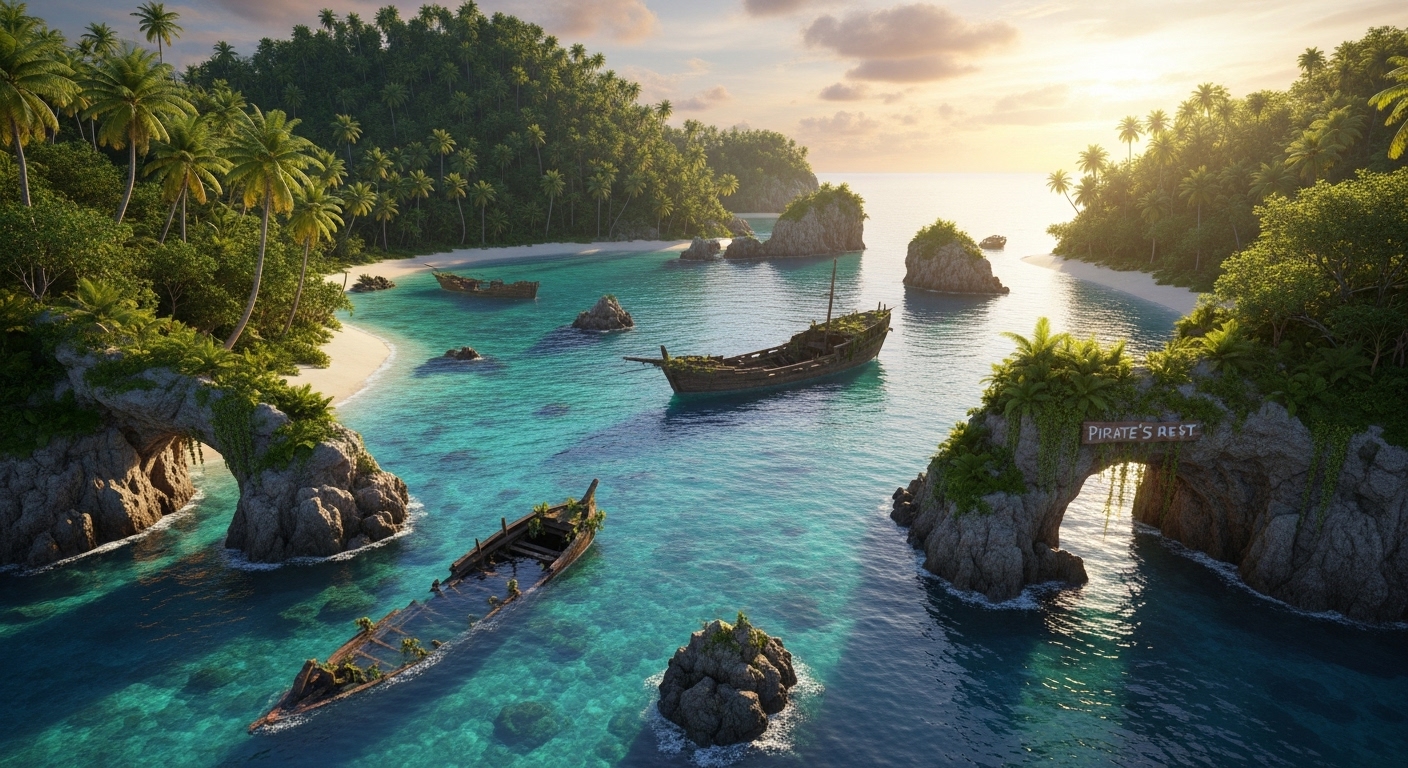
Historic islands once used by pirates hold a strange kind of magic. These places look peaceful today, surrounded by turquoise waters and quiet coastlines, yet centuries ago they echoed with cannon fire, whispered alliances, and buried treasure dreams. Pirates chose islands not just for their beauty, but for strategy, secrecy, and survival. Exploring these islands today feels like peeling back layers of history where adventure, danger, and rebellion once ruled the seas.
At WentWorld.com, we love destinations that carry untold stories. Pirate islands are more than folklore and Hollywood myths. They were real operational bases where crews planned raids, repaired ships, traded stolen goods, and sometimes built entire communities. Have you ever wondered where pirates actually lived between voyages? Or how they managed to stay hidden while controlling major sea routes?
Historic islands once used by pirates reveal a world shaped by navigation, politics, and geography. Many of these islands sit along critical trade routes, offering natural harbors and hidden coves. Over time, pirate presence influenced local culture, economy, and even colonial power struggles. Would you feel excitement or fear standing on a beach once claimed by notorious pirates?
Why Pirates Chose Islands as Their Bases
Pirates needed isolation, access, and escape routes. Islands provided all three. Natural bays allowed ships to anchor safely, while dense vegetation or rugged cliffs offered concealment. Additionally, islands often lay just outside the reach of colonial law, making them ideal for pirates seeking freedom from authority.
Freshwater sources, fertile land, and proximity to shipping lanes made certain islands especially attractive. As a result, some pirate hideouts evolved into semi-permanent settlements. These islands were not chaotic camps but organized hubs where supplies were gathered and alliances formed.
Interestingly, pirates often relied on local populations or enslaved people for survival. This interaction shaped island cultures in subtle ways that still linger today. Does knowing this change how you imagine pirate life?
Nassau, Bahamas: The Pirate Republic
One of the most famous historic islands once used by pirates is New Providence Island in the Bahamas. During the early 18th century, Nassau became known as the Pirate Republic. Pirates like Blackbeard, Charles Vane, and Jack Rackham operated openly here, turning the island into a lawless stronghold.
Nassau’s location near major shipping routes between Europe and the Americas made it ideal for piracy. Shallow waters protected the island from large naval ships, while nearby islands offered escape paths. Over time, pirate governance emerged, complete with codes of conduct and shared decision-making.
Today, Nassau is a bustling tourist destination, yet traces of its pirate past remain visible in forts and museums. Official tourism information can be explored through Bahamas Tourism.
Tortuga, Haiti: A Symbol of Caribbean Piracy
Tortuga Island, off the coast of Haiti, stands as one of the most legendary pirate strongholds in history. During the 17th century, it became a haven for buccaneers who targeted Spanish ships. Its rugged coastline and fortified harbors made it difficult for enemies to attack.
Life on Tortuga revolved around plunder and survival. Pirates formed loose alliances, shared resources, and established a rough social order. Although violence was common, Tortuga also represented freedom from European control for many sailors.
Today, Tortuga remains relatively undeveloped, preserving much of its raw landscape. Its history continues to intrigue historians and travelers fascinated by pirate lore.

Île Sainte-Marie, Madagascar: Pirates of the Indian Ocean
While the Caribbean dominates pirate narratives, historic islands once used by pirates also exist in the Indian Ocean. Île Sainte-Marie, off Madagascar’s eastern coast, served as a major pirate base during the late 17th and early 18th centuries.
Pirates such as Captain Kidd reportedly used the island as a resting point between raids on heavily laden merchant ships traveling between Europe and Asia. The island offered fresh water, repair sites, and friendly local alliances.
Notably, pirate cemeteries still exist on Île Sainte-Marie, including graves marked with skull-and-crossbones. The island’s unique history attracts travelers seeking something beyond traditional beach destinations. More regional insights can be found via Madagascar Tourism.
Skull Island and the Pirate Coast of Madagascar
Madagascar’s Pirate Coast extended far beyond a single island. Several small islands and coastal settlements formed a loose pirate network. Some pirates even married into local communities, blending cultures and creating semi-permanent societies.
These settlements operated almost like independent states. Trade flourished, laws were negotiated, and leadership shifted through alliances rather than force alone. This challenges the stereotype of pirates as purely chaotic criminals.
Would you be surprised to learn that some pirate communities valued fairness and shared decision-making more than many governments of their time?
Ocracoke Island, United States: Blackbeard’s Final Stand
Ocracoke Island, located off the coast of North Carolina, holds a significant place in pirate history. It was here that Blackbeard met his end in 1718 during a battle with British naval forces. The island’s shallow waters and inlets made it a popular hiding spot for pirates operating along the American colonies.
Ocracoke provided access to trade routes while remaining difficult for large ships to navigate. Pirates used the island to careen ships, rest, and plan attacks. Today, the island embraces its pirate legacy through festivals and local storytelling.
Information about the region can be found through Visit North Carolina.

Why Pirate Islands Shaped Global History
Historic islands once used by pirates influenced global trade, colonial expansion, and naval warfare. Pirates disrupted empires, forced nations to strengthen navies, and reshaped maritime law. Their island bases acted as pressure points in global commerce.
Moreover, pirate activity exposed inequalities within colonial systems. Many sailors turned to piracy after harsh treatment by merchant fleets or navies. Pirate islands became symbols of resistance as much as crime.
Understanding this context helps modern travelers appreciate these islands as historical crossroads rather than romantic backdrops.
Visiting Pirate Islands Today
Today, many pirate islands welcome visitors with museums, guided tours, and preserved forts. However, the true experience often lies in walking quiet beaches and imagining ships anchored offshore centuries ago.
When visiting, travelers should respect local communities and cultural heritage. These islands are living places, not theme parks. Responsible tourism ensures that history is honored rather than exploited.
Would you prefer a guided historical tour, or would you rather explore these islands slowly on your own?
Why These Islands Still Fascinate Us
Historic islands once used by pirates continue to captivate because they represent freedom, rebellion, and adventure. They remind us of a time when the seas were lawless and individuals challenged powerful empires.
At the same time, these islands show how geography shapes history. Without hidden coves and strategic locations, piracy might never have thrived. Standing on these islands today, it becomes clear how landscape and human ambition intertwine.
Which pirate island fascinates you the most, and why? Have you ever visited a place connected to pirate history, or is it now on your travel list? Share your thoughts and experiences with us.
For more stories about hidden destinations, unusual history, and unforgettable travel experiences, follow WentWorld.com on our social media platforms. We love exploring the world’s lesser-known stories with curious travelers like you.
Catch up on the top stories and travel deals by subscribing to our newsletter!