River-delta villages on stilts and boardwalks exist in places where land and water constantly negotiate space. These villages are not built in spite of rivers, but because of them. Have you ever wondered how people live where floods arrive every year? Or how communities survive where solid ground shifts with tides and seasons?
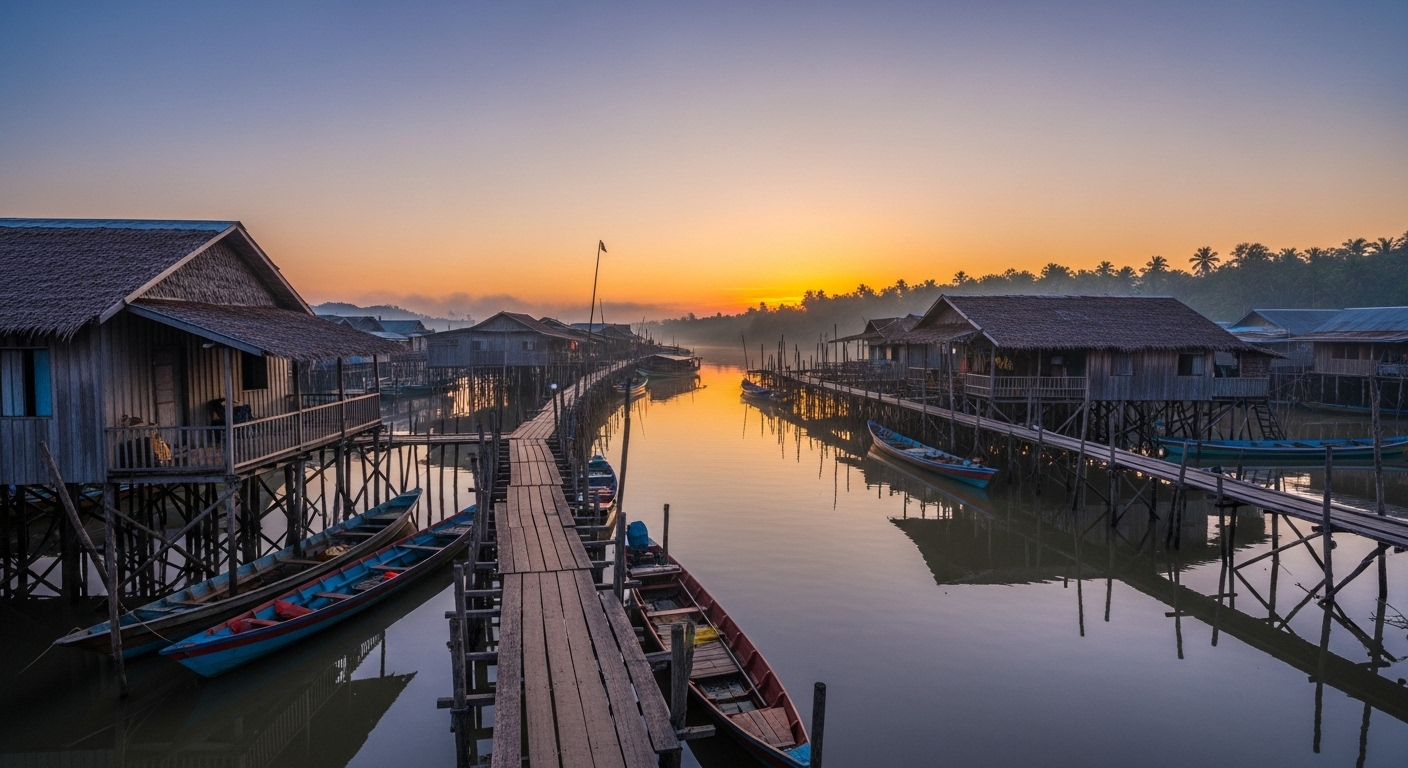
Across the world’s great deltas, entire villages rise above water on wooden stilts and are connected by narrow boardwalks. Homes, schools, markets, and even temples float visually above rivers, lagoons, and marshes. Life here moves differently. Boats replace cars, tides replace clocks, and water becomes both a challenge and a lifeline.
Why River Deltas Create Such Unique Villages
River deltas form where rivers meet the sea, depositing sediment over thousands of years. These landscapes are incredibly fertile but also unstable. Flooding, shifting channels, and seasonal water level changes make traditional construction impossible.
Instead of fighting these conditions, delta communities adapted. Building on stilts allowed homes to remain safe during floods. Boardwalks provided dry passage between structures while allowing water to flow freely underneath.
This adaptation is why river-delta villages on stilts and boardwalks are not temporary solutions. Many have existed for centuries, refined through generations of experience.
A Way of Life Built Above Water
Living above water reshapes daily routines. Morning commutes may involve paddling a canoe instead of walking a road. Children learn to balance on narrow wooden paths from an early age. Fishing, farming, and trading are woven directly into the water system.
Homes are often lightweight but resilient. Materials such as bamboo, palm wood, and treated timber allow structures to flex slightly with movement rather than resist it. This flexibility prevents collapse during floods or storms.
Life here demands awareness. Residents constantly read water levels, weather patterns, and seasonal cycles. This close relationship with nature creates a deep sense of environmental understanding.
Historic Roots of Stilt Villages
Stilt villages are not a modern invention. Archaeological evidence shows elevated dwellings in ancient Southeast Asia, Africa, and parts of South America. In many cases, stilt construction offered protection from wildlife, flooding, and rival groups.
In the Mekong Delta, generations have refined stilt-building techniques that respond precisely to flood heights. In Africa’s Niger Delta, boardwalk villages emerged as trading hubs long before colonial ports existed.
These settlements demonstrate how architecture evolves directly from landscape rather than imposed design.

Famous River-Delta Villages Around the World
One of the most well-known examples is in Vietnam’s Mekong Delta, where villages stretch across waterways in a network of stilt homes and floating markets. According to Encyclopaedia Britannica, the delta supports millions of people through fishing and agriculture.
In Nigeria, parts of the Niger Delta feature stilt villages connected entirely by wooden walkways. These communities rely heavily on fishing and river transport, forming a complex aquatic economy.
South America’s Amazon Basin also hosts river-delta villages where seasonal flooding transforms landscapes completely. Organizations like National Geographic have documented how Indigenous groups adapt their homes annually to changing water levels.
Boardwalks as Streets, Markets, and Meeting Places
In these villages, boardwalks are more than pathways. They are social spaces where neighbors meet, children play, and goods are exchanged. Narrow planks connect homes like streets connect cities.
Markets often appear directly on boardwalks, with vendors selling fish, fruit, and handmade goods. Because space is limited, efficiency becomes part of daily life.
These elevated paths also foster strong community bonds. Everyone shares the same routes, creating constant interaction and mutual responsibility.
How Daily Challenges Shape Strong Communities
Living in river deltas is not easy. Flooding, storms, and limited access to healthcare or education pose constant challenges. However, these pressures often strengthen social cohesion.
Communities rely on cooperation. Repairs to boardwalks, shared boats, and flood preparation are collective efforts. Knowledge is passed orally, ensuring survival skills remain alive.
This resilience is one reason river-delta villages on stilts and boardwalks continue to thrive despite environmental uncertainty.
Environmental Balance and Sustainability
Stilt villages are inherently low-impact. They require minimal land alteration and allow water ecosystems to function naturally beneath them. This makes them surprisingly sustainable compared to modern land reclamation projects.
Fishing practices are often seasonal and regulated by tradition rather than law. Crops are chosen based on flood tolerance and soil regeneration.
Many experts now view these villages as models for climate adaptation, especially as rising sea levels threaten coastal populations worldwide.
What It Feels Like to Visit a Stilt Village
Visitors often describe an immediate sense of calm upon arrival. Water reflects light differently, softening sounds and slowing movement. Life unfolds at a human pace.
Walking along a boardwalk requires attention and balance, which naturally pulls you into the present moment. Conversations happen face-to-face, without distraction.
These experiences leave lasting impressions because they challenge modern assumptions about comfort and convenience.

Respectful Travel in River-Delta Communities
Travelers are increasingly drawn to these villages, but respect is essential. Many communities welcome visitors, while others prefer privacy.
Following local guidance, avoiding intrusive photography, and supporting local businesses help ensure tourism benefits residents rather than disrupts them.
Resources such as Responsible Travel offer insights on visiting sensitive environments thoughtfully.
Why These Villages Matter in a Changing World
As climate change increases flooding risks globally, the wisdom embedded in stilt villages becomes increasingly valuable. These communities have already adapted to conditions many cities now face.
River-delta villages on stilts and boardwalks remind us that living with nature often works better than trying to control it.
They show how architecture, culture, and environment can align rather than compete.
Should We Learn From Floating Lives?
Would modern cities benefit from thinking more like river-delta villages? Could flexibility, elevation, and community-based design shape future urban planning?
These are questions worth considering as water reshapes coastlines worldwide.
If stories like this deepen your curiosity about how people adapt to extraordinary environments, follow WentWorld on social media for more journeys into the world’s most fascinating places.
Catch up on the top stories and travel deals by subscribing to our newsletter!