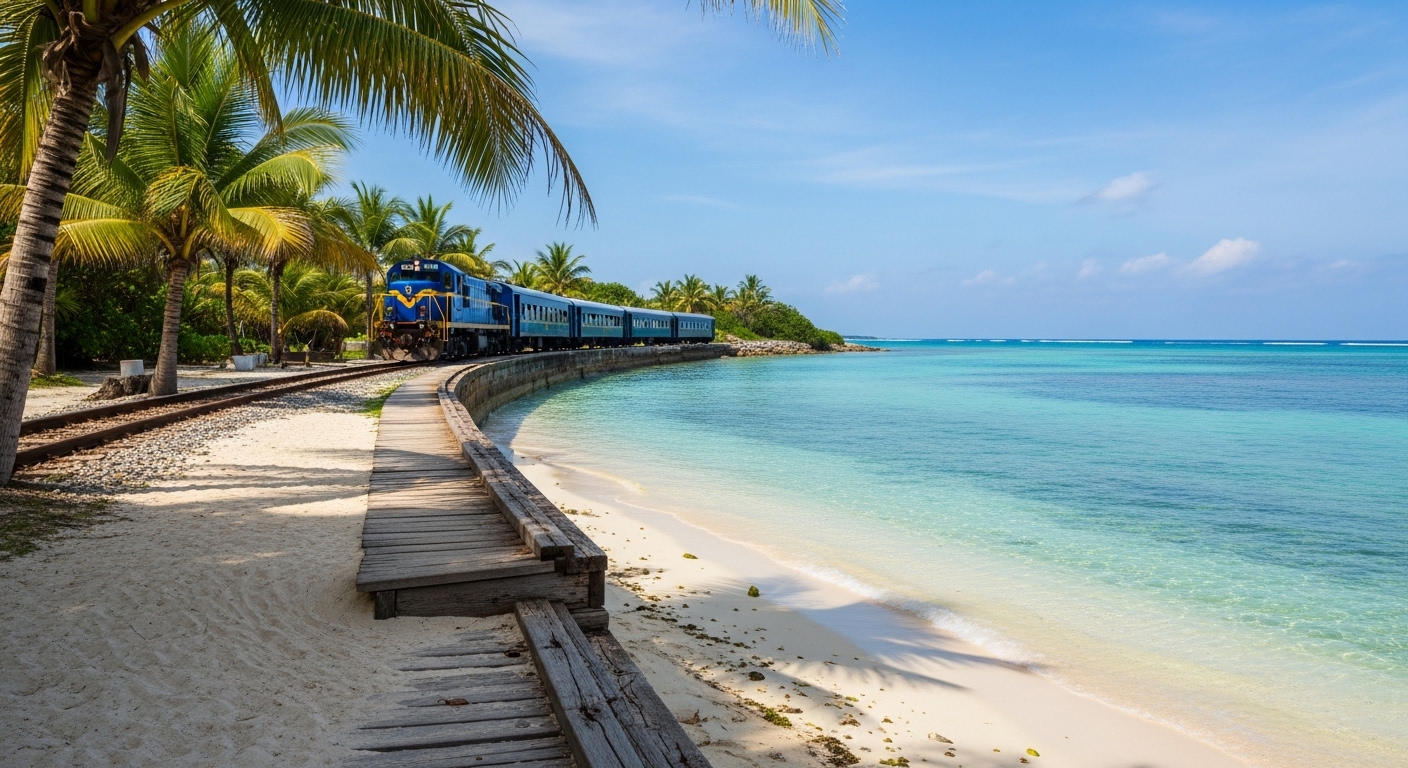
Seaside train halts that double as beaches are some of the most magical, underrated travel experiences in the world. Imagine stepping off a train and feeling sand beneath your feet instead of concrete. Imagine hearing waves instead of traffic the moment the doors open. Sounds unreal, right? Yet in several parts of the world, this is not a fantasy at all—it is everyday life.
These unique coastal stops blur the line between transportation and destination. They are not grand terminals or busy stations. Instead, they are simple platforms, often just meters from the sea, where travelers arrive ready to swim, relax, or simply sit and watch the horizon. For travelers seeking slow, meaningful journeys, seaside train halts that double as beaches offer something truly special.
Why Seaside Train Halts Feel So Different From Regular Beach Destinations
Most beach trips begin with long drives, parking struggles, or crowded walkways. Seaside train halts remove all of that friction. You arrive calmly, without stress, and the transition from travel to relaxation feels seamless.
Another key difference lies in atmosphere. These stops are usually used by locals rather than mass tourists. Because of that, the beaches remain quieter, more authentic, and less commercialized. You are not greeted by loud vendors or oversized resorts. Instead, you encounter fishermen, swimmers, and families enjoying the coast as part of daily life.
For many travelers, this simplicity is refreshing. It makes you slow down and experience the coast the way locals do.
How These Train Halts Came to Exist
Many seaside train halts were never designed as tourist attractions. They were built decades ago to connect fishing villages, coastal towns, or industrial ports. Over time, as lifestyles changed, locals began using nearby beaches for leisure.
Because land was limited along coastlines, rail lines often ran extremely close to the shore. In places like Sri Lanka and Italy, trains pass so near the water that platforms naturally became access points to the sea.
Eventually, these stops evolved into informal beach gateways. Without major redevelopment, they retained their charm and practicality.
Why Seaside Train Halts That Double as Beaches Appeal to Modern Travelers
Today’s travelers increasingly value experiences over attractions. Seaside train halts that double as beaches fit perfectly into this mindset. They offer something memorable without feeling manufactured.
There is also a strong emotional appeal. Stepping off a train into open coastal air creates a feeling of freedom that is hard to replicate. The journey itself becomes part of the experience rather than a hurdle to overcome.
Additionally, these stops encourage spontaneous exploration. You might arrive without a plan and leave hours later with salt in your hair and stories to tell.

Iconic Seaside Train Halts Around the World
One of the most famous examples is along Sri Lanka’s coastal railway, particularly near the town of Hikkaduwa. Here, the train runs directly beside golden sand beaches. Travelers frequently hop off, cross a narrow strip of land, and find themselves facing turquoise waters.
In Italy, sections of the Ligurian coast feature small train halts where rocky beaches sit just steps away. Towns like Monterosso al Mare showcase how rail travel and seaside living blend effortlessly.
Japan also offers subtle versions of this experience. Along rural coastal lines, such as those highlighted by Japan National Tourism Organization, quiet stations open directly toward the sea, offering peaceful coastal moments between destinations.
What You Can Do When the Platform Is the Beach
The beauty of these locations lies in their flexibility. Some travelers come prepared with towels and swimwear, ready to dive in. Others simply walk along the shore, collect shells, or sit and watch passing trains frame the ocean view.
Photography is another major draw. Trains passing beside waves create striking compositions that feel cinematic and timeless. These moments often become the highlight of a journey.
Even simple activities like reading, journaling, or people-watching feel more meaningful when the sea is only steps away.
Best Times to Visit Seaside Train Halts
Timing plays an important role in enjoying these places. Early mornings often offer the calmest atmosphere, with soft light and fewer visitors. Locals may be fishing or exercising, adding to the authenticity of the scene.
Late afternoons bring warmer light and cooler temperatures. Watching the sun lower over the water while waiting for a train creates a uniquely peaceful experience.
Seasonality matters too. Visiting outside peak tourist seasons ensures that these delicate spaces remain enjoyable and uncrowded.
Safety and Etiquette to Keep in Mind
Because these are active rail lines, safety awareness is essential. Always stay clear of tracks and follow local signage. Trains may pass more frequently than expected.
Respect for the environment is equally important. These beaches often lack formal facilities, so visitors should carry out anything they bring in.
Being mindful ensures that seaside train halts remain welcoming for both locals and travelers.
Why These Stops Represent the Future of Sustainable Travel
Rail travel is widely recognized as one of the most sustainable ways to explore regions. When combined with natural attractions like beaches, it creates a low-impact travel model that benefits both visitors and local communities.
Seaside train halts that double as beaches encourage travelers to rely less on cars and more on public transport. This reduces congestion, pollution, and environmental strain on coastal ecosystems.
They also distribute tourism more evenly, preventing overcrowding at major beach resorts.

Emotional Impact of Arriving by Train to the Sea
There is something deeply nostalgic about arriving at the sea by train. It recalls a slower era of travel, where journeys unfolded gradually rather than instantly.
As the train doors open and the sound of waves replaces engine noise, many travelers describe a sense of immediate calm. That emotional shift is rare and powerful.
It reminds us that travel does not need to be complicated to be meaningful.
How to Find These Hidden Coastal Stops
Many of these places are not heavily advertised. Researching coastal rail routes and reading traveler forums can reveal surprising gems.
Guide platforms like Eurail often highlight scenic train journeys where beach-adjacent stops exist.
Asking locals once you arrive can also lead to discoveries no guidebook lists.
Why You Should Add One to Your Next Trip
If you love beaches but dislike crowded resorts, these locations offer a perfect alternative. They allow you to experience the coast organically, without pressure or performance.
Seaside train halts that double as beaches turn transportation into a destination and waiting time into living time.
Would you step off a train just to feel the sand beneath your feet? Have you ever encountered a place where arrival felt like vacation instantly? We would love to hear your thoughts.
For more stories about unusual travel experiences, hidden routes, and destinations that break expectations, follow WentWorld on social media and travel differently.
Catch up on the top stories and travel deals by subscribing to our newsletter!