Imagine a city that doesn’t fight water—but works with it. A city where rain doesn’t flood the streets but nourishes gardens, where parks turn into lakes after a storm and back into playgrounds once the sun returns. Welcome to the world of sponge cities—a new wave of climate-smart urban design that’s reshaping the way we think about life, water, and sustainability.
From China to the Netherlands and from Singapore to Copenhagen, architects and city planners are reimagining the urban landscape. They’re creating places that absorb, store, and reuse rainwater naturally, turning cities into living, breathing ecosystems. In this blog, we’ll explore how these sponge cities and their floodable parks are changing not only skylines but also travel itself. Ready to tour the future of urban design?
What Exactly Is a Sponge City?
At its core, a sponge city is one that soaks up water like a sponge—capturing rainfall, filtering it through soil and plants, and releasing it slowly back into rivers and reservoirs. Instead of relying solely on concrete drains and pipes, sponge cities mimic nature’s own hydrological systems. Think green rooftops, wetlands, rain gardens, and permeable pavements—all designed to let water flow naturally rather than fight against it.
The term first gained attention in China in the early 2010s when rapid urbanization led to devastating floods. The government launched the Sponge City Initiative, aiming to make 80% of urban areas capable of reabsorbing and reusing rainwater by 2030. But the concept has since spread worldwide. Today, travelers can explore this fascinating blend of engineering and ecology firsthand.
Why Sponge Cities Matter for Travelers
You might wonder—why would tourists care about sponge cities? The answer is simple: they’re beautiful, sustainable, and experiential. These cities don’t just hide their infrastructure underground; they make it visible and accessible. Floodable parks, ecological riversides, and green rooftops become spaces for public life, relaxation, and recreation.
Imagine strolling through a park that becomes a shimmering pond after rainfall—or visiting an urban wetland that doubles as a bird sanctuary. For eco-conscious travelers, these cities offer not just sights, but insights into how humanity can coexist harmoniously with nature.
China’s Trailblazing Sponge Cities
China leads the world in implementing large-scale sponge city projects. Cities like Wuhan, Xiamen, and Shenzhen have transformed their concrete jungles into green havens. In Wuhan, once notorious for flooding, vast wetlands and retention lakes now regulate rainwater naturally. The Donghu Greenway—Asia’s longest urban lakefront park—invites visitors to bike and stroll through wetlands designed to manage water flow elegantly.

Shenzhen, meanwhile, has turned its urban planning into an art form. The city’s Qianhai district integrates mangroves, permeable pavements, and constructed wetlands to prevent floods and enhance biodiversity. For travelers, exploring these spaces offers a glimpse into how cities of the future can thrive sustainably.
Singapore: The Garden City That Breathes
Singapore has long been known as a “City in a Garden,” but in recent years, it has also become a model sponge city. With limited land and heavy tropical rainfall, Singapore had to innovate. The result? The Active, Beautiful, Clean Waters (ABC Waters) program—an initiative that turns concrete canals into naturalized rivers and reservoirs surrounded by green spaces.
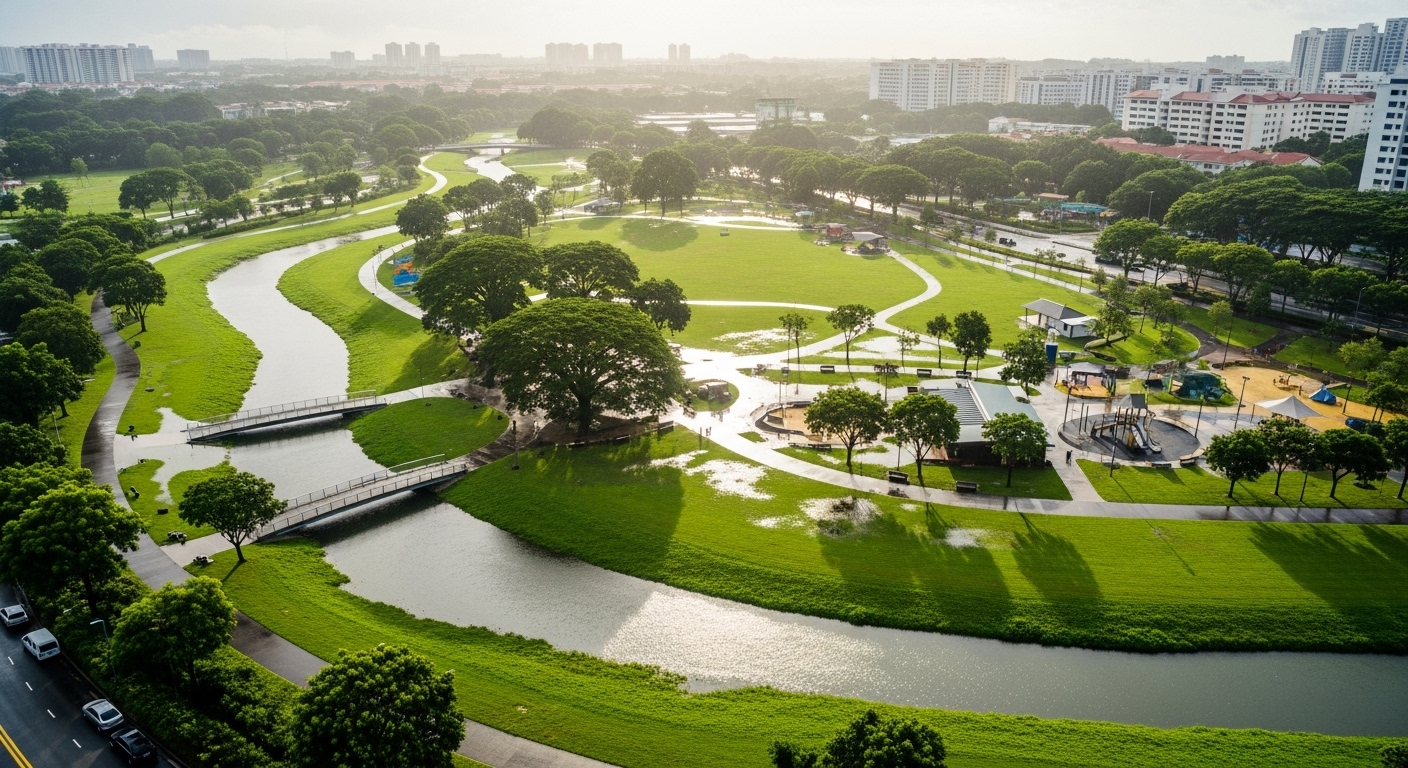
Take a walk along the Bishan-Ang Mo Kio Park. What used to be a concrete drainage canal is now a lush, meandering river filled with wildlife and bordered by pedestrian paths and picnic lawns. During heavy rain, the park’s river expands naturally to absorb excess water. It’s engineering disguised as serenity—a masterclass in climate adaptation through beauty.
The Netherlands: A Country That Lives With Water
Few nations understand water better than the Netherlands. More than a quarter of the country lies below sea level, and centuries of coexistence with water have turned the Dutch into pioneers of flood management. Today, they’re moving from defense to cooperation—embracing the sponge city philosophy on a national scale.
In Rotterdam, the Water Square Benthemplein is an urban masterpiece. On dry days, it’s a plaza with basketball courts and seating areas. When it rains, it transforms into a massive basin that temporarily stores stormwater. The city’s floodable parks and green roofs make every drop count, turning water management into urban art.
Travelers can even join guided tours that showcase Rotterdam’s water-resilient infrastructure, learning how design, play, and climate consciousness can merge seamlessly.

Copenhagen: Europe’s Resilient Capital
Copenhagen, too, has embraced the sponge city model after devastating floods in 2011. The city’s Cloudburst Management Plan transformed its flood defenses into public spaces. Streets double as stormwater channels, and plazas become temporary retention ponds during heavy rain.
Superkilen Park, a vibrant public space, features subtle terrain variations and permeable surfaces that collect water while offering locals and visitors a playground of art and culture. The park’s colorful design reminds travelers that resilience and creativity can go hand in hand.
Floodable Parks: Beauty in Adaptation
One of the most striking features of sponge cities is the rise of floodable parks—public areas designed to flood safely and temporarily. Unlike traditional flood control systems that hide water, these parks celebrate it. They turn climate adaptation into a living performance of nature and design.
In Paris, the Parc André Citroën incorporates water gardens and flexible landscapes that can absorb rainwater and channel it toward underground reservoirs. In Bangkok, the Chulalongkorn University Centenary Park slopes naturally to guide water into retention ponds and wetlands. The result? A city park that breathes with the rhythm of the monsoon season.
Design Principles Behind Sponge Cities
So what makes a city truly “spongy”? The magic lies in design. A successful sponge city integrates green and blue infrastructure—plants, soil, and water—into every layer of urban life. Some common strategies include:
- Permeable surfaces – Roads and pavements made from materials that let water seep through rather than run off.
- Green roofs and walls – Vegetation that absorbs rainfall, reduces heat, and improves air quality.
- Constructed wetlands – Natural filtration systems that clean water and support biodiversity.
- Retention ponds and basins – Spaces that temporarily store rainwater to prevent flooding.
- Urban forests – Trees that intercept rainfall, cool the air, and stabilize the ground.
All of these elements work together to make cities more livable, resilient, and beautiful—qualities any traveler can appreciate.
Traveling Through Climate-Smart Urban Design
Exploring sponge cities isn’t just for architects or engineers—it’s a new kind of travel experience. Imagine a guided walking tour through a district where every park, pond, and pathway tells a story about sustainability. Many cities now offer eco-design tours, showcasing how urban innovation meets environmental stewardship.
In Singapore, visitors can join green infrastructure walks through the Marina Barrage or the Kallang Basin. In Copenhagen, design enthusiasts can explore climate-adaptive streets and plazas. And in Rotterdam, urbanists offer cycling tours that highlight how the city’s relationship with water has shaped its identity.
What Travelers Can Learn
When you visit a sponge city, you learn that sustainability isn’t abstract—it’s visible, functional, and enjoyable. You see how parks, rivers, and rooftops serve both people and the planet. You realize that climate adaptation can be creative, playful, and inclusive. Most importantly, you leave inspired by the idea that the future of cities doesn’t have to be grey—it can be green and blue.
Challenges and the Road Ahead
Of course, building sponge cities isn’t easy. They require collaboration between architects, ecologists, policymakers, and communities. Costs can be high upfront, and maintenance demands long-term planning. Yet, as climate change intensifies, the benefits—reduced flooding, cleaner air, biodiversity, and public well-being—far outweigh the challenges.
What’s most exciting is how these designs are influencing travel itself. Tourists are increasingly drawn to destinations that value resilience and sustainability. Exploring a sponge city can feel like stepping into a blueprint for the future—a place where innovation and nature coexist beautifully.
Next time you plan a trip, consider adding a sponge city to your itinerary. Walk through Singapore’s parks, bike through Rotterdam’s water plazas, or relax by Wuhan’s lakeside wetlands. These destinations don’t just show you what’s possible—they show you what’s necessary. They’re living proof that smart design can turn climate challenges into opportunities for creativity and connection.
What do you think—would you visit a sponge city? Share your thoughts in the comments below! And if you love learning how design and sustainability shape our world, follow WentWorld for more travel stories that blend innovation with inspiration.
Catch up on the top stories and travel deals by subscribing to our newsletter!