In an era of climate change and rising energy costs, some forward-thinking communities have taken an innovative approach to sustainability: requiring solar panels on rooftops. Yes, you read that right. desert towns with solar-panel roof mandates are leading the way in renewable energy adoption, proving that sunny climates are perfect not just for sand dunes and breathtaking sunsets, but also for generating clean electricity.
Imagine living in a place where every roof is a mini-power plant, capturing the sun’s energy to power homes, businesses, and public spaces. Beyond environmental benefits, solar mandates in desert towns reduce electricity costs, create local jobs, and foster energy independence. But how do these communities implement such mandates, and what challenges and benefits do residents experience?
In this blog, we’ll explore desert towns with solar-panel roof mandates, why these policies are gaining traction, the technology behind solar panels, and why these towns are becoming blueprints for sustainable living. Whether you’re a homeowner, urban planner, or eco-conscious traveler, this is a journey into the sunny future of energy.
Why Desert Towns are Perfect for Solar Power
Deserts are often associated with harsh living conditions — scorching heat, sandstorms, and scarce rainfall. But they also receive abundant sunlight year-round, making them ideal for solar energy production. Desert towns can harness this natural resource efficiently, turning an extreme environment into a sustainable advantage.
Here are a few reasons why deserts are perfect for solar power:
- Abundant sunlight: High solar irradiance ensures maximum energy production.
- Flat terrain: Many desert areas have flat rooftops, ideal for solar panel installation.
- Energy independence: Solar panels reduce reliance on fossil fuels and grid electricity.
- Environmental benefits: Less pollution, fewer greenhouse gas emissions, and sustainable development.
These advantages make deserts not just challenging to live in, but also incredible opportunities for clean energy innovation.
1. Lancaster, California — A Solar Pioneer
Lancaster, located in California’s high desert, is one of the most notable examples of a desert town with solar-panel roof mandates. The city requires new residential developments to include solar panels, a policy that has inspired many other municipalities nationwide.
The local government’s initiative is part of a broader sustainability plan to reduce carbon emissions, lower energy costs for residents, and create a model for other desert communities. In addition to mandates, Lancaster offers incentives, technical support, and community programs to encourage homeowners to embrace solar energy.
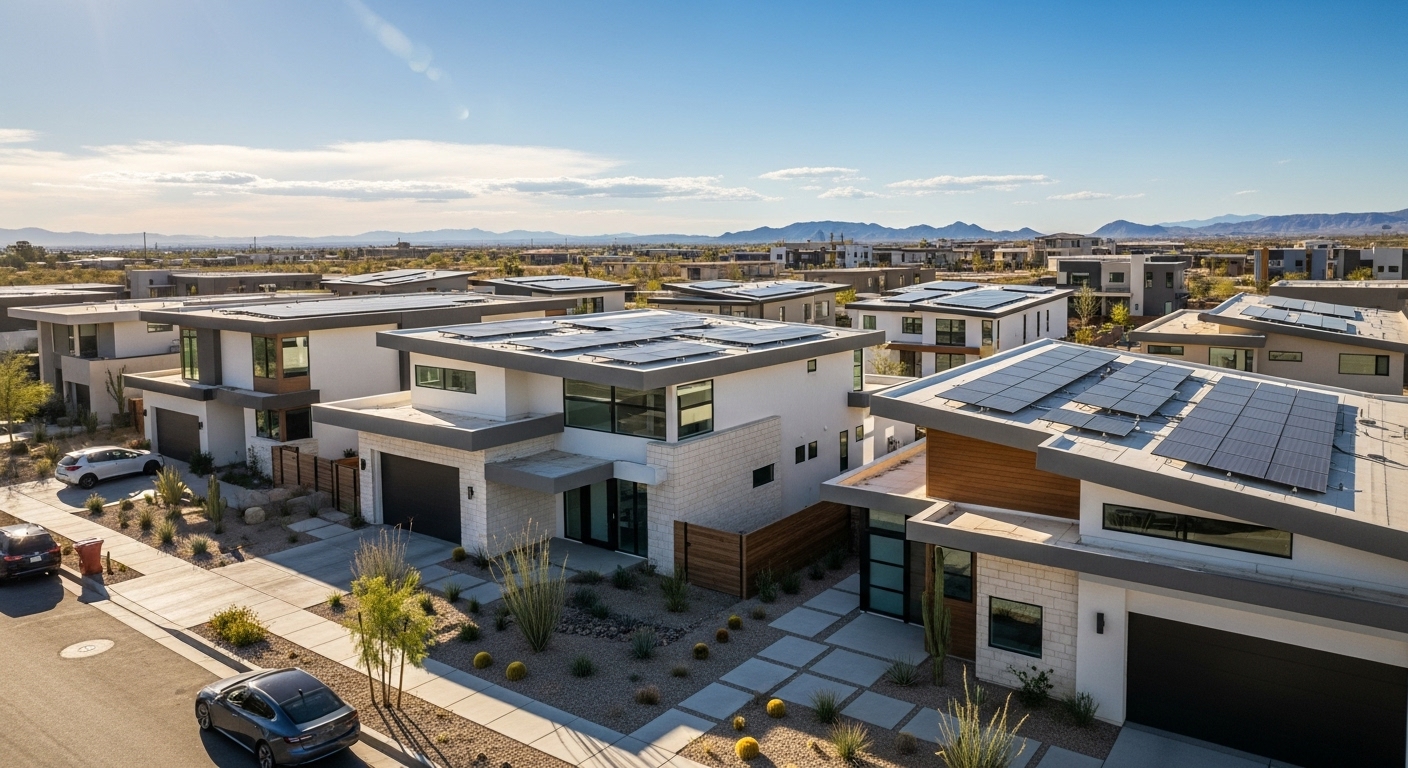
Walking through Lancaster’s neighborhoods, you’ll notice rows of houses with sleek solar panels gleaming under the desert sun. For residents, it’s more than compliance — it’s a statement about sustainable living. Have you ever imagined living in a community where clean energy isn’t optional but a shared commitment? Lancaster embodies that vision.
2. Tucson, Arizona — Harnessing the Sonoran Sun
Tucson, Arizona, situated in the Sonoran Desert, is another leading desert town with solar-panel initiatives. While solar mandates may vary by neighborhood and development, Tucson strongly encourages renewable energy through incentives, rebates, and public awareness campaigns.
Solar energy in Tucson is particularly effective due to the city’s abundant sunshine, clear skies, and long daylight hours. Residential solar panels reduce electricity bills significantly, and municipal programs have also incorporated solar into schools, libraries, and public buildings.

The city has become a hub for clean-tech innovation, attracting solar startups, research centers, and eco-conscious investors. Imagine walking through Tucson and seeing how a city can thrive economically while reducing its carbon footprint. Isn’t that a future we all want to be part of?
3. Phoenix, Arizona — Leading by Example
Phoenix, another Arizona desert metropolis, has made solar energy a cornerstone of urban planning. Several new housing developments in Phoenix now include mandatory solar panels on rooftops, reflecting a growing trend among American desert towns.
The city’s solar mandates help reduce peak energy demand, especially during scorching summer months, and provide a buffer against energy price spikes. Beyond residential areas, Phoenix integrates solar power in commercial zones, public transit facilities, and government buildings.
For residents, the benefits go beyond environmental impact: lower energy bills, potential tax credits, and the pride of living in a community committed to sustainability. If cities like Phoenix can lead this shift, could your town follow suit?
4. Boulder City, Nevada — Sustainability in the Desert
Boulder City, located near Las Vegas, has emerged as another desert town actively promoting solar energy. While full roof mandates may be limited to new constructions, the city provides incentives, technical guidance, and community workshops to encourage solar adoption.
Residents can participate in bulk solar purchase programs, reducing costs and making clean energy more accessible. Additionally, local schools and public facilities often incorporate solar panels, fostering awareness and education about renewable energy for future generations.
Boulder City is a shining example of how small desert towns can become sustainable pioneers, blending community engagement with practical energy solutions. Have you ever visited a town where sustainability is part of the local culture? Boulder City sets that standard.
5. Palm Springs, California — Luxurious Solar Living
Palm Springs, famous for its resorts, golf courses, and desert landscapes, has embraced solar mandates in residential and commercial zones. New housing developments often require solar panels, integrating energy efficiency with modern luxury.

The combination of abundant sunlight, forward-thinking policies, and affluent residents willing to invest in sustainability has made Palm Springs a solar-friendly desert haven. Visitors and homeowners alike benefit from lower energy costs, environmentally conscious construction, and innovative solar designs that complement the city’s aesthetic.

Imagine staying in a desert resort where solar panels not only power your room but also contribute to the town’s clean energy initiatives. That’s the kind of forward-thinking lifestyle Palm Springs promotes.
Challenges and Solutions in Implementing Solar Mandates
While desert towns enjoy abundant sunshine, implementing solar-panel roof mandates is not without challenges. Understanding these hurdles and solutions helps explain why only some towns have fully embraced this policy.
- Initial costs: Installing solar panels can be expensive upfront, though long-term savings often outweigh initial investments.
- Aesthetic concerns: Some residents worry solar panels may alter the look of neighborhoods. Many cities address this with design guidelines and integrated systems.
- Maintenance: Desert dust, sand, and heat can affect panel efficiency. Regular cleaning and technological solutions minimize these issues.
- Policy enforcement: Ensuring compliance requires clear regulations, inspections, and incentives.
Despite these challenges, desert towns demonstrate that with the right planning, support, and community engagement, solar-panel roof mandates can succeed and create long-lasting benefits.
The Broader Impact: Environmental and Social Benefits
Mandatory solar panels in desert towns offer more than individual advantages; they contribute to broader environmental and social benefits:
- Reduced carbon emissions: Less reliance on fossil fuels means cleaner air and lower greenhouse gases.
- Energy independence: Communities become less dependent on centralized power grids and volatile energy markets.
- Job creation: Solar installation, maintenance, and technology sectors grow, creating local employment opportunities.
- Education and awareness: Residents and visitors learn about renewable energy, inspiring sustainable practices elsewhere.
- Community resilience: In extreme weather events, solar-powered homes can provide backup energy, enhancing safety and stability.
Desert towns with solar mandates are living laboratories, showing how communities can adapt to climate realities while benefiting economically, socially, and environmentally.
Desert towns with solar-panel roof mandates are proving that sustainability and innovation can thrive even in the harshest climates. By harnessing the abundant desert sun, these communities reduce energy costs, promote renewable technology, and set a global example for sustainable living.
Have you ever considered living in or visiting a desert town powered by solar energy? What are your thoughts on mandatory solar roofs as a step toward a greener future? Share your feedback and ideas — your insights might inspire the next wave of sustainable urban planning.
For more inspiring stories on sustainability, innovation, and modern urban solutions, follow us on our social media platforms and join WentWorld on a journey to a brighter, cleaner future.
Catch up on the top stories and travel deals by subscribing to our newsletter!