Have you ever imagined living in a place where homes stay naturally cool even under the burning desert sun—without air conditioners, without electricity-heavy cooling systems, and without modern technology controlling the indoor climate? It may sound unbelievable, but lava-rock villages with natural cooling have been quietly perfecting this lifestyle for centuries. These rare and fascinating settlements are built from volcanic stone and designed so cleverly that nature itself does the cooling.
Today, when global temperatures are rising and energy costs are climbing, these lava-rock villages with natural cooling feel more relevant than ever. They stand as living proof that ancient wisdom can offer modern solutions. From scorching deserts to volcanic landscapes, human creativity has shaped homes that work in harmony with the environment instead of fighting against it.
In this blog, we’ll take a deep journey into these extraordinary villages—how they work, where they exist, why they remain cool, and what they can teach us about sustainability, architecture, and smart living. And as you read, I want you to ask yourself: Could this be the future of housing?
The Remarkable Science Behind Lava-Rock Villages With Natural Cooling
The secret of lava-rock villages with natural cooling lies within the stone itself. Lava rock, also known as basalt, is formed when magma cools rapidly after volcanic eruptions. This rock ends up dense, porous, and incredibly good at regulating temperature.
During the day, thick lava-stone walls absorb heat very slowly, preventing indoor temperatures from rising quickly. Then at night, as the temperature drops, the stone slowly releases stored heat back into the environment. This creates a stable indoor climate that stays cool during the day and comfortable at night.
But it’s not just about thick walls. These villages also use clever architectural techniques such as:
• Naturally ventilated courtyards
• Underground rooms and corridors
• Narrow streets that block direct sunlight
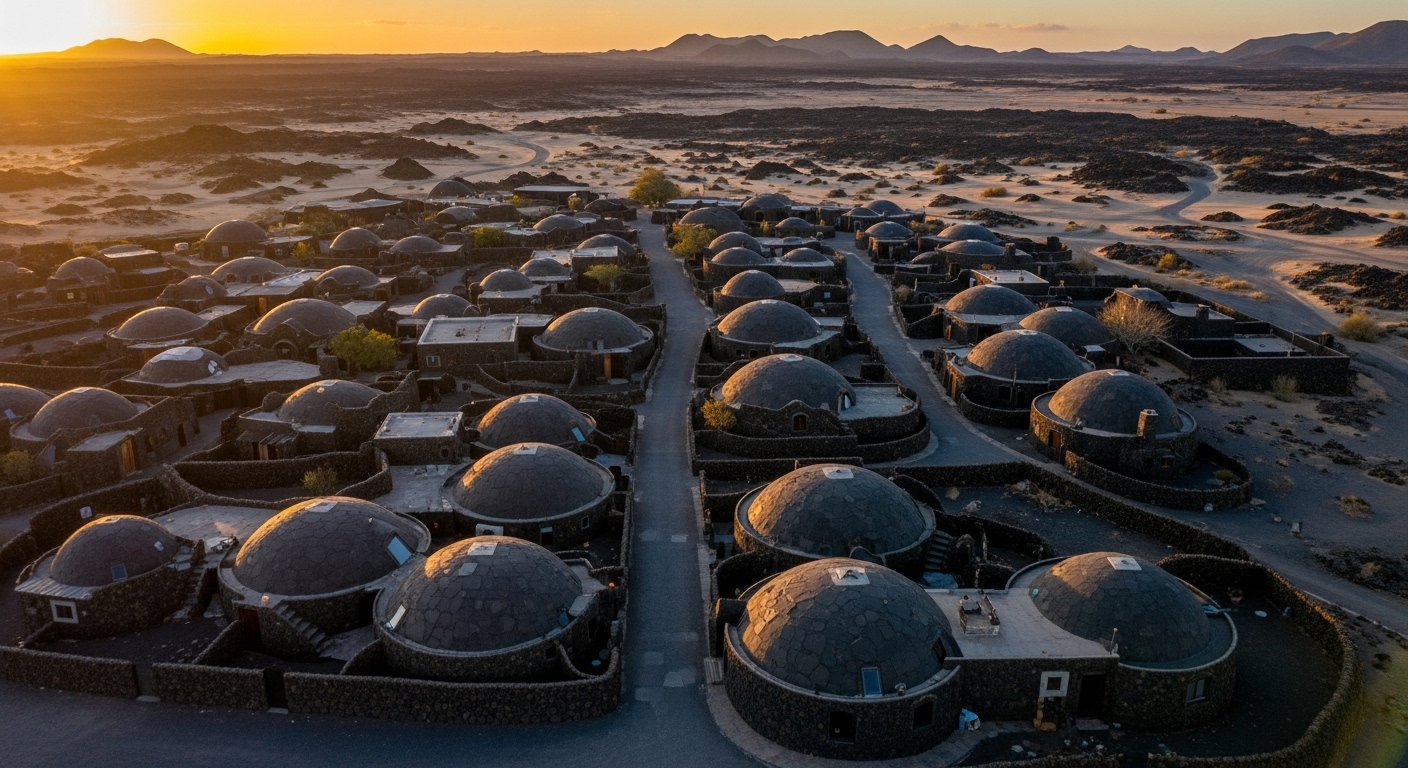
• Dome-shaped roofs that prevent heat buildup
• Strategic window placement to encourage airflow
Everything works together like a silent cooling machine designed by nature and perfected by humans.
Why Lava-Rock Villages With Natural Cooling Matter More Than Ever
Modern cities rely heavily on energy-hungry air-conditioning systems. As a result, electricity demand continues to soar, carbon emissions rise, and entire power grids get overwhelmed during heatwaves. In contrast, lava-rock villages with natural cooling require almost no artificial cooling at all.
These villages offer a powerful message: sustainable living doesn’t always need advanced technology—it often needs smarter design.
Imagine if more homes today were built with these natural temperature-regulating principles. How much electricity could we save? How much pollution could we reduce? How much more comfortable would life feel without relying on machines for every basic comfort?
It’s worth thinking about, isn’t it?
Where Can You Find Lava-Rock Villages With Natural Cooling?
You may be surprised to learn that lava-rock villages with natural cooling are scattered across several parts of the world. They often exist in regions shaped by ancient volcanic activity, especially in arid or semi-arid environments.
One of the most iconic locations is Harran in Turkey, where dome-shaped lava-stone houses have stood for centuries, keeping interiors cool despite extreme heat. In parts of Ethiopia, ancient lava-built settlements still function today using deep underground rooms as natural cooling chambers.
In Lanzarote, part of Spain’s Canary Islands, lava rock is used almost everywhere—from walls and homes to vineyards. Even in Mexico, some villages near volcanic zones continue to use basalt stone structures for thermal regulation. Each region adapted the same principle in unique ways depending on climate, terrain, and culture.

Life Inside Lava-Rock Villages With Natural Cooling
Life inside lava-rock villages with natural cooling feels drastically different from city life. The silence is deeper. The temperatures are steadier. There’s no constant hum of air conditioners, no sudden heat waves attacking you indoors, and no artificial chill that dries your skin.
Locals often describe their homes as “breathing.” As air naturally circulates through stone corridors and courtyards, the buildings seem alive—responding to temperature and airflow in ways modern concrete structures can’t match.
Daily life flows in harmony with the environment. People adapt their routines to natural light, outdoor airflow, and seasonal changes instead of fighting them with machines. Would you enjoy living in a house that follows nature instead of resisting it?
The Ancient Wisdom Hidden in Lava Architecture
Long before climate control systems existed, ancient builders experimented with natural materials and environmental behavior. They observed how heat moved, where shadows fell, how airflow behaved, and how stone stored temperature.
Lava-rock villages with natural cooling represent the peak of this ancient environmental intelligence. Nothing about their design is random. Even the smallest window placement serves a cooling function. Doorways often align with wind directions. Houses cluster close together to shade one another.
It’s architecture as a survival skill—shaped by centuries of observation, trial, and refinement.
Can These Villages Teach Modern Cities How to Cool Naturally?
The answer is absolutely yes. Architects around the world are now revisiting lava-rock villages with natural cooling as blueprints for sustainable housing. Concepts like thermal mass, passive cooling, underground insulation, and airflow zoning are already being integrated into eco-friendly buildings.
In fact, many modern “green buildings” borrow inspired techniques from these villages without always giving credit to the ancient cultures that perfected them.
Imagine cities where buildings are designed to cool themselves. No excessive power usage. No harmful refrigerants. Just geometry, stone, airflow, and smart planning. Does that sound like a dream—or an overdue necessity?

Tourism in Lava-Rock Villages With Natural Cooling
These villages are slowly becoming popular among travelers who seek eco-tourism, cultural immersion, and authentic experiences. Staying in lava-stone homes gives visitors a chance to experience what natural cooling actually feels like.
Many heritage homes have been converted into guesthouses, allowing tourists to sleep inside stone chambers that stay cool even during peak summer.
Visitors often describe the experience as surreal—stepping inside from blazing sunlight into a naturally chilled space without any mechanical systems running. It leaves a lasting impression and often changes how people think about comfort and sustainability.
The Challenges These Villages Face Today
Despite their brilliance, lava-rock villages with natural cooling face serious threats. Urban expansion, tourism overdevelopment, modern construction trends, and lack of awareness are slowly eroding these heritage sites.
Some villages are being replaced with concrete buildings that trap heat rather than release it. Others struggle with maintenance as younger generations migrate toward cities.
Without proper preservation efforts, the world could lose some of the most intelligent architectural traditions ever created. Shouldn’t we protect them—not just as historical sites, but as living laboratories of sustainable design?
The Emotional Power of Living in Naturally Cooled Homes
Beyond science and sustainability, there’s an emotional side to lava-rock villages with natural cooling. Residents often report feeling calmer, healthier, and more connected to their surroundings. The consistent temperatures reduce physical stress. Natural lighting and airflow improve sleep and mood.
Modern life forces us into climate-controlled boxes where we barely feel seasons anymore. But in these villages, you feel nature without suffering from it.
Wouldn’t it be refreshing to live in a way where summer heat doesn’t control your energy, your sleep, or your mood?
The Future of Lava-Rock Villages With Natural Cooling
The future may bring a surprising revival of these incredible architectural systems. As climate change accelerates and energy costs rise, the world will desperately need passive cooling solutions.
Lava-rock villages with natural cooling are no longer just historical oddities—they are blueprints for resilience.
Some architects already experiment with modern lava-stone homes using updated materials but ancient principles. If this movement grows, future cities may look very different from today’s glass-and-steel heat traps. The wisdom already exists. The question is: Will we choose to learn from it?
From ancient volcanic landscapes to modern sustainability debates, lava-rock villages with natural cooling tell a powerful story. They remind us that true innovation doesn’t always mean new—it often means rediscovering what already worked.
These villages are more than beautiful places. They are proof that humans once built with respect for nature instead of dominance over it. If you had the chance to live in one of these homes, would you take it? Do you believe modern cities should return to such passive cooling designs? Share your thoughts—we truly want to hear from you.
If you enjoyed exploring these incredible thermal marvels with us, make sure to follow WentWorld on our social media platforms for more hidden destinations, smart travel stories, and natural wonders from around the globe.
Catch up on the top stories and travel deals by subscribing to our newsletter!