
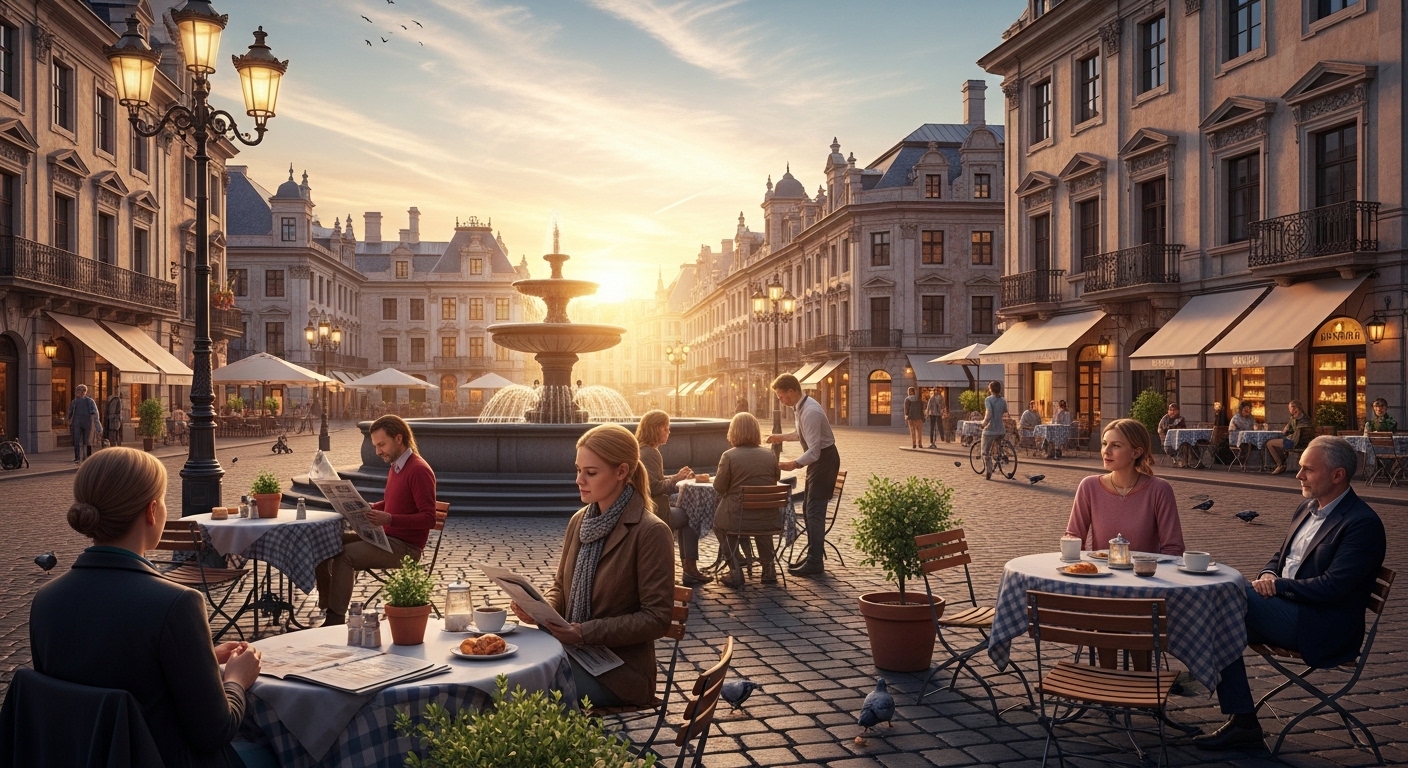
What if the real heart of a city is not inside museums or shopping districts, but out in the open? How to explore a city through its public squares is more than a travel strategy. It is a mindset. Instead of rushing between landmarks, you slow down and observe daily life. Public squares reveal culture, rhythm, and identity in ways guidebooks rarely explain.
Across the world, plazas, piazzas, maidans, and commons act as living rooms for cities. For example, Plaza Mayor in Madrid hosts gatherings that mix locals and visitors effortlessly. Meanwhile, Piazza Navona in Rome blends fountains, history, and café culture into one vibrant space. Therefore, if you truly want to understand a destination, begin with its square.
Why Public Squares Reveal a City’s True Character
First of all, public squares are democratic spaces. Anyone can enter. No ticket is required. As a result, they reflect authentic city life rather than curated tourist experiences.
Historically, these spaces served as marketplaces and political stages. In addition, they hosted celebrations, speeches, and public debates. Because of that layered history, each square carries emotional weight. Even today, you can feel echoes of the past in the architecture and layout.
Instead of asking where tourists go, ask where residents gather. More often than not, the answer points directly to a central square.
Begin Your Day Where the City Wakes Up
To fully understand how to explore a city through its public squares, start early. At sunrise, squares feel calm and intimate. Café owners arrange chairs. Street cleaners prepare the area. Office workers grab their first coffee.
For instance, neighborhood squares in Paris gradually fill with morning regulars, as seen on Paris tourism guides. During this time, conversations are softer and movements slower. Consequently, you observe patterns that disappear later in the day.
Listen carefully. Are there church bells? Birds? Delivery trucks? These sounds shape the personality of the space.
Midday Energy and Architectural Dialogue
As the day progresses, the square transforms. Crowds increase. Sunlight shifts across façades. Tour groups arrive. Because of this activity, the square becomes dynamic and layered.
Take Old Town Square in Prague as an example. Gothic spires stand beside Baroque details. Meanwhile, street musicians perform beneath astronomical clocks. The architecture speaks across centuries.
Furthermore, notice how people move. Do they linger near fountains? Do they cross quickly? Are benches positioned for conversation or isolation? Urban design always sends subtle signals.

Public Squares as Cultural Stages
Throughout history, public squares have functioned as stages. Even now, they host art installations, protests, and festivals. Consequently, they remain central to civic identity.
Consider Times Square in New York, highlighted on NYC’s official tourism site. Although commercial, it still reflects public energy and spectacle. Similarly, Trafalgar Square in London frequently becomes a gathering place for national events.
Rather than simply taking photos, pause and watch interactions. Are locals comfortable? Do tourists dominate? These details reveal whether the square belongs to residents or visitors.
Taste the Square: Food as Cultural Insight
Another powerful way to explore a city through its public squares involves food. Street vendors and surrounding cafés reflect local tastes. Therefore, eating nearby deepens your experience.
In Italy, espresso culture defines many piazzas. In Mexico, central plazas fill with taco stands and fresh fruit carts. Meanwhile, in Istanbul, simit vendors circulate near historic squares. Because food connects directly to daily routines, it anchors you in the present moment.
Instead of dining indoors, choose a table facing the square. As you eat, observe who comes and goes. Who stays longest? Who meets friends there daily?
Evening Transformation and Atmosphere
Later in the day, lighting reshapes everything. Monuments glow softly. Musicians return. Couples stroll. Consequently, the emotional tone shifts from practical to romantic.
Barcelona’s plazas remain lively late into the night. Likewise, Buenos Aires squares sometimes host spontaneous dance gatherings. Because of this transformation, visiting twice in one day feels like exploring two different places.
If possible, return after sunset. Notice how shadows change perception. Listen for laughter replacing traffic noise.
Squares as Political and Historical Landmarks
Beyond aesthetics, public squares often hold deep political significance. For example, major demonstrations unfolded in Tiananmen Square, Tahrir Square, and Red Square. Therefore, these spaces represent collective memory.
Before visiting, research historical events tied to the location. Doing so adds depth to your experience. Instead of seeing empty space, you will imagine speeches, protests, and turning points.
History transforms observation into understanding.
Photography and Observation Techniques
Public squares provide exceptional photography opportunities. Wide shots capture symmetry. Meanwhile, close-ups reveal human emotion. However, avoid rushing.
First, observe without your camera. Then, identify patterns. Finally, capture moments that feel authentic rather than staged.
Ask yourself: Does this image tell a story about daily life? If not, wait longer.

Exploring Smaller Neighborhood Squares
While famous plazas attract attention, smaller neighborhood squares often reveal more. Because they lack heavy tourism, they feel intimate and genuine.
Wander into residential districts. Sit quietly. Notice conversations in local languages. In many cases, these modest spaces become your most memorable stops.
Sometimes, the smallest square carries the biggest story.
How to Explore a City Through Its Public Squares Like a Local
To master how to explore a city through its public squares, adopt a patient mindset. Arrive without strict plans. Stay longer than expected. Engage respectfully with vendors and performers.
- Visit multiple times in one day.
- Balance observation with participation.
- Research historical context beforehand.
- Choose cafés facing the open space.
- Allow spontaneity to guide you.
Above all, resist the urge to rush. Depth comes from duration.
Why This Travel Approach Changes Everything
Modern travel often feels rushed. Checklists dominate itineraries. However, slowing down changes perspective. Instead of consuming attractions, you absorb atmosphere.
Public squares encourage connection. They invite stillness. They reveal how communities share space. Consequently, your experience becomes immersive rather than transactional.
Next time you arrive somewhere new, head directly to the nearest square. Sit. Watch. Reflect. Let the city introduce itself.
Have you ever discovered a city’s personality through its public squares? Which plaza left the strongest impression on you? Share your thoughts below.
Follow WentWorld.com on social media for more immersive and meaningful travel ideas that transform the way you explore the world.
Catch up on the top stories and travel deals by subscribing to our newsletter!







Leave a Reply
You must be logged in to post a comment.