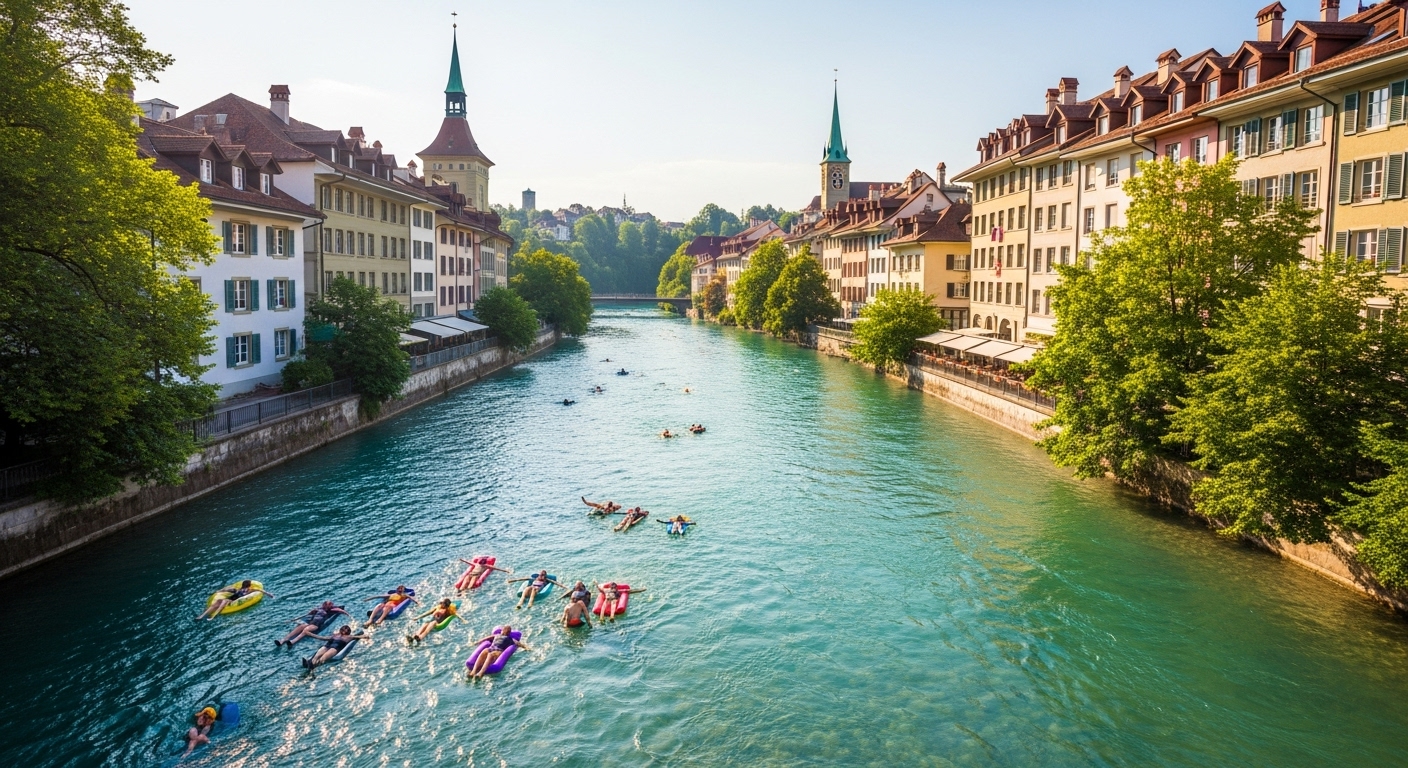
When you think of beaches, you probably imagine crashing ocean waves or white-sand coastlines — not the heart of a bustling city. But around the world, an amazing trend is redefining urban leisure: river-beach cities. These are cities where locals and travelers can take a refreshing dip right in the middle of town — no ocean required.
From Berlin’s canal-side swimming spots to Paris’s Seine beaches and the gleaming waters of Zurich and Vienna, urban rivers are becoming clean, swimmable, and sociable spaces once again. The best part? You don’t have to venture far from your hotel, train stop, or favorite café to experience them. Just grab your swimsuit, towel, and maybe a little local courage — because yes, you can actually swim there!
In this post, we’ll explore what makes river-beach cities so fascinating, where to find them, and how to enjoy them safely and responsibly. By the end, you might just be planning your next summer escape — not to the coast, but to the city’s riverfront instead.
What Makes River-Beach Cities So Special?
It’s easy to forget that most major cities were built along rivers — lifelines that once provided water, trade, and transport. But as urbanization grew, many rivers became polluted and neglected. Thankfully, that story is changing. A wave of environmental restoration and smart urban planning has turned these waterways into clean, accessible recreational spaces. The result? Cities where you can take a swim after work or cool off mid-sightseeing, surrounded by historic architecture and café terraces.
What’s truly beautiful about river-beach cities is how they blend urban life with natural calm. Imagine floating in the Danube as church bells echo through Vienna, or diving into the River Aare in Bern while Alpine peaks shimmer in the distance. These are not just scenic moments — they’re living proof of how sustainable city planning can create joy and community.
Europe’s Trailblazers: The Best River-Beach Cities
Europe has led the charge in turning city rivers into clean, swimmable hubs. Let’s dive into some of the most inspiring examples you can visit right now.
Zurich, Switzerland – Where Urban Meets Alpine
Zurich may be known for banks and chocolate, but locals know it for something much more refreshing: the Limmat River. Flowing through the city’s heart, this crystal-clear river has multiple designated swimming spots like Oberer Letten and Unterer Letten, where swimmers can drift downstream safely. The water is so clean it’s drinkable in some areas — proof that sustainable water management works.
Floating in the Limmat with a view of church spires and modern art spaces is a surreal experience. Afterwards, locals grab ice cream or a cold drink from nearby pop-up bars — because this is where the city comes alive on warm afternoons.

Bern, Switzerland – The Capital of River Joy
Few places capture the spirit of river-beach cities like Bern. The turquoise River Aare loops around the old town, creating one of the most scenic natural swimming pools in the world. Locals leap in with waterproof bags, letting the current carry them downstream before climbing out at designated points.
Safety is key here — the Aare’s current can be strong, so swimmers stick to specific sections and follow posted signs. Still, it’s an unforgettable way to see the city from a new perspective. Think of it as a sightseeing float tour powered by nature.
Paris, France – From the Seine to the Sand
Paris might not be the first place that comes to mind for swimming, but that’s changing fast. With ongoing efforts to clean the Seine, the city plans to make swimming officially legal in designated zones by 2025 — just in time for the Summer Olympics. For now, Parisians can enjoy the Paris Plages (Paris Beaches), a summertime event that transforms riverbanks into sandy retreats complete with deck chairs and parasols.
The goal is clear: bring blue spaces back to urban life. Paris’s transformation is inspiring other cities worldwide to see their rivers not as barriers, but as shared playgrounds.
Vienna, Austria – The Danube’s Urban Oasis
Vienna’s Danube Canal and Old Danube are masterpieces of urban recreation. Here, locals swim, kayak, and sunbathe in water so clean it meets drinking standards. Floating restaurants, grassy banks, and small sandy coves make it easy to forget you’re in a capital city.
Even better, public transport gets you there effortlessly — proving that sustainability and relaxation can go hand in hand. Few river-beach cities blend convenience and cleanliness quite like Vienna.

Copenhagen, Denmark – The Nordic Blueprint
If there’s one city that redefined urban swimming, it’s Copenhagen. The Harbour Baths at Islands Brygge have become a symbol of urban renewal done right. Once heavily polluted, the harbor now boasts crystal-clear water and designated swimming lanes. Lifeguards ensure safety, while floating platforms let you sunbathe between dips.
The city’s approach — investing in water treatment, public design, and community engagement — has inspired similar projects in cities like Oslo, Hamburg, and London.
Other Global Gems Worth a Dip
Europe may lead the way, but other continents are catching up fast. Let’s look at some underrated river-beach cities beyond Europe:
- Brisbane, Australia – The South Bank artificial lagoon offers city swimming surrounded by gardens and skyline views.
- Seoul, South Korea – The restored Cheonggyecheon Stream is more symbolic than swimmable, but nearby Hangang River parks offer paddle and splash zones.
- Portland, Oregon, USA – Efforts to clean the Willamette River have made certain stretches open for safe swimming.
- Ljubljana, Slovenia – With its car-free riverfront, this green capital has started small “dip zones” in the Ljubljanica River.
How to Swim Safely in River-Beach Cities
Before you jump in, remember that not every river section is safe for swimming. Even in top-rated river-beach cities, currents, boat traffic, or pollution can pose risks. Here’s how to keep your urban swim both safe and enjoyable:
- Always swim in designated areas with lifeguards or clear signage.
- Check water quality reports (many cities publish daily data online).
- Be aware of boat zones and don’t swim near docks or bridges.
- Never swim alone in moving water — go with a buddy or locals who know the flow.
- Use waterproof bags for your valuables and dry clothes.
- Respect local rules — if it says “No Swimming,” there’s usually a good reason.
Why River-Beach Cities Matter
Urban beaches aren’t just about fun; they’re about the future of sustainable living. They show how nature and cities can coexist beautifully. Restoring rivers improves biodiversity, boosts local tourism, and gives residents access to free recreation — all while promoting cleaner, healthier communities.
In many ways, river-beach cities are the ultimate symbol of climate-positive urban design. They prove that even dense cities can breathe, relax, and play in harmony with nature. And honestly — who wouldn’t want to live in a city where you can swim to lunch?
So, what do you think? Would you pack your swimsuit for a city trip? Have you ever taken a dip in an urban river or harbor? How was it — refreshing or nerve-wracking? We’d love to hear your thoughts and stories in the comments!
Whether you’re floating in Bern’s turquoise waters, lounging on Paris’s pop-up beaches, or diving into Vienna’s Danube, one thing’s certain — these river-beach cities are redefining what it means to enjoy urban life. It’s not just travel; it’s transformation. If this post inspired you to dive deeper into sustainable travel and unique urban experiences, don’t forget to follow us on our social media platforms for more stories, ideas, and global adventures.
Catch up on the top stories and travel deals by subscribing to our newsletter!