Traveling abroad is exciting, eye-opening, and sometimes a little overwhelming—especially if you’re navigating food choices. For those of us who don’t eat meat, eggs, or dairy, international travel as a vegetarian or vegan can feel like both an adventure and a challenge. How do you make sure you’re not stuck with plain salads while everyone else enjoys hearty meals? How do you communicate your needs in a language you don’t speak? And most importantly, how do you still savor the joy of cultural food experiences without compromising your values?
The good news? With some planning, creativity, and flexibility, you can enjoy incredible meals in almost any country. Let’s dive into practical strategies, tips, and stories that make international travel as a vegetarian or vegan not just doable—but deeply rewarding.
1. Do a Little Homework Before You Go
Food is such a core part of travel that it’s worth doing some research before you board the plane. Look up traditional dishes in the country you’re visiting and highlight ones that are naturally vegetarian or vegan. For example, Italy offers pasta al pomodoro and ribollita soup, while India has endless plant-based curries and dals. Isn’t it exciting to think of how many hidden plant-based treasures are waiting to be discovered?
2. Learn Key Phrases in the Local Language
One of the most effective hacks for international travel as a vegetarian or vegan is learning how to say things like “I don’t eat meat” or “I’m vegan, no eggs or dairy please.” Even writing them down on a card you can show to restaurant staff can save you from confusion and mistakes. Not only is it practical, but it also shows respect for the local culture.
3. Use Apps and Online Communities
Technology is your friend. Apps like HappyCow, VeggieHotels, and local vegan Facebook groups are goldmines for plant-based travelers. They help you find restaurants, shops, and even communities of locals who share your dietary values. Why stress when your phone can lead you straight to a delicious vegan café?
4. Pack Travel-Friendly Snacks
Sometimes flights get delayed, trains run late, or a restaurant isn’t as veg-friendly as expected. Having a stash of protein bars, trail mix, or dried fruit in your bag can save the day. Doesn’t it feel reassuring to know you always have a back-up option?

5. Flexibility and Curiosity Go a Long Way
Being a vegetarian or vegan traveler doesn’t mean you miss out on cultural food experiences. Instead, it can open the door to discovering unique dishes you might not have tried otherwise. Ever had falafel in the Middle East, vegan bánh mì in Vietnam, or plantain stews in West Africa? Curiosity can turn what seems like a restriction into a delicious opportunity.
6. Navigating Airports and Airplane Meals
Air travel is often the first hurdle. Most airlines offer vegetarian and vegan meal options if you request them in advance. Double-check your booking to make sure it’s noted. And when in doubt, again—bring your own snacks. Have you ever been disappointed by a bland in-flight meal? Preparing in advance prevents that.
7. Handling Food Markets and Street Food
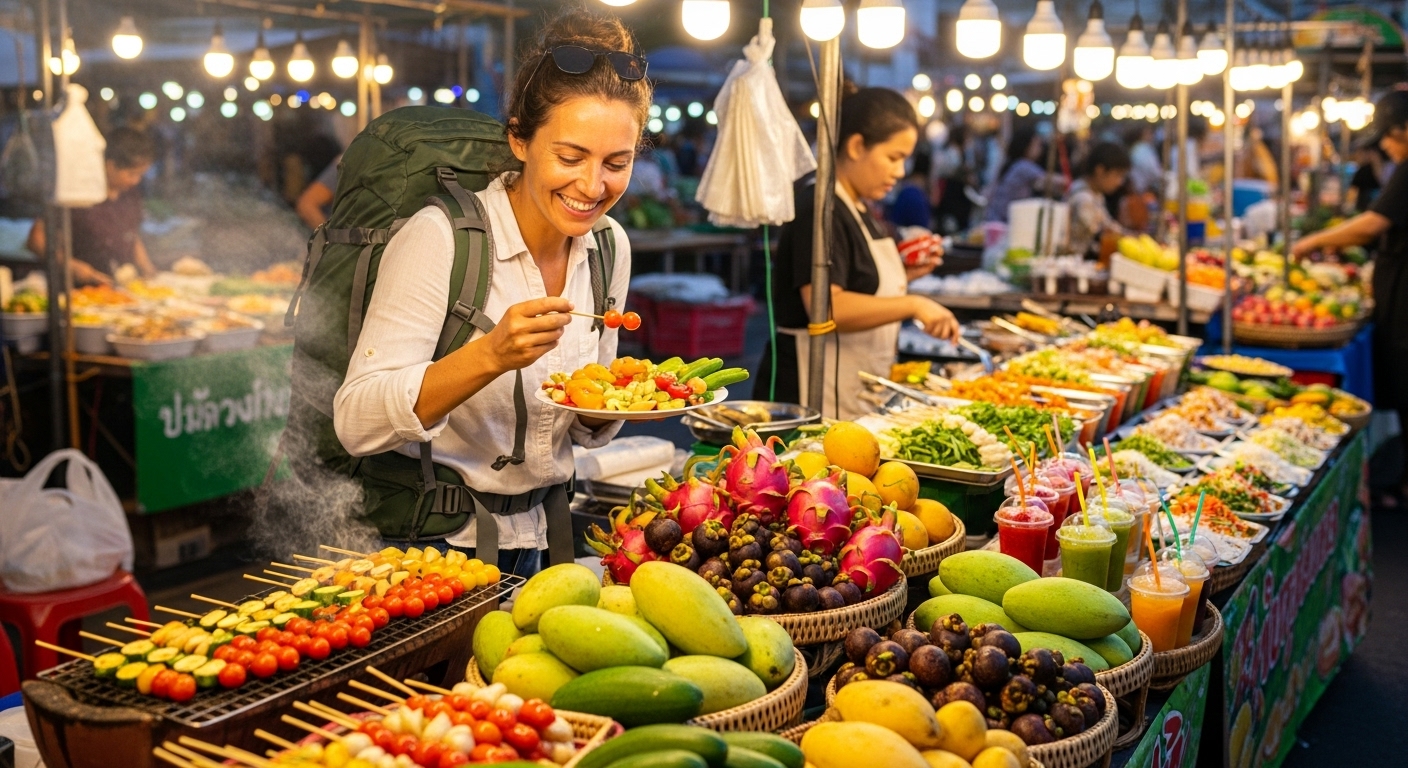
Street food markets are a highlight of international travel as a vegetarian or vegan. While some stalls may be heavy on meat, there are usually gems hidden among them—grilled corn, vegetable skewers, fresh fruit juices, and more. Be open, ask questions, and you’ll often discover the heart of local food culture right on the streets.
8. Stay in Accommodations with Kitchens
If eating out every meal feels overwhelming, look for hostels, guesthouses, or Airbnbs with kitchen access. Cooking a quick pasta, stir-fry, or salad with fresh market ingredients gives you control and saves money. Isn’t it nice to have the comfort of a home-cooked meal while abroad?

9. Communicating with Locals
Sometimes, locals may not fully understand vegetarian or vegan diets, especially in cultures where meat is central to meals. Instead of saying “I’m vegan,” try explaining more clearly: “No meat, no fish, no milk, no eggs.” Simple, direct language avoids confusion—and helps you build trust with restaurant staff and hosts.
10. Balancing Social Situations
Travel often means sharing meals with locals, colleagues, or fellow travelers. If someone offers you food you can’t eat, a polite refusal with gratitude usually works. Carrying small gifts like tea or snacks from your home country can also help you reciprocate hospitality without compromising your diet. Isn’t that a great way to connect respectfully?
11. Country Spotlights
Some countries are famously veg-friendly, while others pose more of a challenge. For example:
- India: A vegetarian paradise with endless curries, lentil soups, breads, and snacks.
- Thailand: Delicious but tricky—fish sauce sneaks into many dishes, so communicate clearly.
- Italy: Pasta, pizza, risotto—you won’t go hungry, but watch for hidden cheese or broths.
- Japan: Plant-based options exist but can be harder to find; miso soup and vegetable sushi are reliable staples.
- Mexico: Beans, rice, tortillas, and fresh produce make it easier than you might think.
Traveling with awareness makes any country accessible.
At the end of the day, international travel as a vegetarian or vegan isn’t about perfection. It’s about making thoughtful choices, enjoying the journey, and respecting both your own values and the cultures you visit. Sometimes you’ll find amazing plant-based restaurants, sometimes you’ll improvise with simple meals—and both can be part of the adventure.
What’s been your best or hardest experience with international travel as a vegetarian or vegan? Do you have any go-to tips for making sure you eat well abroad? Share your stories in the comments—and don’t forget to follow us on our social media platforms for more travel wisdom and inspiration.
Catch up on the top stories and travel deals by subscribing to our newsletter!