
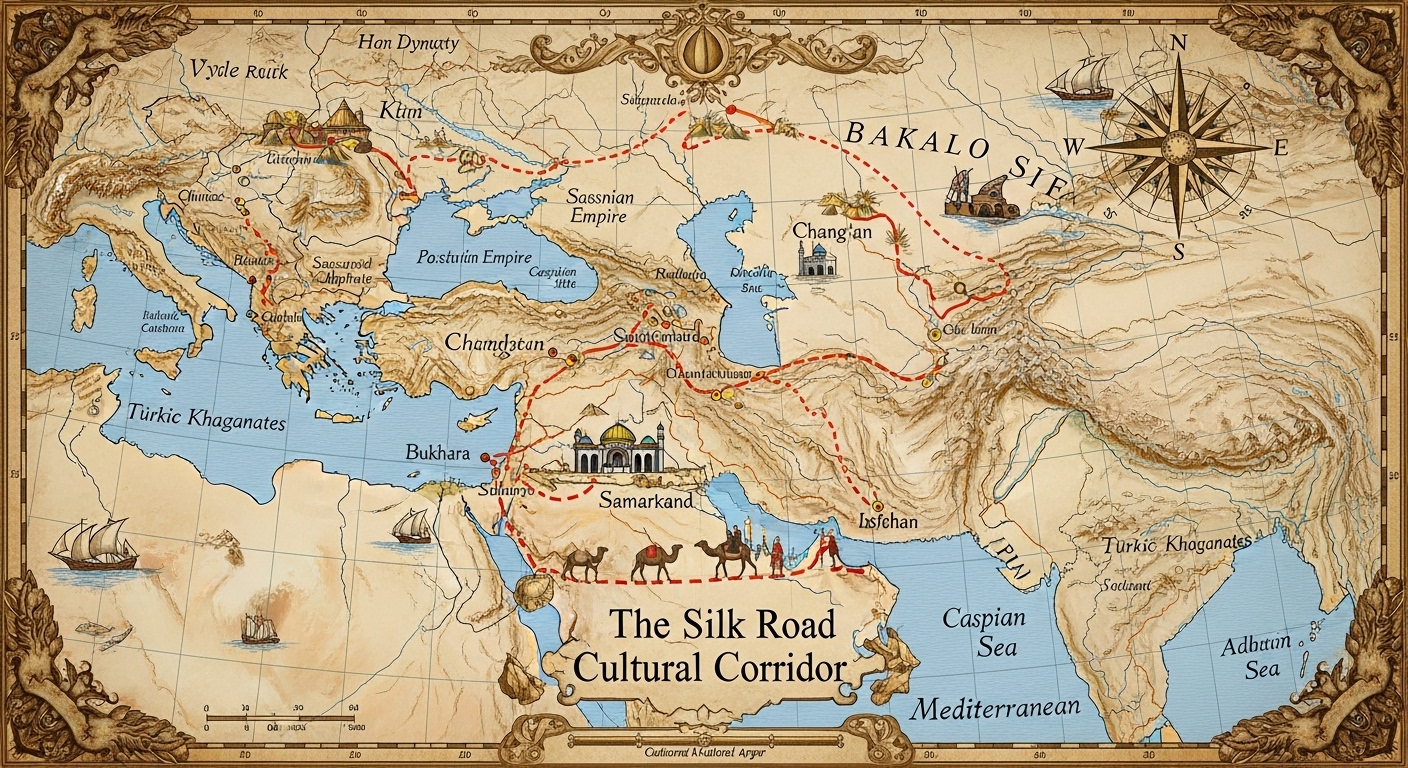
A multi-country cultural corridor trip is not just another vacation. It is an immersive journey through history, language, cuisine, art, and shared traditions that stretch beyond modern borders. Instead of hopping randomly from one country to another, you follow a cultural thread that connects civilizations across regions. Imagine tracing ancient trade routes, religious pilgrimages, architectural movements, or culinary traditions across multiple nations. Doesn’t that feel more meaningful than simply collecting passport stamps?
In recent years, travelers have started choosing depth over speed. A multi-country cultural corridor trip allows you to experience how cultures evolve, influence each other, and yet maintain unique identities. From Europe’s historic corridors to Southeast Asia’s spiritual networks, these routes transform travel into storytelling.
If you have ever wondered how to design such a journey without feeling overwhelmed, this guide by WentWorld.com will walk you through every step. By the end, you might find yourself mapping your own cultural corridor adventure.
What Is a Multi-Country Cultural Corridor Trip?
A multi-country cultural corridor trip focuses on a connected theme that spans across borders. Instead of visiting unrelated destinations, you follow a shared historical, artistic, religious, or social pathway. These corridors often emerged from trade routes, migration patterns, empires, or cultural exchanges.
For example, the Silk Road once connected East Asia with Europe, influencing architecture, textiles, and cuisine along the way. Today, travelers can retrace parts of this route across countries like Uzbekistan, China, and Turkey. Organizations like UNESCO even recognize several cultural corridors as World Heritage sites because of their historical importance.
So ask yourself: Do you want your next trip to be random, or would you rather follow a story that unfolds across nations?
Why Choose a Cultural Corridor Instead of a Regular Multi-Country Trip?
The biggest difference is intention. A regular multi-country itinerary may focus on convenience or budget flights. A multi-country cultural corridor trip, however, is curated around continuity. Each destination builds upon the previous one.
You begin noticing subtle differences in architecture, dialects, and food. For instance, if you travel along the Danube cultural corridor through Germany, Austria, Slovakia, and Hungary, you will see how one river shaped art, music, and trade across centuries.
More importantly, you develop a deeper appreciation for how cultures overlap. Borders may divide countries, but traditions often flow seamlessly across them.

Step 1: Choose Your Cultural Theme
Every successful multi-country cultural corridor trip begins with a strong theme. Without it, the journey can feel scattered.
Here are a few powerful themes to consider:
Ancient trade routes like the Silk Road or the Trans-Saharan routes.
Religious pilgrimages such as the Camino de Santiago stretching across Europe.
Colonial architecture corridors in Latin America.
Mediterranean culinary trails linking Spain, Italy, Greece, and Turkey.
Buddhist heritage routes across Thailand, Cambodia, and Myanmar.
When choosing your theme, think about what genuinely excites you. Are you fascinated by ancient civilizations? Do you love food? Or are you drawn to sacred spaces?
Step 2: Research Cross-Border Connections
Once you select a theme, research how the corridor connects geographically and historically. Reliable travel platforms like Lonely Planet and official tourism boards offer valuable insights.
Also, check visa requirements early. For example, the Schengen Area allows seamless travel across many European countries, making corridor trips much easier. Airlines such as Turkish Airlines or Qatar Airways often offer multi-city routing options that simplify logistics.
Ask yourself: Are the countries politically stable? Is border crossing straightforward? Is overland travel possible for a more immersive experience?
Step 3: Balance Depth and Distance
One common mistake when planning a multi-country cultural corridor trip is trying to see too much in too little time. Cultural immersion requires space to breathe.
Instead of spending two days in each country, consider staying longer in fewer cities. Attend local workshops, visit regional museums, and talk to residents. For example, along a Balkan cultural corridor, you could spend meaningful time in Sarajevo, Belgrade, and Dubrovnik rather than rushing through five capitals.
Quality always beats quantity when following a cultural thread.
Step 4: Use Ground Transportation When Possible
Flights save time, but trains and buses reveal context. Watching landscapes gradually shift helps you understand how geography influences culture.
Europe’s rail network, coordinated through Eurail, makes cross-border exploration seamless. Similarly, Southeast Asia offers affordable overland routes that enhance the corridor experience.
Slow transitions deepen the narrative of your trip. They turn travel days into storytelling moments.
Designing Sample Cultural Corridors
The Iberian Cultural Corridor
Travel from southern Spain into Portugal, exploring Moorish architecture in Seville, maritime history in Lisbon, and shared culinary traditions across both countries. Notice how history connects them, even though they speak different languages.
The Mekong Spiritual Corridor
Follow the Mekong River through Thailand, Laos, Cambodia, and Vietnam. Visit temples, floating markets, and rural communities shaped by the same river system.
The Alpine Heritage Corridor
Explore Switzerland, northern Italy, Austria, and southern Germany. Observe how mountain life influences food, music, and design across borders.
Which of these corridors would you choose? Or would you design your own?
Budgeting for a Multi-Country Cultural Corridor Trip
Budgeting requires flexibility. Currency changes, exchange rates, and cost-of-living differences can impact daily expenses. Tools like XE Currency Converter help track exchange fluctuations.
Consider regional travel passes, multi-country insurance plans, and accommodation platforms that operate internationally. Booking centrally located stays reduces transportation costs and allows for spontaneous exploration.
Have you considered mixing boutique hotels with local guesthouses to experience culture more authentically?

Cultural Sensitivity Across Borders
Respect becomes even more important when crossing multiple cultures. What is acceptable in one country may be offensive in another. Learn a few phrases in each language. Understand dress codes, especially for religious sites.
A multi-country cultural corridor trip is about connection, not consumption. The more respect you show, the richer your experience becomes.
Capturing the Journey Meaningfully
Instead of focusing only on landmark photos, document contrasts and similarities. Capture street markets, public art, and daily life scenes. Keep a journal. Write about how food changes from one region to another.
When you return home, your memories will feel layered rather than fragmented.
Challenges You Might Face
Language barriers, transportation delays, and unexpected border policies can test patience. However, flexibility turns obstacles into stories.
Always keep digital copies of important documents. Use international data plans or portable Wi-Fi devices for connectivity. And most importantly, build buffer days into your itinerary.
Would you feel comfortable adapting your plan mid-journey if necessary?
Why Cultural Corridors Matter in Modern Travel
In a time when tourism can feel rushed and superficial, a multi-country cultural corridor trip encourages thoughtful exploration. It highlights shared human heritage instead of national differences.
These journeys remind us that culture does not stop at borders. Music flows. Recipes travel. Architectural styles evolve. Traditions merge.
When you follow a corridor, you begin seeing the world as interconnected rather than divided. That shift in perspective may be the most valuable souvenir of all.
We would love to hear from you. Have you ever planned a multi-country journey with a cultural focus? Which corridor fascinates you the most? Share your thoughts and experiences in the comments.
If immersive travel stories inspire you, follow WentWorld.com on our social media platforms for more curated journeys that go beyond surface-level tourism.
Catch up on the top stories and travel deals by subscribing to our newsletter!








Leave a Reply
You must be logged in to post a comment.