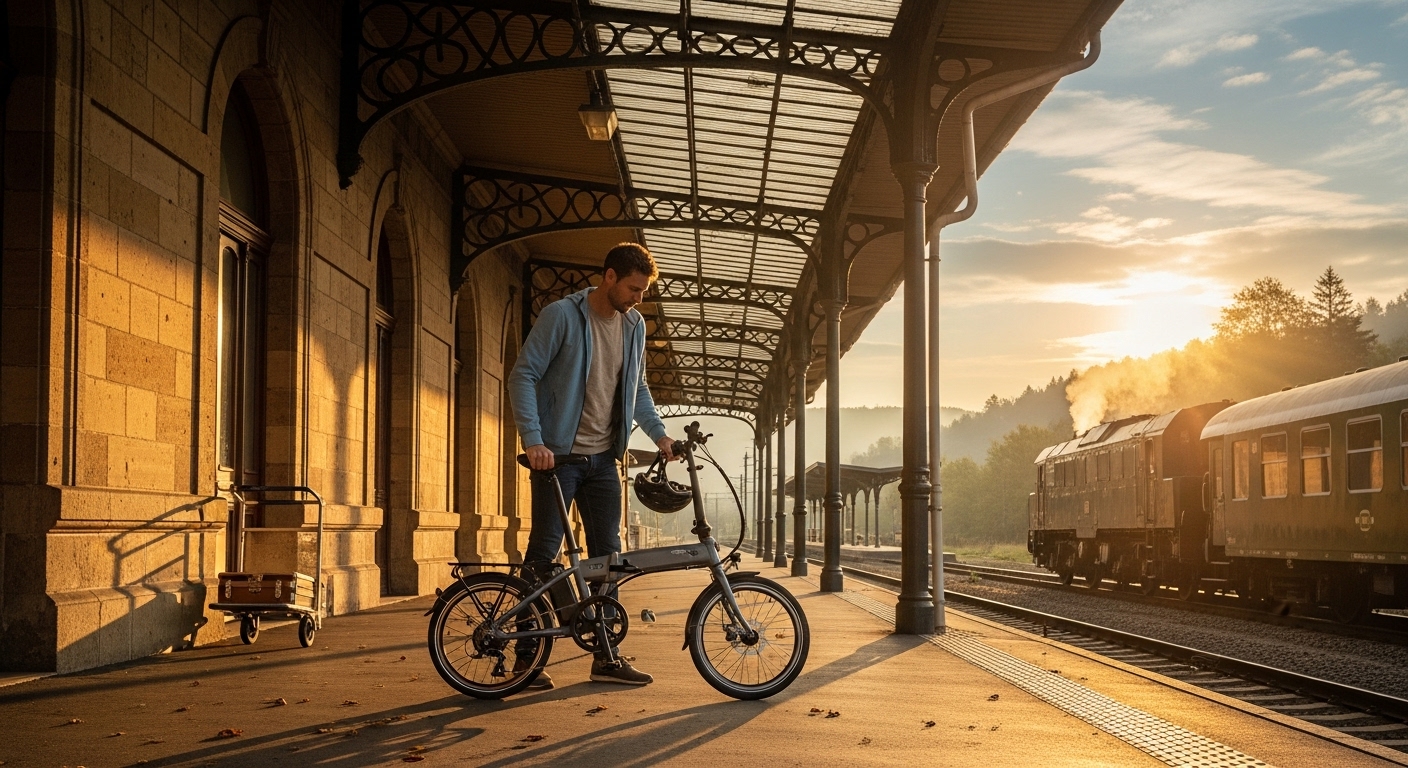
There’s something thrilling about the idea of traveling with a folding e-bike. It combines the freedom of cycling with the flexibility of travel — whether you’re hopping between European cities by train, exploring coastal paths in Asia, or cruising through national parks in North America. But while it sounds romantic and spontaneous, there’s a lot more to it than simply folding your bike and heading off.
Have you ever wondered if you can take your e-bike on a plane? Or whether train lines allow them on board? What about charging your battery abroad, or finding routes that actually suit folding bikes? These are just some of the questions travelers face — and this guide is here to help you figure it all out before your next adventure.
The Rise of Folding e-Bikes in Travel
Over the last few years, traveling with a folding e-bike has gone from niche hobby to mainstream trend. Cyclists, digital nomads, and eco-conscious travelers are all realizing how much freedom these bikes offer. You can fold them up, store them under your hostel bed, bring them on a ferry, or roll them into a train compartment — no bike rack required!
Modern folding e-bikes are lightweight, efficient, and come with powerful motors that make hill climbs feel effortless. They’re ideal for both long-distance explorers and commuters who want to ditch rental cars and public transport altogether. But like any form of travel, there are some practicalities and legalities to keep in mind.
Can You Bring a Folding e-Bike on a Plane?
Here’s the tricky part. Airlines generally do not allow e-bike batteries onboard due to lithium-ion safety concerns. Even if you fold your e-bike neatly and check it as luggage, the battery will almost always need to be shipped separately — or left behind. This can be a dealbreaker for some, but there are ways around it.
If you’re flying to a destination where e-bikes are popular (like Germany, Japan, or the Netherlands), you can often rent a compatible battery locally. Alternatively, you could ship your bike via courier in advance, using a logistics service that handles e-bikes safely. Always check airline websites for up-to-date policies — they vary widely!
Train Travel With a Folding E-Bike
This is where traveling with a folding e-bike truly shines. Most train systems, especially in Europe and parts of Asia, allow folding bikes on board free of charge. When folded, they’re considered regular luggage rather than bicycles. That means no bike reservation, no extra fees, and no awkward moments trying to fit into the bike car.
However, not all folding e-bikes are created equal. Some are heavier or bulkier than they look in ads, so make sure you can comfortably lift yours up a few steps or onto a platform. A padded bag or cover is essential for protecting your frame and keeping train staff happy.
Bus, Ferry, and Metro Options
Buses and ferries are generally friendly to folding bikes, especially if you’re traveling short distances. In many major cities, electric folding bikes are even allowed on the metro or tram during off-peak hours. For ferries, especially overnight ones, check if there’s a bike storage area or if you can keep it with your cabin luggage.
Pro tip: Always carry a microfiber towel to wipe off dirt or water from your tires before bringing your bike into indoor spaces — it’s a small courtesy that locals appreciate.
Charging Your Folding E-Bike While Traveling
Charging can be a challenge, particularly when staying in budget accommodations or campgrounds. Most folding e-bikes use removable batteries, which means you can charge them indoors even if your bike is locked outside. But voltage and plug type differences can catch you off guard abroad.
Before you leave, pack a universal adapter and check if your charger supports both 110V and 220V systems. If not, bring a small voltage converter. You’ll thank yourself when you’re recharging after a long day of pedaling along a scenic route.

Finding the Best Routes for Folding E-Bike Adventures
Not every bike route suits an e-bike — and not every e-bike suits every terrain. Folding e-bikes typically have smaller wheels and lighter frames, making them perfect for paved or semi-paved trails. Coastal routes, river paths, and countryside lanes are ideal.
Some of the best regions for traveling with a folding e-bike include:
- France’s Loire Valley: Smooth bike paths, charming châteaux, and plenty of vineyards to recharge (yourself, not just your battery!).
- Japan’s Shimanami Kaido: A 70-kilometer island-hopping route connecting Hiroshima and Shikoku — scenic, safe, and incredibly cyclist-friendly.
- California’s Pacific Coast Highway: While more challenging, there are sections perfect for folding e-bikes, especially around Monterey Bay and Santa Barbara.
- Germany’s Rhine Cycle Route: Flat, scenic, and dotted with castles — great for riders who want a balance of comfort and culture.
Before you head out, download offline maps from Komoot or Google Maps and plan routes that have frequent charging stops. Remember that while e-bikes extend your range, you still need to plan responsibly — nothing ruins a day faster than a dead battery 15 kilometers from town.
Accommodation Tips for Folding E-Bike Travelers
Many hotels, hostels, and Airbnb hosts are now used to guests arriving with e-bikes, especially in Europe and Southeast Asia. Always let your host know in advance that you’re bringing one. Folded bikes often fit neatly in corners or under beds — but if the space is tight, ask about secure bike storage.
For camping, a lightweight lock and waterproof cover are essential. In cities, indoor overnight storage is safest. Never leave your e-bike outside unlocked, even in small towns — theft is unfortunately common worldwide.
Rules and Regulations You Need to Know
Each country defines e-bikes differently. In the EU, a pedal-assist e-bike with a motor under 250W and a top assisted speed of 25 km/h is treated like a normal bicycle — no license or insurance needed. In the U.S., rules vary by state, while in Japan, e-bikes are strictly limited to certain speed and power categories.
Before crossing borders, research local laws about helmet use, age restrictions, and battery wattage. Some areas (like national parks or pedestrian zones) may ban motorized bikes altogether. Always respect local signage — it’s better to walk a short distance than risk a fine or confrontation.
Packing and Preparation Essentials
Beyond your bike, consider what accessories make life easier when traveling with a folding e-bike:
- Compact helmet: Safety first, but choose one that fits neatly into your bag.
- Mini toolkit: A multitool, tire levers, and a small pump go a long way.
- Portable charger: Some e-bike batteries can even charge via USB — perfect for off-grid rides.
- Waterproof panniers: Keep your electronics and clothes dry.
- Reflective gear: Even if you plan to ride only during daylight, weather and schedules can change fast.
Real-World Experiences From Fellow Travelers
Many travelers say the best part of using a folding e-bike isn’t just the mobility — it’s the freedom. Imagine arriving in a new city and being able to explore at your own pace without waiting for taxis or tour buses. Or taking a spontaneous detour to a hidden café down a cobbled street because you spotted something interesting.
One traveler shared, “I rode my folding e-bike through the Swiss Alps by train, hopping from one valley to the next. Every morning I’d pick a route, unfold the bike, and just ride until sunset. It felt like the world was opening up, one turn at a time.”
Why Choose an E-Bike Over a Regular Folding Bike?
The motor assistance makes long rides and hilly terrain accessible to everyone — not just athletes. You’ll travel farther, carry more luggage, and still have the energy to enjoy your evenings. Plus, modern batteries are efficient enough for 60–100 km per charge, depending on terrain and assist level.
Even if you’re new to cycling, you’ll find that traveling with a folding e-bike lets you rediscover the joy of movement without the stress of exhaustion.
Maintenance and Care While Abroad
Keeping your e-bike in top shape while traveling doesn’t require a full workshop. Regular cleaning, checking tire pressure, and keeping your chain lubricated will go a long way. Many local bike shops are happy to help with e-bike maintenance if you need spare parts — especially in cycling-friendly countries.
It’s wise to carry your own charger and a few spare fuses or cables. Avoid exposing your bike to heavy rain or direct sunlight for long periods — folding mechanisms and battery terminals can corrode over time.
There’s something magical about being able to fold your world into a compact shape and carry it with you. Whether you’re cycling across borders or exploring a single island, traveling with a folding e-bike gives you the perfect blend of independence, adventure, and sustainability.
So, what’s stopping you from planning your own folding e-bike journey? Have you already tried one? We’d love to hear about your experience — share your stories and tips in the comments below! And if you enjoyed this guide, don’t forget to follow us on our social media platforms for more travel insights, adventure tips, and inspiration from around the world.
Catch up on the top stories and travel deals by subscribing to our newsletter!