
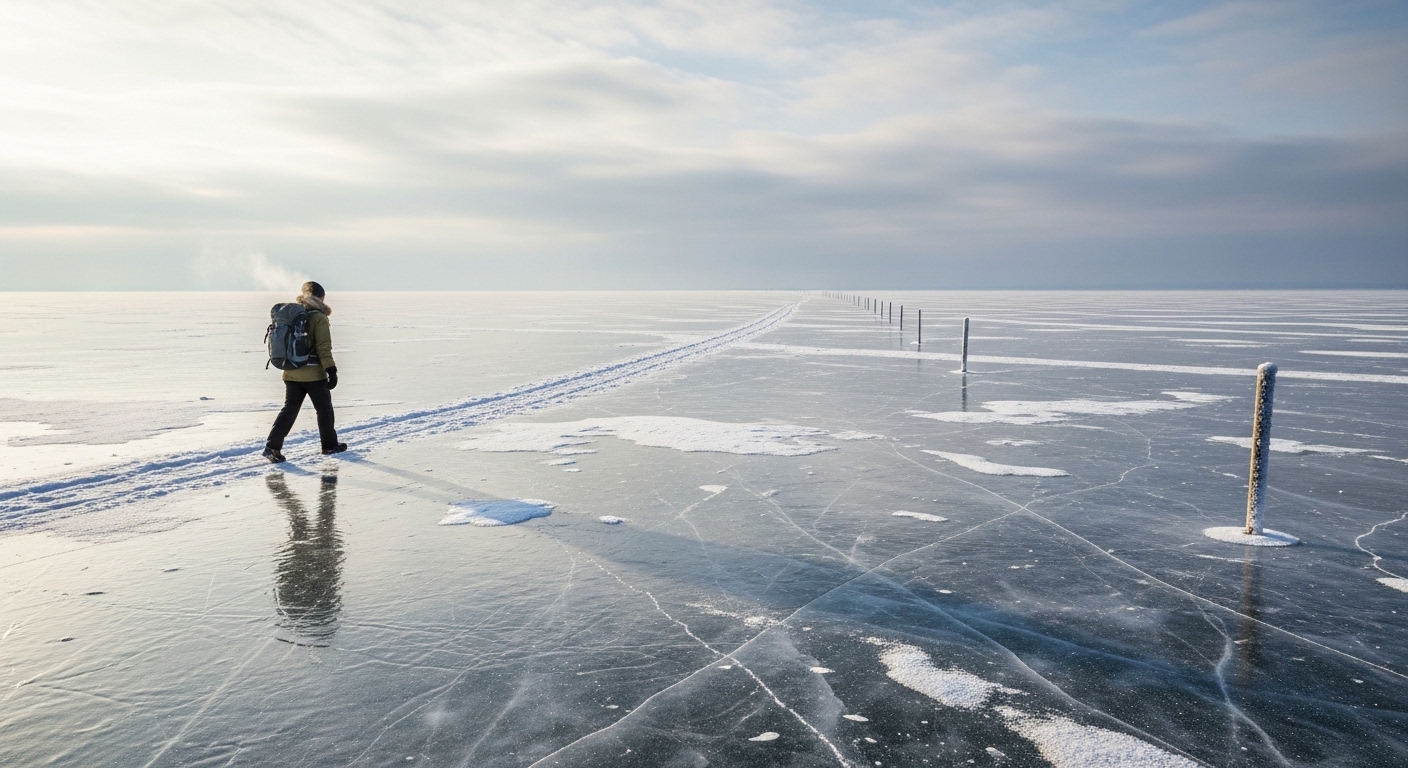
There is something quietly powerful about old ice roads marked as winter hiking routes. These roads once existed purely for survival, carved across frozen rivers, lakes, and tundra so that isolated communities could receive food, fuel, and medical supplies. Today, those same corridors are returning in a different form. Instead of trucks and convoys, they now welcome hikers, photographers, and travelers seeking silence, space, and a deeper connection with cold landscapes.
At first glance, it feels strange to think of roads that appear and disappear every year. However, winter has always reshaped geography in the north. When water freezes, it becomes solid ground. Entire transportation networks emerge where none exist in summer. Because of this seasonal transformation, people learned to treat ice not as a barrier, but as a bridge.
Now, as industries shift and climate patterns change, many of these routes no longer serve commercial purposes. Instead of fading away completely, communities are giving them a new identity. Old ice roads marked as winter hiking routes are becoming slow travel experiences, where history, climate, and landscape blend into one frozen journey.
The Origins of Ice Roads
Ice roads did not begin as adventurous ideas. On the contrary, they emerged from necessity. In regions where permafrost, wetlands, or extreme terrain prevented permanent roads, frozen water offered the only reliable solution. Every winter, rivers and lakes thickened enough to support vehicles, creating temporary highways across vast distances.
Over time, these routes became lifelines. Northern Canada relied on them to supply mining towns. Alaska used them to connect villages. Scandinavia depended on them for seasonal trade. Even parts of Siberia developed entire winter transport systems based on frozen rivers.
Because these roads melted every spring, they left no permanent scars on the land. That quality made them both sustainable and fragile. While they solved practical problems, they also reminded people that nature controlled the rules.
Have you ever considered how different our world would look if most roads vanished every year?
How Ice Roads Became Hiking Routes
As technology advanced, air transport and permanent infrastructure replaced many traditional ice roads. Gradually, heavy trucks stopped using certain routes. Some corridors became too unstable. Others simply lost their economic purpose.
Instead of abandoning them entirely, local governments and tourism boards began reimagining these frozen paths. They realized that ice roads already followed safe, tested corridors. Because of that, they made ideal foundations for winter hiking routes.
Consequently, many old ice roads marked as winter hiking routes now appear on seasonal maps. Trail markers replace road signs. Safety updates replace traffic reports. What once carried industry now carries curiosity.
Does knowing the history of a path change how meaningful a walk feels?

Canada’s Frozen Highways
Canada holds one of the largest networks of historical ice roads on Earth. For decades, the Northwest Territories operated thousands of kilometers of seasonal routes connecting remote settlements to the rest of the country.
One famous example remains the Tibbitt to Contwoyto Winter Road. This route once supplied diamond mines and crossed more than sixty frozen lakes. Today, sections of it serve as guided winter trekking corridors.
Organizations like Parks Canada support educational winter trails that follow these historical routes. As a result, travelers can now experience landscapes that previously belonged only to truck drivers and engineers.
Walking across these frozen highways feels surreal. There are no trees for shelter. There are no landmarks for direction. Instead, the horizon stretches endlessly, and the silence becomes part of the experience.
Alaska’s Ice Corridors
In Alaska, ice roads once connected oil fields, research stations, and Indigenous communities. Over time, many of these routes transitioned into winter travel paths.
State agencies and outdoor groups now maintain certain frozen river crossings as marked hiking routes. However, these are not casual trails. Hikers must prepare carefully and respect the extreme environment.
According to nps.gov, winter travel in Alaska often follows routes that Indigenous communities used long before modern infrastructure existed.
Because of Alaska’s scale, distances feel immense. Isolation becomes real. Every step reminds you that this landscape once demanded survival, not leisure.
Scandinavia’s Ice Trails
Scandinavia offers a gentler version of ice road hiking. Countries like Sweden and Finland actively promote frozen lake trails as cultural experiences.
Lake Mälaren in Sweden and sections of the Gulf of Bothnia transform into walking and skating highways each winter. Unlike remote Arctic routes, these paths include safety monitoring and public access.
Tourism platforms like Visit Sweden highlight ice routes as part of slow seasonal travel.
Here, old ice roads marked as winter hiking routes function not as relics, but as living traditions.
What It Feels Like to Walk on Ice
Walking on frozen water creates a unique psychological effect. Even when conditions are safe, instincts stay alert. Sounds feel sharper. Movements become deliberate.
Unlike forest trails, ice offers no visual distractions. There are no roots, no foliage, no landmarks. Instead, the surface reflects light, clouds, and shadows.
Because of this, many hikers describe ice routes as meditative. Thoughts slow down. Breathing becomes rhythmic. Time feels suspended.
Have you ever experienced silence so deep that it feels loud?
Climate Change and Ice Road Fragility
Unfortunately, many ice roads now operate for shorter seasons. Warmer winters reduce ice thickness and stability.
Institutions like NOAA track declining ice reliability across northern regions.
As a result, old ice roads marked as winter hiking routes also serve as climate indicators. They show how fragile these landscapes have become.
Walking these paths often creates mixed emotions. On one hand, the experience feels magical. On the other hand, it feels temporary.
How does it feel to explore a place that might not exist in twenty years?
Safety on Ice Routes
Ice hiking requires constant awareness. Conditions can shift quickly. Snow may hide weak zones. Temperature swings affect stability.
Most official routes provide real-time updates. Hikers usually carry flotation gear, ice picks, and navigation tools.
Despite the risks, people continue to seek these experiences. The challenge itself becomes part of the reward.
Cultural Memory and Indigenous Routes
Ice roads also carry cultural memory. Indigenous communities used frozen paths long before modern transport existed.
These routes connected hunting grounds, seasonal camps, and trade networks. Today, winter hiking preserves that legacy.
Walking becomes a form of storytelling, where landscapes reveal how humans adapted without altering nature permanently.
Should travel focus more on remembering than consuming?

Why Ice Routes Feel Different From Normal Trails
Traditional hikes usually lead toward destinations. Ice routes offer something else. They remove the idea of arrival.
There is no summit. There is no final viewpoint. Instead, the journey itself becomes the experience.
Old ice roads marked as winter hiking routes encourage presence rather than progress.
Planning Your First Ice Road Walk
Beginners should start with well-managed Scandinavian or Canadian routes. These offer guidance, monitoring, and emergency support.
Travel platforms like Lonely Planet and National Geographic often feature safe winter destinations.
The key remains preparation, patience, and respect for natural limits.
The Emotional Impact of Frozen Paths
Many travelers report emotional clarity after walking ice roads. Visual emptiness creates mental space.
At the same time, vulnerability becomes real. You are standing on something temporary.
That awareness often leads to gratitude.
Why These Routes Matter Today
In a world obsessed with permanence, ice roads offer another philosophy. Temporary does not mean meaningless.
Old ice roads marked as winter hiking routes represent a shift from exploitation to experience.
They also allow people to witness climate change in a personal way.
We would love to hear from you. Have you ever walked on frozen water? Would you try an ice road hike?
If stories like this inspire your curiosity, follow WentWorld.com on our social media platforms to stay connected with rare journeys and meaningful landscapes.
Catch up on the top stories and travel deals by subscribing to our newsletter!









Leave a Reply
You must be logged in to post a comment.