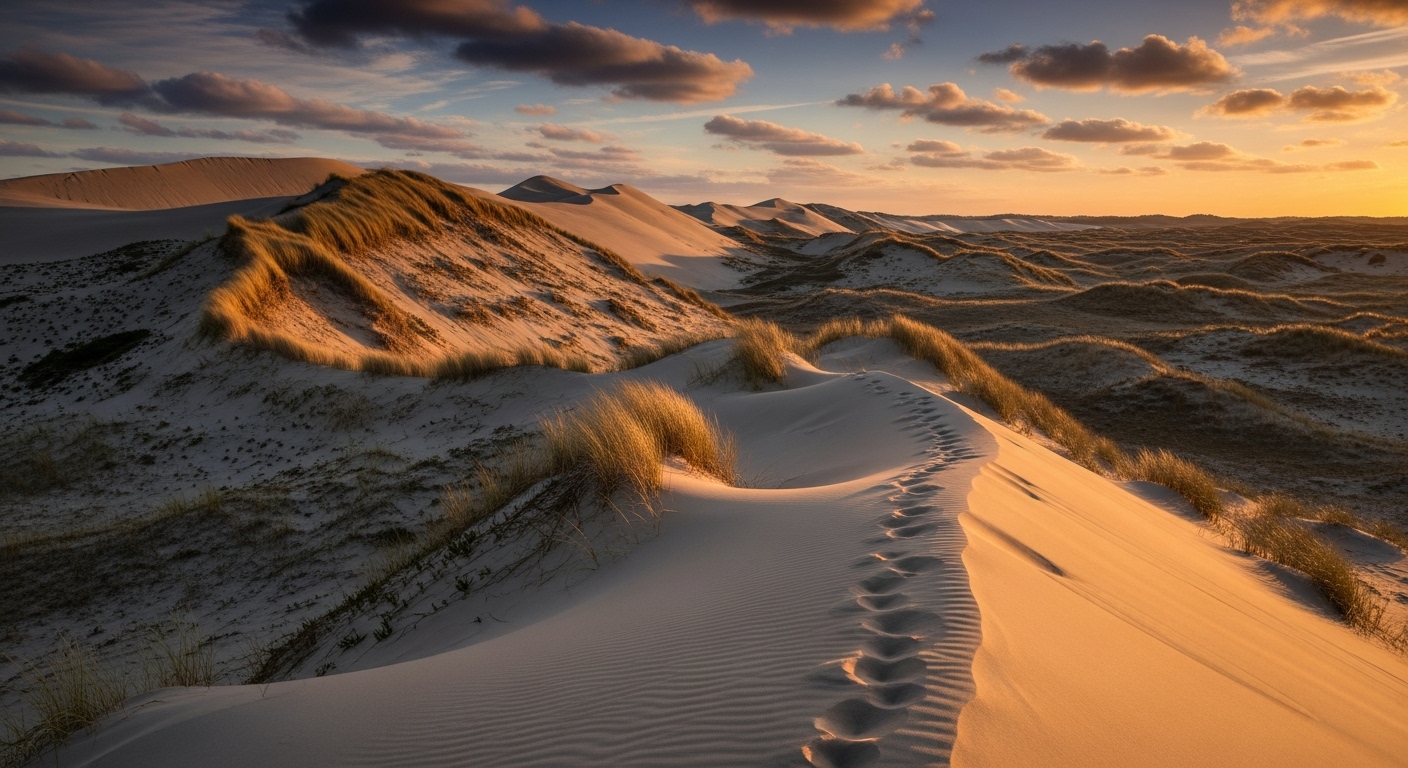
Living dunes are landscapes that never settle. Unlike forests, mountains, or coastlines, these dunes shift, stretch, and reshape themselves every year. Trails appear, vanish, and re-form somewhere else entirely. A path walked last season may no longer exist, replaced by ripples of sand sculpted by wind and time.
Walking across these dynamic dunes challenges one of our most basic assumptions about travel: destinations rarely stay put. Trails through living dunes require attention, patience, and humility. You don’t conquer these landscapes — you adapt to them. That is exactly what makes them unforgettable.
Across deserts, coasts, and protected reserves, travelers discover that living dunes offer a rare experience: moving through a place that changes beneath your feet.
What Makes Dunes “Living” Landscapes
Dunes are considered living because they constantly respond to wind, weather, and gravity. Sand grains are lifted, rolled, and dropped in patterns that rarely repeat. Over months or years, entire dune systems migrate.
Trails across living dunes are temporary agreements between humans and nature. Rangers mark routes for safety, but even these shift over time. Footprints vanish quickly. Landmarks move. The terrain refuses to be memorized.
In living dunes, navigation becomes awareness rather than memory. You learn to observe subtle cues instead of relying solely on maps or GPS.
Why Trails in Living Dunes Move Every Year
Wind direction, seasonal storms, rainfall, and vegetation all influence dune movement. During dry years, dunes advance faster, while wetter seasons temporarily anchor sand with plant life.
As a result, trails through living dunes are redrawn annually, sometimes even more frequently. Authorities update maps, relocate markers, and close routes that no longer exist. This constant change makes hiking truly exploratory, even on familiar paths.
Famous Living Dune Systems Around the World
Some living dunes have become globally recognized for their scale and beauty.
The Great Sand Dunes National Park in the United States features the tallest dunes in North America, rising and shifting at the edge of the Rocky Mountains. Managed by the National Park Service, the park frequently updates trail guidance as dune patterns evolve.
In Namibia, the Namib Desert’s dune fields are among the oldest on Earth, yet still actively move. Trails near Sossusvlei change subtly each year, offering repeat visitors a completely new experience.
Europe’s Dune du Pilat in France grows, collapses, and slides toward nearby forests and towns. Visitor paths are adjusted seasonally, documented by organizations such as Atout France.

Walking a Trail That Won’t Be There Tomorrow
There is something humbling about knowing a trail exists only briefly. Living dunes remove the illusion of permanence. You walk slower, look around more, and take in every detail. Each step feels less like progress and more like participation.
Have you ever been somewhere that demanded your full attention simply to move through it? Living dunes create that experience naturally.
How Wildlife Adapts to Moving Dunes
Living dunes aren’t empty; they host specialized plants and animals adapted to constant change. Some grasses grow long root systems that shift with the sand. Insects burrow deep to escape heat and movement, while reptiles and mammals instinctively read dune patterns.
Trail routes are often designed carefully to avoid nesting areas or fragile vegetation, reinforcing the idea that humans are guests in these environments.
Safety and Navigation in Living Dune Trails
Trails that move every year demand respect. Visibility can change suddenly, and wind can erase tracks within minutes. Visitors should check current trail maps, carry navigation tools, and follow ranger guidance. Many dune systems prohibit off-trail walking to protect both travelers and ecosystems.
Organizations like the World Wildlife Fund emphasize dune conservation, reminding visitors that a single footprint can have a lasting effect in some conditions.
Why These Landscapes Feel So Different From Other Trails
Most trails are designed for efficiency — to get you from one point to another. Living dune trails prioritize experience over destination. You don’t rush across sand. You pause often and adjust your stride. Progress is measured in awareness rather than distance.
Many hikers describe these trails as meditative, even challenging their usual definition of hiking itself.
Traveling to Living Dune Destinations
Reaching living dune systems often requires planning because many are located far from major cities. Airlines such as Delta Air Lines and Air France connect travelers to regions dominated by dune landscapes, followed by scenic drives through remote terrain.
Local guides enhance the experience, explaining dune behavior and helping visitors understand how the land moves over time.

The Emotional Impact of Walking a Moving Landscape
Living dunes leave a distinct memory. You don’t remember exact routes — you remember sensations. The sound of wind over sand, the effort of climbing slopes that collapse beneath you, the silence between gusts. These places remind us that not everything needs to be preserved exactly as it is. Change can be the feature, not the flaw.
Why Living Dunes Matter in a Changing World
As climate patterns shift globally, living dunes provide insight into resilience and adaptation. They show how landscapes respond dynamically rather than resisting change. Studying and protecting these systems helps scientists understand erosion, habitat migration, and long-term environmental balance.
For travelers, they offer a rare chance to witness transformation in real time.
Would you hike a trail knowing it might move, fade, or disappear entirely? Does that make the experience feel more meaningful or less? We’d love to hear your thoughts. Have you visited living dunes, or is this a landscape you’d like to explore someday?
For more stories about places shaped by time, climate, and movement, follow WentWorld on our social media platforms and stay curious about the world beneath your feet.
Catch up on the top stories and travel deals by subscribing to our newsletter!