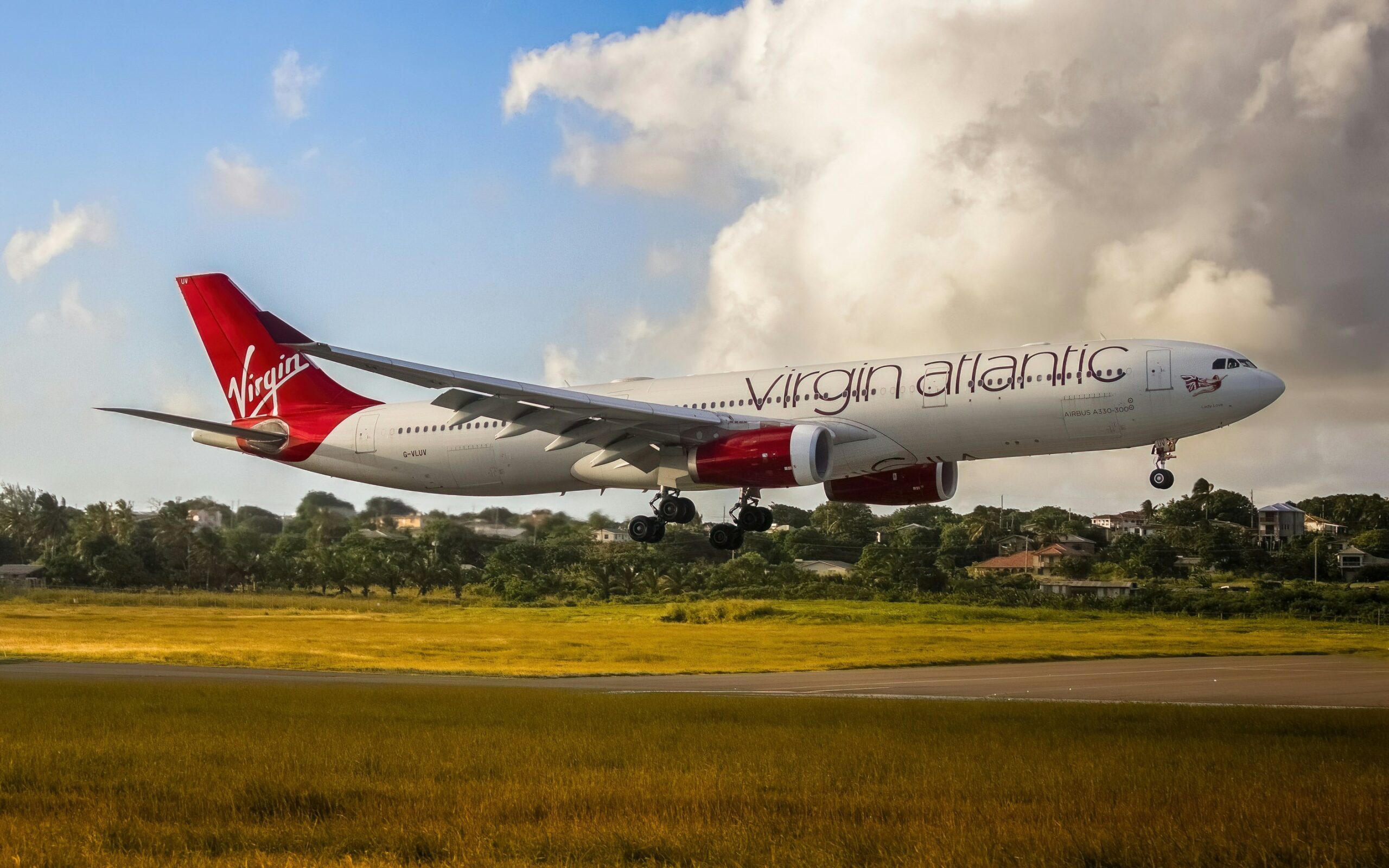
For most travelers, an airport is a place of concrete, terminals, and long taxiways. On some islands, however, airports blend directly into the coastline. Island airports where the beach is the runway edge place aircraft landings just meters from the sea, creating one of the most dramatic travel experiences on Earth.
At these locations, waves roll in as planes descend. Sand replaces safety fencing. Sunbathers pause to watch aircraft pass overhead. These airports do not hide their surroundings. Instead, they become part of the island’s natural rhythm.
Would you feel excited or nervous landing where the ocean meets the runway?
Why island geography forces creative airports
Island airports where the beach is the runway edge exist because flat land is limited. Many islands are mountainous, rocky, or densely developed, leaving few areas suitable for long runways.
Coastal plains offer the flattest terrain available. Building runways close to the shoreline becomes the most practical option, even if it places aircraft just steps away from sand and surf.
Rather than reshape the island entirely, engineers adapt aviation to the landscape.
How runways meet the sea safely
Despite appearances, island airports where the beach is the runway edge operate under strict safety controls. Runways are carefully aligned with prevailing winds, and pilots undergo special training to land in short distances.
Visual landing approaches are common, relying on clear weather and precise timing. In some locations, flight schedules adjust to tides, wind patterns, and seasonal weather changes.
The proximity to water demands constant monitoring, but decades of operation show that careful design works.
Princess Juliana International Airport, Sint Maarten
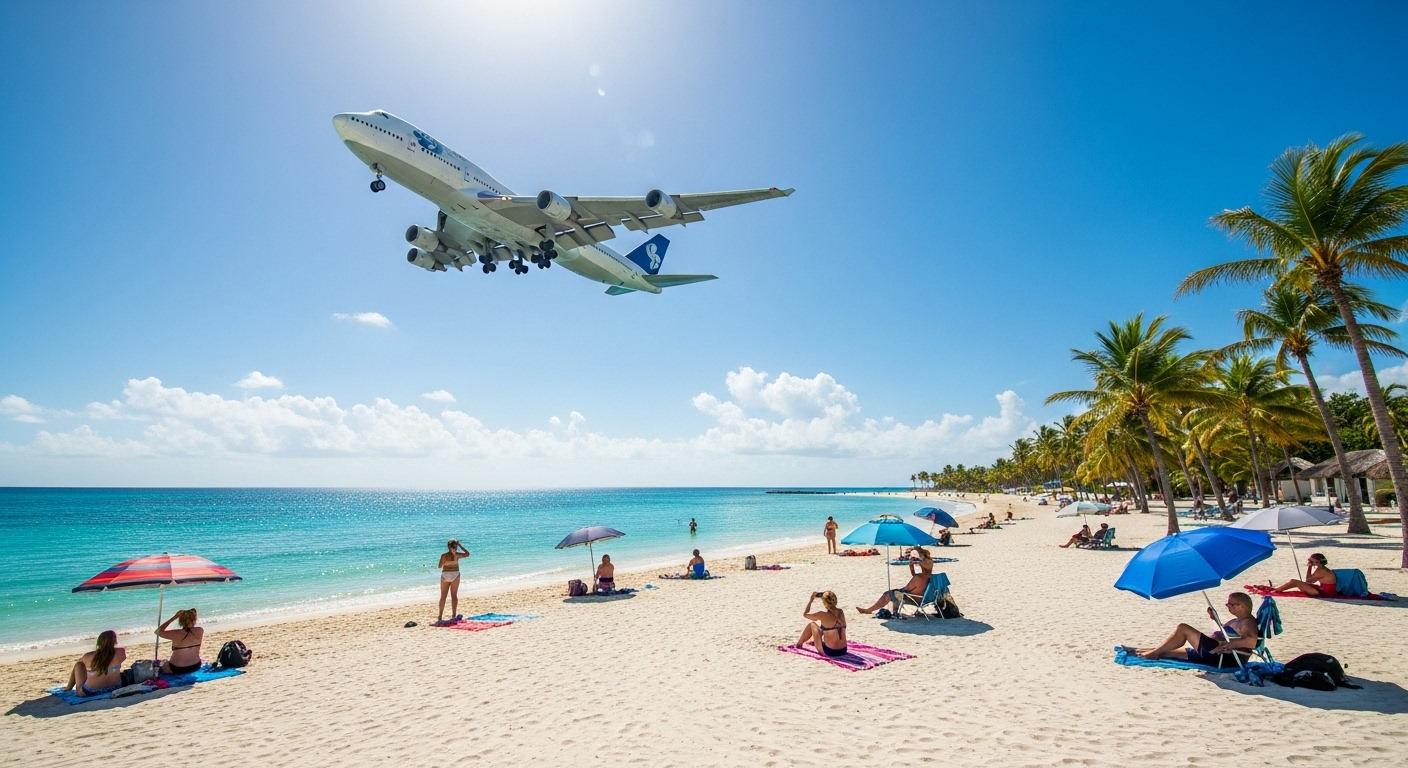
Perhaps the most famous example of island airports where the beach is the runway edge is Princess Juliana International Airport. Its runway begins just beyond Maho Beach, where aircraft pass incredibly low over visitors.
Jet engines roar overhead as travelers and locals gather along the sand to watch landings. Warning signs line the beach, reminding spectators of the power involved.
This airport has become a destination in itself, drawing aviation enthusiasts from around the world.
Official airport information is available via Sint Maarten Airport.
Barra Airport, Scotland
Barra Airport offers one of the most unusual examples of island airports where the beach is the runway edge. Here, aircraft land directly on hard-packed sand.
Runways are defined by wooden poles placed in the beach, and flight schedules depend on tide charts. When the tide rises, the runway disappears entirely.
This airport proves that even natural shorelines can serve aviation when conditions allow.
Operational details are documented by Highlands and Islands Airports.
Courchevel-style challenges without the mountains
While mountain airports are known for steep approaches, island airports where the beach is the runway edge present different challenges. Pilots must manage glare from water, crosswinds, and limited stopping distance.
Salt air accelerates corrosion, requiring frequent maintenance. Wildlife, including seabirds, must also be carefully managed.
Every landing becomes a calculated balance between precision and environmental awareness.
Why beaches and runways coexist
On many islands, the beach existed long before the airport. Instead of closing access entirely, communities often allow shared use.
Beachgoers learn to recognize aircraft schedules. Pilots learn the patterns of daily island life.
This coexistence turns the runway into a shared space rather than a restricted zone.
How locals experience these airports
For residents, island airports where the beach is the runway edge feel ordinary. Planes are part of the soundscape, as familiar as waves or wind.
Children grow up watching aircraft land near the shore. Fishermen pause briefly, then return to their routines.
What feels extraordinary to visitors becomes woven into daily life.
Environmental considerations near coastal runways
Environmental impact is a constant concern. Coastal erosion, rising sea levels, and storm surges threaten runway stability.
Many airports reinforce shorelines or elevate sections to protect infrastructure.
Climate change has intensified planning efforts to ensure these airports remain operational without damaging fragile ecosystems.

Why these airports attract travelers
Island airports where the beach is the runway edge offer something rare: immediacy. Travelers step off a plane and are instantly surrounded by sea air and open sky.
There is no gradual transition from airport to destination. Arrival feels immediate and immersive.
This closeness between flight and landscape creates lasting memories.
Best places to watch landings
Observation points vary by island. Some beaches allow direct viewing, while others designate safe zones.
Morning and late afternoon often provide the best light for watching arrivals.
Local signage and guidance should always be followed.
Why WentWorld features coastal runway stories
WentWorld highlights places where infrastructure adapts to nature rather than overpowering it. Island airports where the beach is the runway edge show how travel can exist in harmony with geography.
These airports remind us that arrival can be as meaningful as the destination itself.
Have you ever landed somewhere that felt unforgettable the moment the wheels touched down? Share your experience with WentWorld.
Follow WentWorld to discover more places where travel meets landscape in surprising ways.
Catch up on the top stories and travel deals by subscribing to our newsletter!