Cities often reflect the materials beneath their foundations. In some extraordinary places around the world, entire urban landscapes have been shaped almost exclusively from the stone found nearby. These destinations stand as living proof that architecture, geography, and culture can merge into something timeless. Exploring architectural cities built entirely from local stone reveals how human creativity adapts to its environment while preserving identity, durability, and beauty.
Unlike modern cities that rely on imported materials and global supply chains, these stone-built cities grew organically from their surroundings. As a result, their buildings blend seamlessly into hillsides, deserts, and valleys. Streets feel cohesive, textures feel authentic, and the overall atmosphere feels grounded in place. For travelers, these cities offer a sense of permanence that modern skylines often lack.
So why did these cities rely so heavily on local stone? And what makes them so visually striking even centuries later? Let’s explore how architectural cities built entirely from local stone came to exist and why they continue to captivate visitors today.
Why Local Stone Shaped Entire Cities
Before modern transportation, building materials had to come from nearby sources. Stone was durable, abundant, and well-suited to local climates. Therefore, communities learned how to quarry, cut, and assemble stone in ways that maximized strength and comfort.
Additionally, using local stone reduced costs and ensured buildings could withstand regional weather conditions. Desert cities used thick stone walls to stay cool. Mountain towns used dense rock to resist wind and snow. Over time, architectural styles evolved directly from the characteristics of the stone itself.
As a result, these cities developed a strong visual identity. Their color palettes, textures, and forms reflect the land they rise from, making them feel inseparable from their environment.
Matera – Italy
Matera is one of the most striking examples of architectural cities built entirely from local stone. Carved into limestone cliffs, the city’s ancient cave dwellings, known as the Sassi, have been continuously inhabited for thousands of years.
The buildings appear to emerge naturally from the rock. Walls, roofs, and stairways are all shaped from the same pale stone. Moreover, the city’s layout follows the contours of the ravine, creating a dramatic and harmonious landscape.
Once considered impoverished, Matera is now celebrated for its preservation and cultural significance. It has also served as a filming location for historical movies due to its timeless appearance. More details are available at Italia.it.
Jaipur – India
Known as the Pink City, Jaipur was built primarily using locally sourced sandstone. This choice gave the city its distinctive warm hue, which still defines its architectural identity today.
Palaces, forts, and city walls share the same stone material, creating visual unity across the urban landscape. Furthermore, the stone performs well in Rajasthan’s climate, keeping interiors cooler during hot summers.
Walking through Jaipur feels cohesive and immersive. The consistent use of stone connects royal architecture with everyday buildings, reinforcing the city’s historical continuity. Learn more at Incredible India.

Petra – Jordan
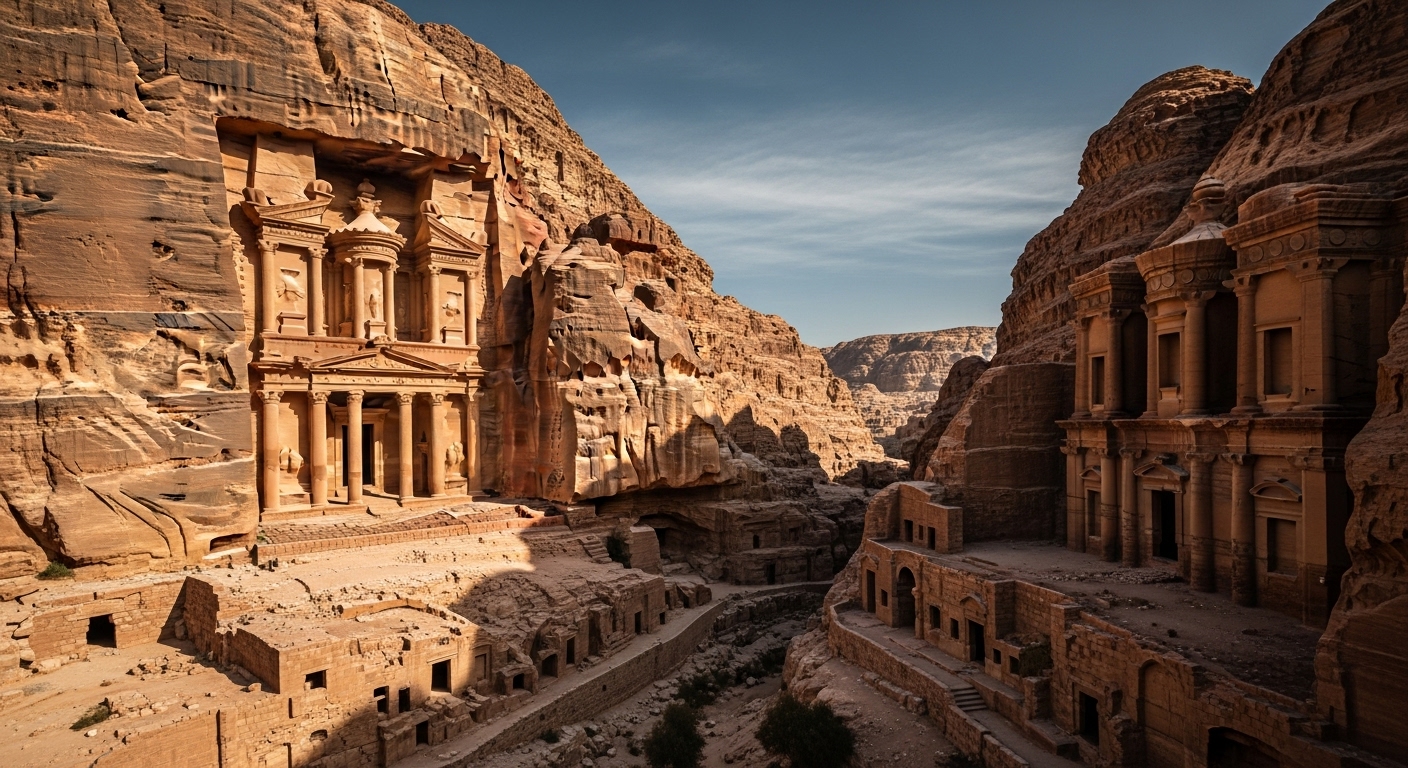
Petra is perhaps one of the most iconic stone-built cities in the world. Rather than assembling stone blocks, the Nabataeans carved entire structures directly into rose-colored sandstone cliffs.
Temples, tombs, and façades appear sculpted rather than constructed. Additionally, the city’s color shifts throughout the day as sunlight interacts with the stone’s mineral composition.
Petra’s architecture demonstrates advanced engineering and deep respect for the natural environment. It remains a powerful symbol of how architectural cities built entirely from local stone can achieve both grandeur and harmony. More information can be found at Visit Jordan.
Edinburgh – Scotland
Edinburgh’s Old Town and New Town are built predominantly from locally quarried sandstone. The stone’s gray and honey tones give the city its dramatic and dignified character.
Castles, churches, bridges, and residential buildings share the same material, creating a sense of unity across centuries of development. Moreover, the stone ages gracefully, deepening in color rather than deteriorating.
The city’s skyline feels cohesive and historic, even as modern life unfolds within it. More details are available at Visit Scotland.
Ghadames – Libya
Ghadames is an ancient desert city built using local stone, mud, and gypsum. Its architecture was designed specifically to withstand extreme heat.
Thick stone walls insulate interiors, while narrow streets remain shaded throughout the day. Additionally, the city features an early form of climate-responsive design, including rooftop walkways that allow airflow.
Despite its harsh environment, Ghadames demonstrates how stone-based architecture can support comfort, sustainability, and community. It stands as a powerful example of adaptation through design.

What It Feels Like to Walk Through Stone Cities
Walking through a city built entirely from local stone feels grounding. The streets carry a sense of permanence, and the buildings feel anchored rather than imposed.
Textures are consistent. Colors are harmonious. Even sounds behave differently, as stone absorbs and reflects noise in unique ways. As a result, these cities feel calmer and more immersive than many modern urban environments.
Have you ever noticed how certain cities feel timeless the moment you arrive? Often, stone architecture plays a major role in that feeling.
Preservation and Modern Life
Maintaining stone-built cities requires careful balance. Preservation laws protect historic structures, while modern needs demand updates. Fortunately, stone is adaptable.
Many cities retrofit interiors while preserving exteriors. Modern plumbing, lighting, and insulation can be added without altering the visual identity. Therefore, architectural cities built entirely from local stone continue to function as living cities rather than frozen museums.
Why These Cities Continue to Inspire
In an age of glass towers and steel frames, stone cities remind us of slower, more intentional building practices. They represent durability, craftsmanship, and respect for the land.
Travelers increasingly seek destinations with authenticity and depth. Stone-built cities offer both. They tell stories not just through monuments, but through everyday walls, staircases, and streets. Would you prefer wandering through a city shaped by its landscape, or one designed to dominate it?
Architectural cities built entirely from local stone stand as enduring examples of harmony between humans and nature. They show how architecture can emerge from the land rather than overwrite it.
From limestone caves to sandstone palaces, these cities invite travelers to slow down, observe details, and appreciate the beauty of materials shaped by time. Which stone-built city would you love to explore first? Share your thoughts with us, and follow WentWorld on our social media platforms to discover more places where architecture, history, and landscape come together.
Catch up on the top stories and travel deals by subscribing to our newsletter!