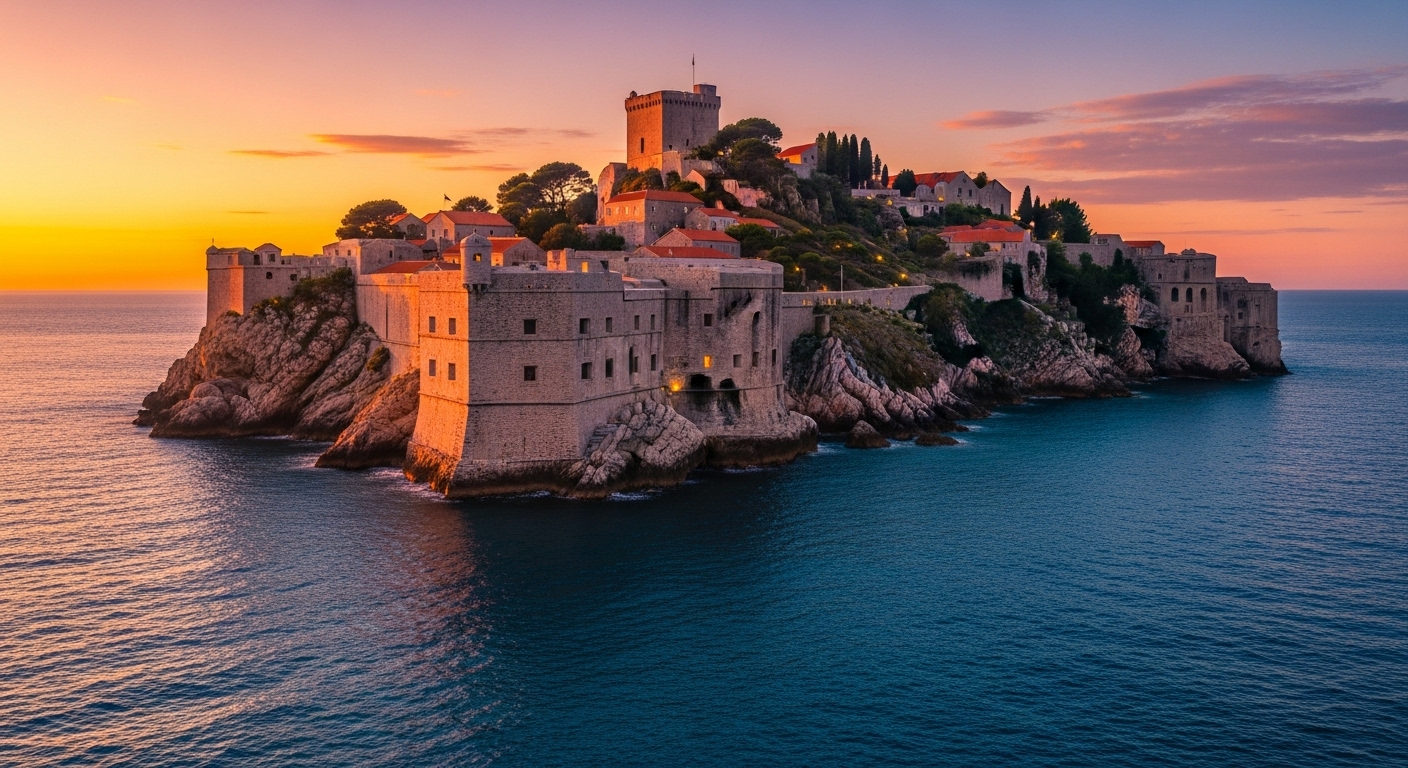
Some places in the world do not quietly fade into history. Instead, they rise from the sea wrapped in stone, shaped by survival, and guarded by centuries of conflict. The Ancient Fortified Islands in the Mediterranean belong to that rare category of destinations that feel alive with memory. These are not just scenic islands. Rather, they are enduring testaments to power, strategy, fear, and resilience.
Even today, while travelers sip coffee by peaceful harbors, thick walls still stand where cannons once roared. Meanwhile, narrow alleys continue to echo with the footsteps of soldiers, merchants, and villagers who once depended on those walls for survival. Have you ever stood inside such a place and felt history pressing quietly against your senses?
Through this journey with WentWorld, we are not rushing through a checklist. Instead, we are slowing down and walking through time. Step by step, we move along stone pathways smoothed by centuries of movement. At the same time, we climb watchtowers that once scanned the seas for approaching danger. Along the way, we discover why Ancient Fortified Islands in the Mediterranean continue to fascinate travelers across the world.
Why Islands Needed Fortresses in the First Place
The Mediterranean Sea has always functioned as a grand highway of civilization. For thousands of years, traders, warriors, pirates, and explorers crossed its waters. Where trade existed, wealth followed. However, where wealth gathered, conflict soon appeared as well.
As a result, islands located along strategic shipping routes became highly valuable. At the same time, they became extremely vulnerable. Without modern surveillance, radar, or quick communication, early island communities relied only on vision, timing, and construction for protection.
Therefore, stone by stone, massive walls began to rise. Deep harbors were carved for defense. Towers were built to extend sightlines across open water. Over time, entire island cities transformed into living fortresses. Notably, many of these islands passed through multiple empires — Greek, Roman, Byzantine, Venetian, and Ottoman.
Despite centuries of siege and occupation, many of these fortified islands still stand today. That survival alone makes them extraordinary.
Malta and the Birth of an Island Fortress Empire
Malta often dominates conversations about Ancient Fortified Islands in the Mediterranean, and understandably so. For centuries, this small archipelago held enormous strategic value. Consequently, the Knights of St. John transformed Malta into one of the most heavily fortified locations in the region.
Gozo’s citadel, rising dramatically above the island, remains a powerful symbol of that era. Upon entering its gates, visitors immediately sense a shift. Sounds soften. Temperatures cool slightly. Stone walls seem to absorb the noise of the modern world.
During the Great Siege of 1565, thousands of Ottoman soldiers laid attack upon Malta. In contrast, the defending force of knights and locals was significantly smaller. Nevertheless, they held their ground. Against overwhelming odds, resistance succeeded. Today, that same ground welcomes visitors rather than invaders.
Standing there, one cannot help but wonder: would you have had the courage to defend such walls when every advantage was against you?
Rhodes and the Art of Endurance
Rhodes offers another powerful chapter in the story of fortified islands. Its medieval Old Town remains one of the most astonishingly preserved fortified cities in existence. Unlike many ruins that feel distant and detached, Rhodes feels lived in, active, and emotionally present.
Repeated Ottoman attacks tested the strength of its walls. Yet, each time, the defenses prevailed. Cannon scars that still mark certain sections serve as physical reminders of that relentless struggle. Meanwhile, cafés and shops now operate peacefully inside structures once designed for war.
Interestingly, Rhodes does not feel frozen in time. Instead, it feels layered. History exists alongside the present without one overpowering the other. That harmony is precisely what makes Ancient Fortified Islands in the Mediterranean so compelling to modern travelers.
Dubrovnik and the Adriatic’s Stone Guardian
Although not a traditional island, Dubrovnik functions like a fortified island in almost every meaningful way. Encircled by massive walls and bordered by the Adriatic Sea, it once stood as one of the most secure urban centers of the medieval world.
Merchants moved freely inside the gates while threats remained locked outside. Meanwhile, watchtowers allowed early detection of approaching fleets. As a result, the city flourished economically while remaining relatively protected militarily.
Today, visitors walk atop those same walls. Sunsets now replace sieges. Cameras replace cannons. Still, the emotional weight of the stone remains impossible to ignore.
The Lesser-Known Stone Sentinels of the Mediterranean
While famous names attract the spotlight, many lesser-known fortified islands quietly preserve just as much history. Korčula, in Croatia, offers a striking example. Its walled town rises directly from the sea, forming a nearly perfect defensive ring.
Notably, the town’s streets follow a fishbone layout. This design allowed wind to cool the city in summer while blocking harsh winter gusts. Therefore, even urban planning became a survival strategy.
Similarly, several Spanish coastal islands and peninsulas once functioned as defensive strongholds against pirate raids and rival empires. Although these sites attract fewer visitors today, their emotional impact often proves even stronger — largely because expectations remain low.
Why These Fortified Islands Still Matter Today
In an age dominated by cyberwarfare, drones, and satellites, ancient stone walls may appear obsolete. However, their relevance has not faded. Instead, their meaning has shifted.
These islands stand as reminders that security once depended on craftsmanship, foresight, cooperation, and sacrifice. There were no digital resets or remote backups. If a fortress fell, everything fell with it.
Additionally, these fortified islands showcase an early mastery of engineering. Builders designed curved walls to deflect cannon fire. They carved hidden tunnels for supply transport and escape. They even aligned structures to control sunlight during conflict. As a result, every stone served both symbolic and practical purposes.
Life Inside a Fortress in the Modern World
One of the most fascinating realities of Ancient Fortified Islands in the Mediterranean is that people still live within these defensive walls. Unlike abandoned ruins, these places continue to breathe.
Children ride bicycles through medieval gates. Restaurants operate inside former armories. Laundry dries on balconies carved into stone centuries ago. As daily life unfolds, history does not disappear. Instead, it integrates.
This blending of modern routine with ancient survival architecture creates a rare emotional experience. Rather than feeling trapped, many residents describe a unique sense of protection and identity.
The Emotional Weight of Fortified Landscapes
Massive stone walls rarely leave visitors emotionally untouched. At first, they feel imposing. Then, surprisingly, they begin to feel comforting. These structures once trapped people inside during sieges, yet today they offer shelter from the chaos of modern life.
Many travelers describe an unexpected emotional stillness while walking these walls. Fear fades. Reflection takes over. These stones outlived rulers, armies, and empires, yet they remain under open skies — silent witnesses to everything humanity has repeated over and over again.
The Future of Ancient Fortified Islands in the Mediterranean
Preservation has become the new battlefield. Rising sea levels, climate change, tourism pressure, and urban expansion now threaten what cannons could not destroy.
Fortunately, governments and cultural organizations work continuously to protect these fragile structures. However, balance remains delicate. Excessive tourism accelerates erosion. Insufficient tourism limits funding. Therefore, responsible travel has become more important than ever.
WentWorld’s Perspective on Fortified Islands
At WentWorld, we see travel as more than movement across maps. We see it as connection — to stories, struggles, and human resilience. The Ancient Fortified Islands in the Mediterranean perfectly represent that philosophy. These islands teach us that architecture once meant survival. They show us that beauty often rises from necessity. Most importantly, they remind us that human determination leaves permanent marks upon the world.
If tomorrow offered you a chance to explore one of these fortified islands, which would call you first — Rhodes, Malta, Korčula, or Dubrovnik? Would life inside stone walls feel protective or confining to you? We would truly love to hear your thoughts and travel dreams. Share your perspective, your curiosity, or even your questions with us.
And if journeys rooted in history and discovery inspire you, stay connected with WentWorld on social media, where hidden destinations and forgotten legacies continue to unfold every day. Because the most powerful journeys do not always begin with tickets — they begin with curiosity.
Catch up on the top stories and travel deals by subscribing to our newsletter!