When winter tightens its grip on the far north, something remarkable happens. Rivers freeze solid, lakes become mirrors of ice, and landscapes transform into silent white worlds. In these moments, historic ice roads turned scenic winter routes come back to life. What were once vital lifelines for trade, survival, and connection now offer travelers breathtaking journeys across frozen terrain.
Historic ice roads turned scenic winter routes are not modern inventions. They are centuries-old pathways shaped by climate, necessity, and human resilience. Today, they serve a new purpose — inviting travelers to experience winter not as an obstacle, but as a destination.
Have you ever imagined driving across a frozen river, knowing that generations before you relied on that same icy path to survive?
The Origins of Historic Ice Roads
Long before paved highways and GPS navigation, communities in cold regions depended on ice roads during winter months. Frozen rivers and lakes became natural highways, allowing sleds, carts, and later vehicles to travel faster than through deep snow or dense forests.
In places like Canada, Scandinavia, and Siberia, ice roads connected remote settlements, delivered food and fuel, and enabled trade when summer routes became impassable. These routes were carefully observed and maintained, with locals reading ice thickness, temperature patterns, and snow cover to determine safety.
Historic ice roads turned scenic winter routes carry these stories forward, preserving knowledge passed down through generations.
From Survival Routes to Scenic Winter Journeys
As modern infrastructure reduced dependence on ice roads, many of these frozen paths found new life. Instead of heavy cargo, they now carry travelers seeking rare winter experiences. Driving or walking along these routes offers a perspective unavailable in any other season.
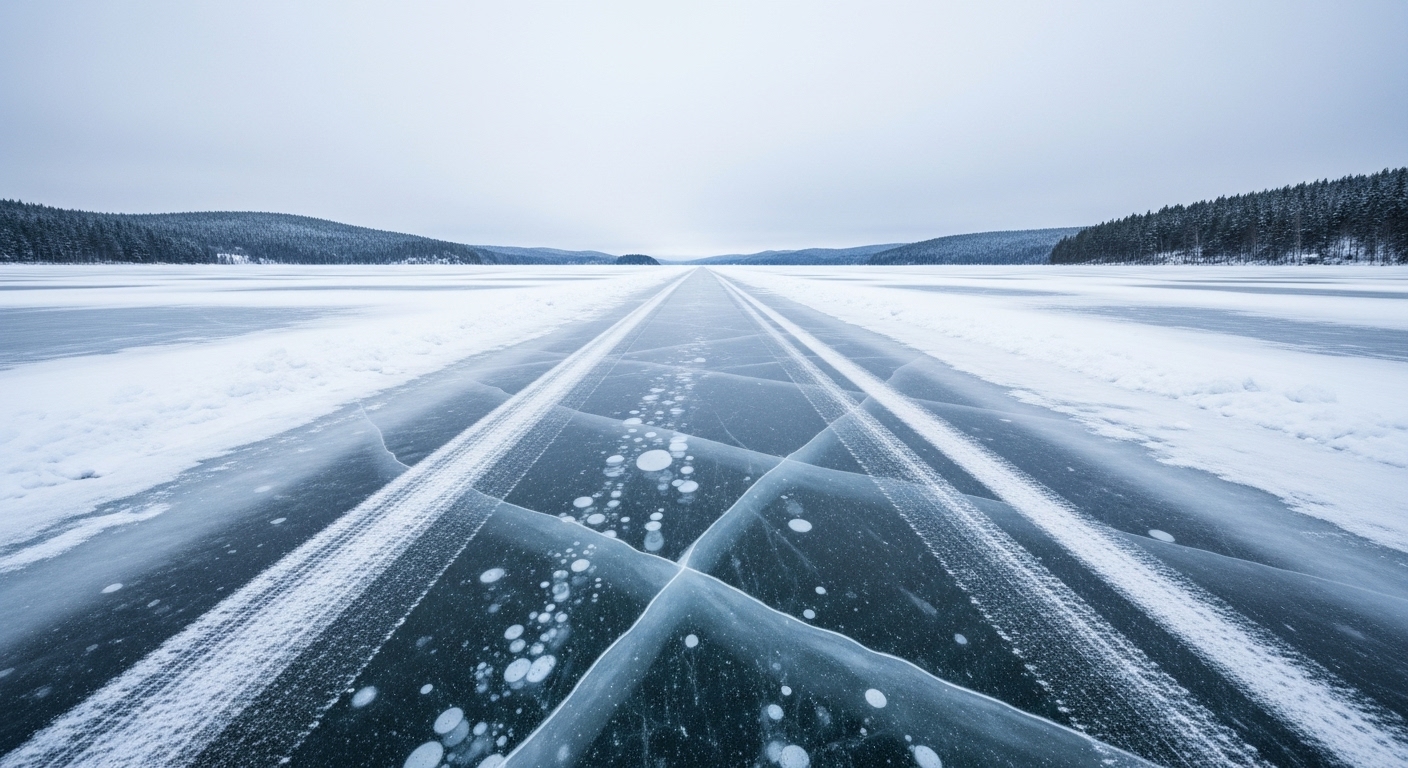
Snow-covered forests stretch endlessly, frozen lakes reflect pale skies, and silence settles so deeply it feels physical. Historic ice roads turned scenic winter routes allow travelers to move slowly through landscapes usually hidden beneath water.
Would you slow down enough to notice the cracks, textures, and subtle sounds of ice beneath your feet?
Famous Ice Roads Around the World
Canada is home to some of the most well-known ice roads. In the Northwest Territories, seasonal ice highways cross frozen lakes and rivers, connecting remote communities. These routes are closely monitored for safety and have become attractions for winter adventurers. Information about northern travel experiences can be found through Destination Canada.
In Scandinavia, historic ice roads appear each winter across frozen archipelagos and inland lakes. Sweden and Finland, in particular, mark official ice routes for walking, cycling, and even ice skating. Resources like Visit Sweden highlight how these routes combine heritage with outdoor recreation.
Russia’s winter roads across frozen rivers in Siberia remain essential for seasonal transport. Some sections now welcome guided tours, allowing visitors to experience vast frozen landscapes while learning about indigenous cultures and survival techniques. Travel overviews are available via Visit Russia.

What Makes These Routes So Visually Powerful
Historic ice roads turned scenic winter routes offer visuals unlike any other travel experience. The absence of vegetation reveals geological patterns normally hidden underwater. Ice forms intricate designs — bubbles frozen mid-rise, long fractures stretching like veins, and snowdrifts shaped by relentless wind.
Light behaves differently in winter. Low sun angles create long shadows, pastel skies, and soft reflections across ice. Photographers and artists are drawn to these routes because every moment feels temporary, changing with temperature and light.
The Science and Safety Behind Ice Roads
Despite their beauty, ice roads demand respect. Thickness, temperature stability, and water movement determine safety. Local authorities measure ice depth regularly and restrict access when conditions change.
Modern scenic ice routes include markers, rest points, and emergency protocols. Vehicles often follow strict spacing rules, while walking and skating routes are clearly defined. Understanding that historic ice roads turned scenic winter routes remain dynamic environments helps travelers appreciate both their fragility and strength.
Cultural Meaning Frozen Into the Landscape
These routes carry more than travelers — they carry memory. Indigenous communities, traders, and settlers relied on frozen waterways to share stories, goods, and traditions. Ice roads were places of encounter, not isolation.
Today, festivals, guided storytelling tours, and cultural programs bring these histories to life. Elders recount journeys made by dog sled or horse-drawn carts, reminding visitors that what feels adventurous now was once a matter of survival.
Can a road still tell stories if it only exists a few months each year?
Traveling Historic Ice Roads Today
Experiencing historic ice roads turned scenic winter routes requires preparation. Travelers should dress for extreme cold, respect local guidance, and avoid traveling alone. Many regions offer guided experiences that combine safety with cultural education.
Airlines such as Air Canada and Finnair connect travelers to winter destinations where ice roads become accessible parts of the landscape.
Some routes are open to vehicles, while others are reserved for walking, skiing, or skating. Each mode offers a different relationship with the ice, from controlled observation to immersive movement.
Why Winter Routes Change How We Travel
Historic ice roads turned scenic winter routes challenge modern travel habits. They discourage speed and demand attention. There are no shortcuts, no alternate paths — only the frozen road ahead.
This limitation becomes a gift. Travelers learn patience, awareness, and respect for natural forces. The journey itself becomes the destination.

The Future of Ice Roads in a Changing Climate
Climate change presents uncertainty for ice roads worldwide. Shorter winters and unpredictable freeze cycles threaten both traditional use and tourism. In response, many regions document routes digitally, preserve oral histories, and adapt seasonal travel responsibly.
Visiting historic ice roads turned scenic winter routes also carries responsibility. Supporting local communities and sustainable tourism ensures these frozen pathways remain respected rather than exploited.
Would you travel a road that disappears every spring? Would you trust ice shaped by time, temperature, and tradition? Historic ice roads turned scenic winter routes offer more than scenery — they offer perspective.
If you have ever experienced winter travel on frozen landscapes, or dream of doing so, we would love to hear your thoughts.
For more stories about rare travel experiences shaped by nature and history, follow WentWorld on our social media platforms and stay inspired.
Catch up on the top stories and travel deals by subscribing to our newsletter!